dailynewsnblog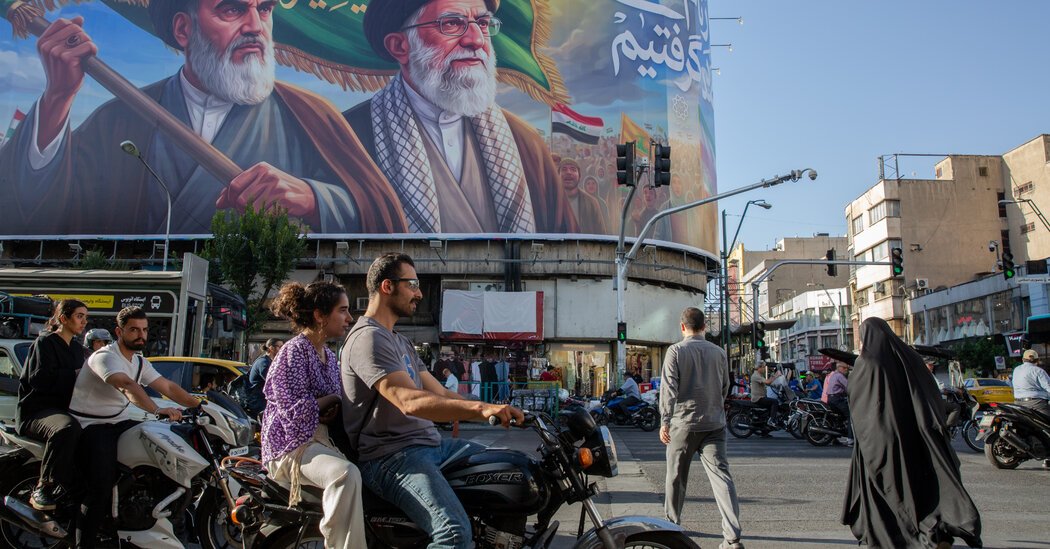
In the days after Iran and the United States reached a preliminary agreement to pause their war, Iranian politicians, generals, and clerics from a range of political factions described the deal as a victory that showed Tehran’s resilience against a far more powerful enemy.
That is the position Iran’s leaders are pushing even though the country lost a slew of its top political and military figures, suffered a battering to its stock of ballistic missiles and was left with an economy strained even further by a naval blockade.
“Iran has taken a major step toward final victory,” Mohammad Bagher Ghalibaf, the speaker of the Iranian Parliament who has played a major role in negotiating the deal, wrote on social media on Monday.
As negotiators were nearing an agreement, Sadegh Amoli Larijani, chairman of a powerful appointed council that supervises the work of the government, wrote on social media on Saturday that Iranians had shown a “renewed spirit of resistance” and defeated U.S.-Israeli plans to overthrow the Islamic republic.
Some of the backslapping is most likely aimed at presenting a united front both abroad and at home, where a vocal hard-line minority has protested the agreement as a betrayal of those killed in the war.
The comments also reflect the genuine perception of Iran’s leaders, who can point to the fact that the terms of the agreement, though still not fully known, will fall far short of what President Trump had previously declared as his goals in starting the war: “total and complete victory” for the United States and “unconditional surrender” for Iran.
The style of Iran’s leadership has also changed as a result of the war. Some pragmatic figures, such as the national security official Ali Larijani, were killed, while the Islamic Revolutionary Guards Corps — the military force that defends Iran’s system of clerical rule — has consolidated power. The long-term impact of those changes is still to be seen, but the shifts raise the question of how willing the military, now even more powerful, will be to make serious concessions at the negotiating table.
Mr. Trump’s rhetoric also appears to be adding to Iranian leaders’ confident tone. The American president has publicly excoriated Prime Minister Benjamin Netanyahu of Israel for mounting attacks on Lebanon that nearly derailed the U.S.-Iran deal, and he has described Iran’s current leadership, including the supreme leader, Mojtaba Khamenei, as pragmatists.
On Tuesday, Mr. Trump said Iran’s leadership was now “rational,” compared to, in his view, the leaders who were killed at the outset of the war.
According to Mr. Trump’s account of the deal, Iran is to allow shipping through the Strait of Hormuz — a return to the status quo before the war. But in what is perhaps an indication of the leverage Iran feels it has, Tehran has indicated that it intends to charge ships for passing through the strait, which it did not do before the war.
“Iran is certain to be emboldened by this deal,” said Mehrzad Boroujerdi, an Iran expert at Missouri University of Science and Technology. “I cannot recall another instance in which Iran suffered such serious military setbacks yet emerged with what could be considered a diplomatic victory.”
In Iran, much of this narrative is a familiar one, honed during eight years of war with Iraq. That war, which began in 1980, was framed by Iranian officials as an underdog struggle against a foreign invader and its powerful allies.
Iran may have achieved more now than it did in the aftermath of that war, said Hamidreza Azizi, an Iranian security expert at the German Institute for International and Security Affairs.
“For the first time, its role in the Strait of Hormuz has, to some extent, been de facto recognized, while regional countries appear to be seeking accommodation with Iran rather than confrontation,” he said.
Iranian negotiators have even felt emboldened enough to insist that Lebanon, where Israel has been fighting Iran’s ally Hezbollah, be included in the agreement, Mr. Azizi added. Iran has claimed the deal would extend to stopping fighting in Lebanon, though Israel has pushed back, saying its forces would remain there.
“The Iranian leadership sees itself as being able to dictate terms that, in its view, should be binding not only on the United States but on Israel as well,” Mr. Azizi said.
The agreement punted the most vexing disputes between Iran and the United States — the fate of the Iranian nuclear program and what kind of sanctions relief the country should receive in return for limiting it — to later rounds of talks, expected to begin on Friday in Switzerland.
With Iran entering those talks feeling confident, its negotiators may be unwilling to make compromises on the key points of disagreement, including the future of Iran’s current stockpile of enriched uranium.
“The nuclear negotiations will be the real test of the durability of this arrangement,” Mr. Boroujerdi said. “If tensions in the Strait of Hormuz have subsided by that stage, Trump may find it more difficult to extract major concessions from Tehran.”