dailynewsnblog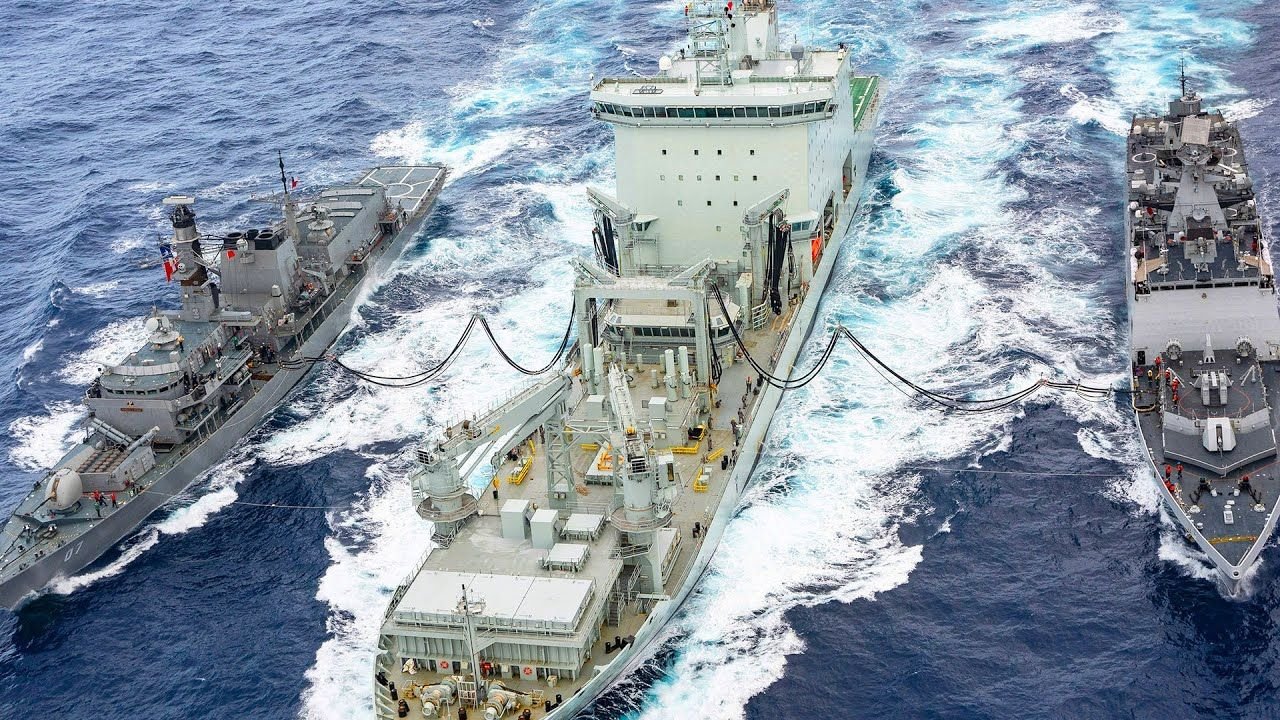
Imagine a giant ship sailing across the ocean for weeks without stopping at a port. No gas stations, no fuel docks, and land nowhere in sight. Yet somehow, it keeps moving. How is that possible?
The secret is a remarkable process known as at-sea refueling. In this article, we’ll discover how ships receive fuel in the middle of the ocean and the technology that makes this incredible operation possible.

Why Do Ships Need Refueling at Sea?
Ships require refueling at sea because many of them consume massive amounts of fuel while traveling across vast stretches of ocean.
Large cargo ships that transport goods around the world, oil tankers carrying millions of barrels of fuel, and naval vessels conducting military operations all rely on powerful engines that burn significant quantities of fuel every day.
A single long-distance voyage can last for several weeks, and some routes cross entire oceans where no ports are available for thousands of kilometers. Stopping to refuel is not always practical, especially for military fleets that need to remain operational or commercial vessels that must maintain tight delivery schedules.
By receiving fuel at sea, ships can continue their journey without interruption, extend their operational range, and avoid costly delays. This capability is particularly important for naval forces, allowing them to stay deployed far from their home bases for extended periods while maintaining full readiness.
What Is Underway Replenishment (UNREP)?
Underway Replenishment, commonly known as UNREP, is a specialized maritime operation that allows ships to receive fuel, supplies, ammunition, and other essential materials while they are still moving at sea.
Instead of returning to a port for resupply, a receiving ship sails alongside a support vessel at a carefully controlled speed and distance, enabling fuel and cargo to be transferred safely between them. This system was developed to overcome the limitations of long ocean voyages, where stopping at ports could waste valuable time and reduce operational effectiveness.
Over the years, UNREP has become an essential capability for modern navies because it allows warships to remain deployed for extended periods without interrupting their missions. It is equally important for long-distance maritime operations, where vessels may travel across vast oceans with few opportunities to refuel.
By enabling continuous operations far from land, Underway Replenishment has transformed naval strategy and logistics, making it possible for fleets to operate virtually anywhere in the world for weeks or even months at a time.
The Floating Gas Station: Replenishment Ships
Often referred to as the ocean’s floating gas stations, replenishment ships are specially designed vessels built to carry vast quantities of fuel and transfer it to other ships while at sea.
Unlike ordinary tankers that transport fuel from one port to another, these support ships are equipped with advanced pumping systems, fuel hoses, storage tanks, and transfer equipment specifically designed for underway replenishment operations. Their primary mission is to keep fleets supplied without requiring them to return to shore for refueling.
This capability is especially valuable for naval forces operating far from their home ports, as well as for ships involved in extended missions across remote regions of the world’s oceans.
By meeting vessels at designated locations and transferring fuel directly at sea, replenishment ships significantly extend the range and endurance of entire fleets. Without these floating fuel depots, many long-distance maritime operations would be slower, more expensive, and far more dependent on access to coastal infrastructure.

How Ships Meet in the Middle of the Ocean
Before any refueling operation can take place, the ships involved must first locate and meet each other in the vast expanse of the ocean.
This process begins with careful planning of a rendezvous point, a prearranged location determined using factors such as the ships’ routes, fuel requirements, weather conditions, and ocean traffic.
Modern vessels rely on advanced navigation technologies, including GPS, radar, electronic charts, and satellite systems, to accurately reach the designated meeting area.
Throughout the journey, both ships maintain constant communication using radio, satellite links, and other maritime communication systems to exchange information about their position, speed, heading, and estimated arrival time.
As they approach one another, crews coordinate every movement to ensure a safe and precise meeting. Even though the ocean covers millions of square kilometers, modern navigation and communication technologies allow ships to locate each other with remarkable accuracy, making it possible for complex refueling operations to be carried out far from any coastline.

Step-by-Step Refueling Process
Refueling at sea is a carefully coordinated operation that allows ships to receive fuel without stopping at a port. The process involves several steps to ensure the transfer is completed safely and efficiently.
Sailing Side by Side
The receiving ship and the replenishment ship sail parallel to each other at the same speed, maintaining a safe but close distance.
Connecting Lines and Fuel Hoses
Crew members establish a connection between the vessels using guide lines, which are then used to transfer heavy fuel hoses from one ship to the other.
Pumping Fuel Safely
Powerful pumps transfer fuel through the hoses while both crews continuously monitor pressure, flow rates, and equipment to prevent leaks or accidents.
Disconnecting and Resuming the Voyage
Once the required amount of fuel has been transferred, the hoses are disconnected and retrieved. The ships then gradually separate and continue their respective journeys.

Safety Measures and Spill Prevention
Because refueling at sea involves transferring large amounts of fuel between moving ships, strict safety measures are essential to prevent accidents and environmental damage. Modern vessels use advanced systems and follow international regulations to ensure every operation is conducted safely.
Emergency Shutoff Systems
If a problem occurs during fuel transfer, automatic emergency shutoff systems can instantly stop the flow of fuel, reducing the risk of spills or equipment damage.
Leak Detection Technology
Special sensors continuously monitor hoses and transfer equipment for leaks, allowing crews to identify and address problems before they become serious.
International Safety Standards
Refueling operations must follow strict international maritime regulations that govern equipment, procedures, and crew training to ensure safety and environmental protection.

Military Refueling Operations
Military refueling operations are among the most important uses of at-sea replenishment, allowing aircraft carriers, destroyers, submarines, and other warships to remain deployed for extended periods without returning to port.
Modern naval vessels consume large amounts of fuel while traveling, conducting patrols, launching aircraft, and carrying out military exercises.
By receiving fuel from specialized replenishment ships while still at sea, these vessels can continue their missions for weeks or even months across vast ocean regions.
This capability provides a significant strategic advantage because fleets can operate far from their home bases without relying on foreign ports or coastal infrastructure.
During conflicts, humanitarian missions, or security operations, at-sea refueling enables naval forces to respond quickly, maintain a constant presence in critical areas, and project power across the globe.
Without this capability, warships would be forced to interrupt operations frequently for refueling, greatly reducing their effectiveness and operational reach.
The Future of Ocean Refueling
The future of ocean refueling is expected to be safer, faster, and more efficient thanks to advances in automation and AI-assisted navigation. Modern systems are being developed to reduce human error and improve the precision of fuel transfers at sea. At the same time, the shipping industry is exploring cleaner alternative fuels such as LNG, methanol, and ammonia to reduce environmental impact. These innovations could transform how ships are supplied, making long-distance maritime operations more sustainable and reliable than ever before.
As shipping technology continues to evolve, one fascinating question remains:
Could fully autonomous ships one day refuel themselves in the middle of the ocean without any human involvement?
Thank you for reading! If you enjoyed the blog, please like, share, and leave a comment – your support means the world!
Check out my YouTube channel-
Click Here
For Support-
TIP JAR