dailynewsnblog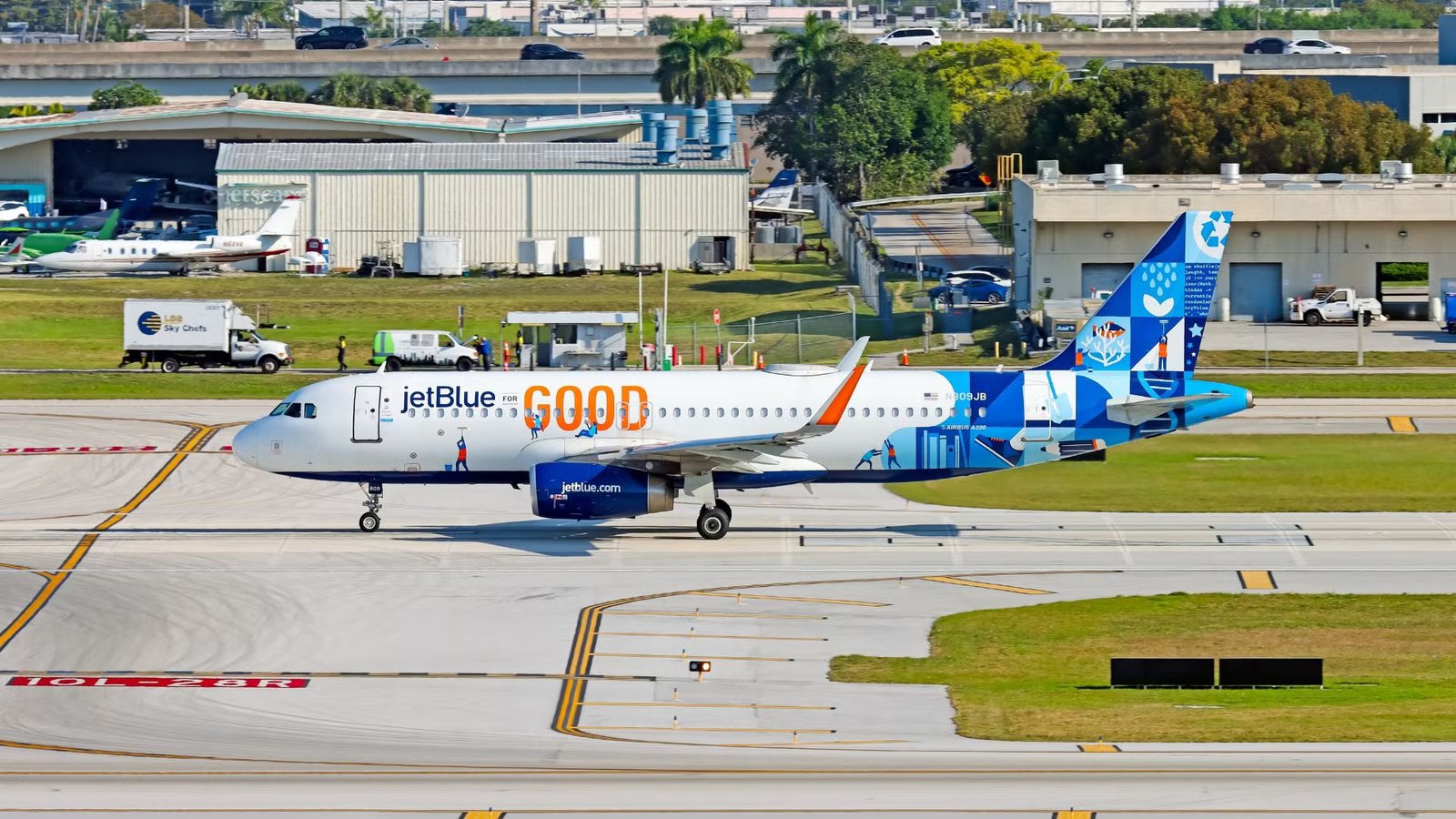
JetBlue Airways is increasingly positioning  Fort Lauderdale-Hollywood International Airport (FLL) as a cornerstone of its long-term strategy, with CNBC reporting that senior leadership indicated that a dedicated lounge at the airport would align with broader commercial goals. The airline is attempting to strengthen revenue quality at a time when US carriers are leaning more heavily on premium cabins, loyalty programs, and airport-based services to stabilize earnings.
The airport itself has become one of the most active and competitive aviation hubs in the United States. Recent federal transportation data shows Fort Lauderdale handling roughly 25–28 million US enplaned passengers annually, placing it among the top 20 busiest airports nationwide. JetBlue is now the top carrier with 36% market share by capacity at the airport.
Fort Lauderdale’s Scale And Competitive Pressure

Fort Lauderdale served about 32.2 million passengers in 2025, reflecting a slight decline after years of rapid growth tied to post-pandemic travel demand. Despite the dip, it remains one of Florida’s key gateways, especially for leisure and Caribbean-bound traffic. The airport also operates more than 300 daily departures and offers nonstop service to dozens of domestic and international destinations, making it a highly dense mid-to-large hub by US standards.
JetBlue’s footprint at Fort Lauderdale has expanded significantly, with peak schedules exceeding 100 daily departures during busy seasons. This level of activity places it among the dominant carriers at the airport, competing directly with Spirit, Southwest, and Delta for high-frequency leisure and connecting traffic. Spirit has historically held the largest share at the airport, but recent shifts in capacity and strategy have narrowed the competitive gap.
A major structural factor is demand volatility. Data from 2025 shows that overall departures declined by roughly 8.5% when compared to 2024, reflecting broader normalization in US travel after the post COVID surge. Even with this moderation, Fort Lauderdale remains attractive due to its year-round leisure demand and strong international links to Latin America and the Caribbean. JetBlue President Marty St. George said:
“The airport folks, I think, are equally motivated to have a lounge down there. Certainly, given the size of our operation and the number of premium customers going in and out of Fort Lauderdale, I think [it makes] a lot of sense, we just have to find the right location.”
JetBlue’s Premium Strategy And Operational Realignment

JetBlue’s evolving strategy increasingly relies on premium revenue streams rather than purely low-cost competition. Its Mint product has expanded on transcontinental and select Florida routes, signaling a shift toward higher-yield passengers who are willing to pay for upgraded seating and service. The airline has also been restructuring its network to concentrate flying in stronger-performing regions, particularly South Florida.
The company’s broader financial context adds urgency to this pivot. JetBlue reported a net loss of roughly $600 million in 2025, continuing a multi-year stretch of unprofitable results since 2020. This has pushed management to prioritize routes and airports where it can build stronger loyalty and ancillary revenue performance rather than simply chasing volume.
Fort Lauderdale fits that model because of its passenger mix and operational density. The airport supports heavy leisure flows, but also a meaningful share of frequent flyers connecting through JetBlue’s Northeast gateways. That combination makes it a suitable environment for premium infrastructure such as lounges, which can help convert frequent travelers into higher-margin customers through loyalty programs and co-branded credit cards.
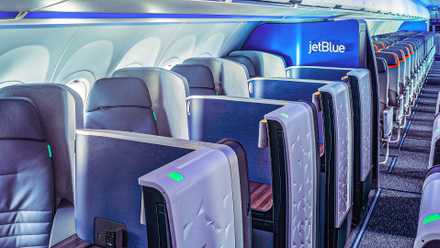
How 24 JetBlue Mint Seats Bankroll An Entire Transatlantic Airbus A321LR Flight
The aircraft has become a tool the airline desperately needs during a period of financial struggle.
Why A Lounge Fits the Market— And The Numbers Behind It

Airport lounges have become a critical competitive lever across the US aviation market, particularly as carriers expand premium credit card partnerships. Industry estimates show that airport lounge access can significantly increase customer retention among frequent flyers, especially those who value expedited services, quiet workspaces, and consistent travel comfort.
Fort Lauderdale’s passenger volume also supports the business case. With more than 30 million total annual travelers and strong projected long-term growth towards 45 million by the mid-2030s, the airport offers a large and expanding base of potential lounge users. Even modest penetration rates among JetBlue’s customer base could generate meaningful utilization levels for a single facility.
At the same time, competitive pressure is intensifying. Major US airlines continue expanding premium ground experiences across Florida, especially in Miami and Orlando, where lounge networks are already well established. For JetBlue, establishing a presence in Fort Lauderdale would not only improve customer experience but also help close the gap with competitors that already benefit from extensive lounge infrastructure in similar markets. If the airline proceeds, Fort Lauderdale would likely join New York and Boston as a core pillar of JetBlue’s premium footprint, reinforcing a transition from a primarily low-cost carrier into a hybrid airline model with a stronger emphasis on high-yield travelers.