dailynewsnblog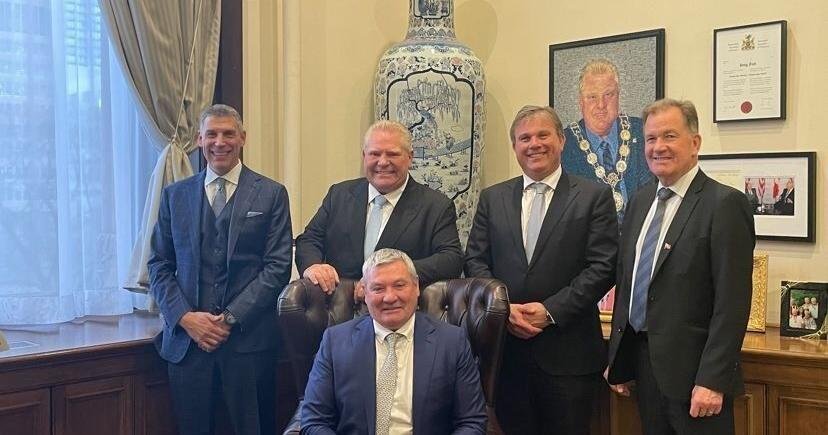
Kevin Rombout had been working hard to advance a gold mine in northwestern Ontario.
By September 2024, the deputy director of policy for the provincial Ministry of Mines had briefed staff in Premier Doug Ford’s office, exchanged emails with Kinross, the publicly-traded company pushing for the mine, and directed bureaucrats at multiple ministries on how to advance the project.
“The (Premier’s Office) is going to want a sense of timing for executing the remaining steps,” Rombout wrote to colleagues at the Ministry of Mines.
Momentum toward approval seemed to be building. The next phase of the Great Bear Project just needed a few more permits.
A few months later, Rombout left the public service. But his move to the private sector might have only widened government access for the mining company. Rombout went to work as a lobbyist for Kinross.
The move appears to have violated an ethics law guiding public servants, said Duff Conacher of the government accountability group Democracy Watch — an allegation that the Ontario government and Kinross deny.
Downstream from the proposed mine, in Grassy Narrows First Nation, leaders are concerned about how the senior public servant who had a central role in the push to advance the gold mine could be allowed to so quickly take his insider knowledge to Bay Street.
“How can a small, poisoned First Nation like Grassy Narrows protect ourselves when one of the minister’s top guys on the file goes to work for the huge gold company that wants to put mining waste into our river?” Joseph Fobister, the director of the Grassy Narrows Land Protection Team, said in a statement.
More than 4,000 pages of internal government correspondence, obtained by the Star via freedom-of-information legislation, offer a window into Rombout’s behind-the-scenes work on the Kinross project during his final six months as a public servant.
The Ministry of Energy and Mines released the emails to the Star earlier this year, before the Ford government changed freedom of information laws. Under the new rules, similar records from ministers’ offices and Ford’s office will be kept hidden from the public.
The records show that while Kinross has enjoyed close and constant access to the Ford government, Grassy Narrows has been sidelined, even as research shows wastewater from the proposed mine site would likely include sulphate, which can exacerbate the effects of industrial mercury that already pollutes the river feeding the community.
Residents of the Grassy Narrows First Nation have been exposed to dangerously high levels of mercury, the result of industrial pollution upriver from the community that contaminated the fish and poisoned the people who ate them.
Grassy Narrows leaders say they can’t get a seat at the table with Ontario’s decision-makers to discuss their concerns, never mind one at Ford’s desk, where Kinross’ CEO was photographed in 2024 during a company visit to Queen’s Park.
“This whole process seems rigged against us,” Fobister said.
Kinross spokesperson Samantha Sheffield disputed the idea that the process has been unfair. “Such assertions are inconsistent with Kinross’ experience of a detailed, evidence-based review overseen by independent regulators.”
Integrity commissioner consulted on move to lobbyist, firm says
Ex-government staff must wait a year before accepting a job with an entity they had substantial dealings with as a public servant, if they had access to insider information that could give that entity an unfair advantage. They also can’t disclose confidential information they learned through their work for the province.
Both Kinross and the Ontario government said Rombout consulted the province’s integrity watchdog before changing jobs and followed all ethics rules. His departure was carried out according to protocols set by the integrity commissioner’s office, and the Great Bear project has undergone “rigorous review” from ministry officials, said Noah Mawji, a spokesperson for Minister of Mines Stephen Lecce.
Kinross sent the Star what it said was an excerpt of the commissioner’s guidance, which said the commissioner determined Rombout did not appear to hold any confidential information that could give Kinross an unfair advantage.
The integrity commissioner’s office said it cannot confirm or deny whether it gave advice to Rombout. Neither Kinross nor the Ontario government would share a full copy of the commissioner’s guidance with the Star.
If the commissioner signed off on the move, that decision “completely ignored” the purpose of the ethics law, which “clearly prohibits cabinet minister advisers from going through the revolving door to work directly for a big business that is seeking favours from the government,” Conacher said.

Kevin Rombout
LinkedIn
Rombout is now listed as an in-house lobbyist for Kinross in Ontario’s lobbying registry, which says one of the company’s goals is to “raise awareness and develop a mutually positive environment in support of developing the Great Bear Project.” His Linkedin profile says he is a “senior analyst external affiars” for Kinross.
The whole point of hiring a former government staffer is to get their advice on how best to influence decision-makers, Conacher said.
“You can’t say, ‘Oh, I’m just giving you advice based on everything except the confidential information that I know is in my head, and I know it, but I’m just forgetting it for this particular conversation that I’m having with you,’ ” Conacher said.
“You can’t not use it. You know it.”
Last year, after Rombout left the government, the Ford government shuffled its cabinet, moving former minister of mines George Pirie — who Rombout reported to — to a new position and merging the department with the Ministry of Energy. Staff at the new Ministry of Energy and Mines have had “no direct engagement with Mr. Rombout on any mining projects related to Kinross,” said Mawji, the spokesperson for Minister Lecce.

Kinross Gold says it adheres to the highest environmental standards. But there is growing concern about its history of alleged pollution.
Kinross Gold says it adheres to the highest environmental standards. But there is growing concern about its history of alleged pollution.
The ethics law also bars former staff from changing sides on a negotiation between the government and an outside entity. They can’t advise the outside entity about the issue until the government stops being involved with it.
Neither the Ontario government nor Kinross, which said it was answering on Rombout’s behalf, would say if he has lobbied any other ministries on behalf of Kinross.
Sheffield said the company holds itself to the “highest ethical standards” and does not receive preferential treatment from the Ford government.
‘No more consultation with Grassy’
Grassy Narrows has long questioned whether the Ford government takes its wastewater concerns seriously — worries that Fobister says are validated by the records obtained by the Star.
In a July 2024 email to senior bureaucrats, Rombout, then working for the Ministry of Mines, dismissed the First Nation’s wastewater concerns.
“Kinross has confirmed that any discharge water from the project will contain sulfate levels at or below background levels … meaning concerns about increased methylation are unfounded,” he wrote. (Methylation refers to the chemical process that turns mercury into an even more toxic form, called methylmercury.)
In an email sent the same month, to Rombout and other provincial staffers about a permit to draw water from wells and a nearby creek, a Kinross executive said, “Our primary concern, as discussed, is no more consultation with Grassy.”
A staffer from the Ministry of the Environment wrote back: “Will have an update for you shortly … Thanks for reaching out and please let me know if you need anything else in the meantime.”
The records reference at least 20 calls and meetings between government officials and Kinross about the Great Bear project from 2022 to 2024, compared to five with Grassy Narrows over the same time period.
One of those Kinross meetings included the photo op for CEO Paul Rollinson sitting at the premier’s desk, with Ford smiling behind him. Ford also met with other Kinross executives and then-minister of mines George Pirie.
“Premier Ford has offered to our CEO Paul Rollinson to assist when needed on this project, and we believe now is the time,” said a Kinross official in an August 2024 email.
A premier’s office staffer then forwarded the request to Rombout and one of his colleagues, the records show, but do not detail whether Ford or his staff responded.
Ford’s office did not answer questions about its involvement in the project, or whether it’s typical for the premier’s staff to be involved in permitting mines.
The same month, Rombout emailed a government colleague to say that Kinross was sending “frequent follow-ups” about one stage of the mine approval process and “expecting progress” on the file. “We are hopeful we can get this across the line for them.”
Fobister said it seems like Ontario is “trying to grease the wheels for Kinross” instead of trying to protect Grassy Narrows. “Ontario doesn’t take our concerns seriously at all, but when a gold company asks them to jump they say ‘how high?’”
Sheffield, the Kinross spokesperson, said Grassy Narrows’ claims that their concerns aren’t being taken seriously are “demonstrably false.” She also said Ontario’s permitting process for the mine exploration phase has been “comprehensive and rigorous.”
Ontario approves permits despite opposition
Last year, a provincial tribunal rebuked Ontario’s Environment Ministry for its decision to approve a permit that would allow Kinross to draw water for its advanced exploration about 100 km upstream from Grassy Narrows.
The tribunal heard evidence that wastewater from the work would likely contain sulphate, a chemical compound that can worsen the effects of mercury contamination already tainting the water.
The dumping of mercury upstream of Grassy Narrows in the 1960s is known as one of Canada’s worst industrial pollution disasters. It contaminated the fish and poisoned the people who ate them, and members of the community, also known as Asubpeeschoseewagong Netum Anishinabek, have long reported tremors, slurred speech, impaired hearing, tunnel vision and lost muscle co-ordination.
In granting Grassy Narrows permission to appeal the permit, the tribunal concluded there was “good reason to believe that no reasonable person” could have signed off on the permit, finding it posed the “threat of serious environmental impacts” and was based on “incomplete” studies. Kinross has said it strongly disagrees with the tribunal’s decision and that data demonstrated the project can be operated responsibly.
Kinross withdrew the permit application after the decision, but later applied again. This spring, the provincial government granted the company that permit and another, allowing it to move forward with exploratory work.
Kinross says its new permits come with strict conditions, including water quality monitoring, and that Grassy Narrows was “deeply involved in the permitting process.”
“Kinross agreed to these conditions … in response to concerns raised by Grassy Narrows through the consultation process, despite the absence of scientific evidence supporting their asserted risks,” said Sheffield, the Kinross spokesperson.
The company — which in recent years has faced allegations that it violated water pollution limits in Washington State and dumped waste without a permit in Alaska, allegations the firm denies — says it adheres to the highest environmental standards.
“Environmental protection and meaningful consultation with Indigenous communities are core principles of how Kinross does business and central to the Great Bear project,” Sheffield said.
Earlier this year, the Ontario government also fast-tracked the project under a new designation called “One Project, One Process,” or 1P1P.
Rombout was not involved in lobbying his former colleagues at the Ministry of Mines for the designation, which the government created more than a year after he left government, the mining minister’s spokesperson Mawji said.
The government says the mine is expected to create over 1,000 jobs and involves more than $5 billion in capital investment.
With files from Sheila Wang