dailynewsnblog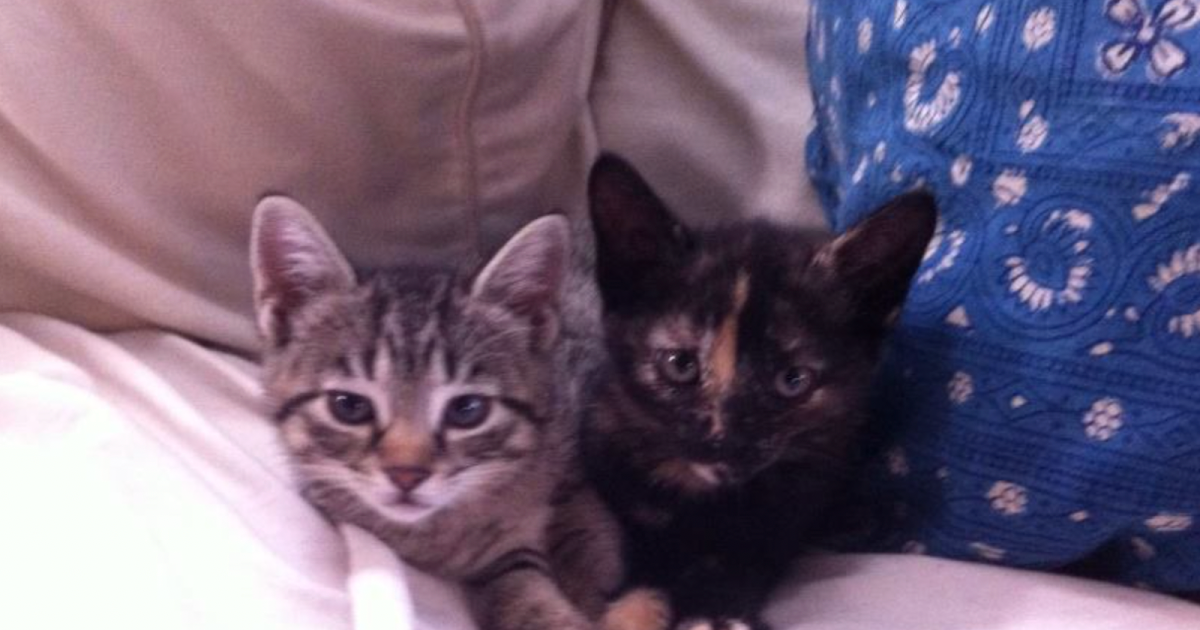
Finding peace with end of life decisions.

My cat died of pancreatic adenocarcinoma a few weeks ago. In March she had an annual check up and was deemed to be in good health for 13, although a bit overweight. We noticed that she was walking a little funny sometimes, so the vet suggested we think about arthritis medication. Then one day in May, just before our appointment to start meds for her suspected arthritis, she went into hiding. A more in-depth vet appointment discovered that her changed gait wasn’t from her joints, but from a huge abdominal mass. It took some tests to find out what it was, then came the dreaded decision-making about what to do about it. Apparently cats can live for months with the condition but often with a very dismal quality of life.
BURYING DIFFICULT PERSONALITIES
She was an ornery cat despite living a life of safety and comfort. I have a certain respect for the fact that she’d snap if you pet her one too many times or in a way that she didn’t want today. She was my work companion, often snuggled in beside me during online school sessions or marking marathons, but there was more than one time during a meeting that she suddenly attacked my arm if I gestured too widely, and I had to feign nonchalance as I shook her off me just outside of camera range. And she was always a bit dirty. As soft as she appeared, her fur acted like velcro, tracking litter throughout the house. Despite regular brushing, wherever she curled up, she left behind the expected layer of hair, but also bits of gravel and maybe some sticks and leaves. Of course she loved to sleep in my bed under the covers. (And who could say no to a tiny mew beckoning to be let in?) I feel asleep to her purrs, but I’d often be rudely awakened by a few sharp bats to the head if I moved around too much. She either couldn’t learn or didn’t care that disciplining me would cost her bed-privileges for the rest of the night.
I had her undeserved adoration from the day we took her and her sister home. For a good year after we started letting her out, if I’d go for a bike ride, I could turn to see her running down the street after me (a very safe, quiet street). While I admired her feistiness, I often loved her in spite of her personality. And I wonder how much I held her in a special place of honour because she chose me, and if that “counts” as love.
It’s complicated burying loved ones with whom we have a complex relationship.
On top of the grief, I have some guilt. I haven’t just accepted her death; I was kind of looking forward to it. It sounds horrible and uncaring, but there it is. Maybe it’s from my Jungian dominant function being task-oriented (aka thinking-type) so I might see what needs to be done more than the people or animals in front of me. It’s a sense of “What’s next on the list?” like gleefully anticipating reading a good book at home once we can make an exit from a party. A future-focus can keep us engaged and productive, but can also keep from actually existing in the present. That’s certainly one way to look at it, but I don’t think that’s the whole story.

DRIVE TO COMPLETION
I might make peace with loss a little too well. Maybe it’s about a focus on the task at hand, but maybe it’s a drive towards completion. In Beyond the Pleasure Principle (part VI), Freud discusses the death drive as an instinct towards equilibrium or homeostasis. We want to finish things. He says,
“Our recognition that the ruling tendency of psychic life … is the struggle for reduction, keeping at a constant level, or removal of the inner stimulus tension — a struggle which comes to expression in the pleasure-principle — is indeed one of our strongest motives for believing in the existence of death-instincts.”
We want to end the tension of being in the middle of something. It’s sometimes an actively destructive drive, but it can also be executed by not acting, and merely allowing things to end. We sometimes fight against the urge toward completion because it might mean missing out on other pleasures. I’m not sold on the logic of his theory, but I do relate to the discomfort of being in the middle of a decision or event. The anxiety of sitting on a precipice can provoke us to cut things short to relieve the strain of that uncertain space.
I feel horrible that, as my cat lay dying, I was thinking about how great it would be to finally completely clean all the cat hair and litter from my bedroom for the last time.
On a much larger scale, every transition has people or things to grieve as well as to celebrate. Every ending is a beginning. The celebration at a funeral is typically thought to be a celebration of the person’s life and legacy. But in many cases, at least a few people are celebrating that this person is gone, a celebration of what we no longer have to endure. But we typically don’t like to talk about the complex relationships we’ve formed, especially once they’re gone.
If a person is ornery and messy and sharp with us, we’d be forgiven for acknowledging a part of us that’s relieved at their passing. With a pet it doesn’t feel permissible. If we think they lack agency, that they couldn’t help who they are, then are we more villainous for having some relief that they’re gone? I recognize that our interactions with pets have an effect on their behaviour, so we blame the owner not the animal when things go awry, but it feels dismissive and reductionist to imply that animals bring nothing to the table. They have personalities that aren’t trained away by our kindness. My little fireball had a sister raised in the same conditions, and she was far more snuggly and accommodating. But do they have less agency, as if they’re like children? With a child, any sense of joy from a loss is seen as an abomination, but I wonder if it’s possible, even healthier, to acknowledge what we won’t miss of the lives that have passed. There’s no time limit for when the melancholy of losing someone is replaced by the anticipation and acceptance of the absence.
UNNECESSARY SUFFERING
“By imposing too great a responsibility, or rather, all responsibility, on yourself, you crush yourself.” ~ Kafka
Worse than the guilt of that quick acceptance is the regret that I didn’t end it sooner to reduce her suffering. In hindsight, it feels like I wavered for too long, letting her lie on the basement floor on painkillers for weeks before getting a vet to end the pain. If we brought her upstairs, she’d just make her way back down there where it’s dark and cold. On her last night, I slept down there with her and tried to keep a blanket on her. She was still purring, which made me think she was getting some pleasure from my company. I learned too late that cats purr to self-sooth when they’re in pain.
Ouch.
It’s ironic that the very action that caused regret, postponing the inevitable, was from trying to avoid regret. I was paralyzed from fear of making the wrong decision. I knew she wouldn’t get better, but maybe she’d have a peaceful natural death. Maybe she’d want to sleep in the sun one more time. The crux of the pain is in knowing that my choice could have made a difference. I had the agency to act sooner, and decided to wait, just in case, despite knowing the prognosis.
When she was first diagnosed, I was actually prepared to put her down that day, on my vet’s advice, but my daughter wanted a second opinion. By the time that came through a few days later, my impetus for action had dissipated. It’s curious how often I make decisions a little too quickly, almost on impulse, so I can bypass the distress of decision-making. Once the ability to act in the moment passes, then the possibilities settle in like a rock. It takes a lot of will to get that process back in motion.
The paralysis is a resistance to the uncertainty of it all, as if we can wait it out and eventually we’ll know definitely how the trajectory of each possible option will turn out. But it’s rarely feasible to know all the things we’d like to know before we act. Making decisions is always an act of faith. Every decision closes the door on every other possibility, and it can feel like those paths had an imagined life and death to be grieved as well.
I kept wishing she could talk and tell me what she wanted. Being in charge of making this decision brought an uncomfortable feeling of helplessness and reluctant responsibility: I’m in charge, and I don’t know what I’m doing. Online forums have every possible opinion out there along with the requisite shock and awe that anyone might think otherwise, so they might help for brainstorming, but not for deciding, and definitely not for finding any peace with a decision.

FROM RESIGNATION TO ACCEPTANCE
“An uninstructed person will lay the fault of his own bad condition upon others. Someone just starting instruction will lay the fault on himself. Some who is perfectly instructed will place blame neither on others nor on himself.” ~ Epictetus, Enchiridion, 5
Resigning ourselves to a decision often has a bit of grief or annoyance or even anger that tags along. Resignation says, “It happened, and I wish it were different. I should have acted differently, but there’s nothing to be done now.” There’s a bitterness to resignation that sits in the chest and hangs on to what might have been. The other paths haven’t quite left us even though we have to close the door on them. It leaves us with a trace of longing.
Jungian analyst, Joseph Lee has remarked that if we remember things in a way that re-enflames the nervous system, then we’ll continue to be troubled by our memory: “There is a psychic cost to remembering in the wrong way.” Acceptance has a different feel to it, but it seems less intuitive to get there. How do we remember in the right way?
One perspective suggests remembering that this was the most viable choice at the moment. Even if things could have gone better, and we have regrets in hindsight, we’re judging past actions as if from a version of ourselves with more information that we actually had. At the time, I wasn’t certain things were going to get worse instead of plateauing at a tolerable place for a while. It’s only looking backwards that I inevitably use that new information to judge a prior decision and find it wanting.
Despite being the final authority over the decision, it can also help to reduce a feeling of total responsibility by recognizing all the many factors that influenced the decision. If all those factors played a part in creating the effect, then it’s no longer just my decision alone. That takes some of the weight off in a welcomed way as it makes me merely part of a chain of events, but it also feels like it waters down responsibility in a way that could be used to skirt responsibility (e.g. it was my upbringing’s fault for that murder spree).
It’s not just about finding ways to believe that the decision was reasonable, but also tolerating the pain that goes along with having prolonged unnecessary suffering. Rationalizing our behaviours can keep us in resignation. Marsha Linehan explains, “The path out of hell is through misery. By refusing to accept the misery that is part of climbing out of hell, you fall back into hell.” Acceptance isn’t just accepting what we did, but also accepting the reality that it caused harm, and that feels terrible. But only a complete acceptance of reality enables bitterness to dissipate. We can learn from our decisions, but that only helps to an extent because next time could be a completely different set of circumstances. Things rarely happen the same way twice.
A bigger lesson is to reconcile with the unknowable and the fear of regret, since it can come back to bite us no matter what we do!
I heard somewhere that to let go of anger is to be generous with kindness, so maybe letting go of grief is being generous with love and letting go of regret is being generous with forgiveness. Something like that.
I wake up without a stuffy nose these days, which is a welcome change, but I fall asleep without the rhythm of her purrs. Despite her surly response to me and the very narrow range of behaviours she would permit around her, she was a lovely little cat and good company, and I looked forward to our greetings at least as much as our farewells.