dailynewsnblog
While the first example of the new Northrop Grumman B-21 Raider has already taken flight, marking history as the world’s first sixth-generation stealth bomber, the US Air Force is pushing to begin replacing legacy airframes en masse as soon as possible. The USAF is completely retiring the Rockwell B-1 Lancer fleet of 45 jets to make way for the new B-21 flying wings and wants to phase out the 19 B-2 Spirits soon after them. The initial order for the Raiders is slated for 100 planes, but there is already talk that the Air Force could increase that number to 200.
In a marked departure from most other defense programs in recent history, the B-21 is on time and on budget. Even so, as the threat of near-peer adversaries developing superior aircraft and air defenses grows, the US Military is significantly increasing investment in advanced warplanes. The ambitious plan to recapitalize the bomber fleet will also see the Boeing B-52 Stratofortress receive major upgrades as a support platform for the B-21, but the Raider will become the new workhorse of the Air Force Global Strike Command.
The US Strategic Command has already made a formal push to raise the target to 145 aircraft. In 2025, the Department of the Air Force and Northrop Grumman signed an agreement to increase annual production capacity by 25% to accelerate production. Building the aircraft at a faster, continuous tempo stabilizes manufacturing processes and prevents the severe cost overruns that famously ruined the B-2 Spirit procurement program.
Delivering The Ultimate Air Power Through Industrial Might

The industrial revolution behind the Raider has made the B-21 vastly superior to any previous bomber in history, guaranteeing unprecedented combat availability and modularity. The Pentagon is racing against time to outpace rapidly emerging global threats. The baseline target of 100 aircraft is just the starting point to meet basic strategic requirements. By scaling up production at Plant 42 in Palmdale, California, Northrop Grumman can lower the unit cost per aircraft. Top military leaders have already signaled that a much larger fleet will be required to effectively counter China’s dense anti-access and area-denial missile networks in the Pacific.
Looking back to the B-21’s predecessor, because Congress aggressively slashed the original B-2 order from 132 planes down to just 21, the industrial supply chain completely collapsed. Designed in the 1980s before the exponential progress of modern computing, every single B-2 was essentially a custom-built aircraft. Workers had to apply its highly sensitive, liquid radar-absorbing tape and chemical coatings by hand, a meticulous and error-prone process that required days of curing time.
Past bombers like the B-2, and even the supersonic B-1B, were restricted by their heavy maintenance requirements and rigid hardware configurations, frequently trapping them in maintenance hangars for hundreds of hours. Heavy work or upgrades on an older aircraft like the B-2 or B-1B meant physically tearing into the airframe, ripping out miles of wiring. Modular Open Systems Architecture has radically improved the process with the B-21 with plug-and-play modules that technicians on the flightline can simply swap out, and the central mission computer automatically activates it.
The B-21 Raider breaks this cycle entirely because it was conceived as a digital-first manufacturing program. Thanks to a $5 billion investment in digital engineering and production infrastructure by NG, engineers used advanced 3D digital modeling to simulate the entire assembly line process, ensuring that every bolt and wire would fit perfectly and identically across every aircraft. Instead of hand-spraying fragile coatings, the B-21 utilizes advanced composite stealth materials that are robotically woven and chemically baked directly into the aircraft’s structural skin.
Why The Pentagon Is Worried About International Stealth Fighter Development
The new 5th-generation arms race.
ACE: Investing In Agility And Ruggedness

The 34th and 37th Bomb Squadrons will activate as the first fully operational B-21 combat units at Ellsworth Air Force Base. The current goal is to have the first operational B-21s fielded by 2027, followed by squadrons at Whiteman and Dyess AFBs. The systematic rollout is designed to smoothly phase out legacy B-1B and B-2 bombers without creating a dangerous gap in American airpower. The Raider will be the centerpiece of the Air Force’s strategic strike under the new service-wide doctrine shift toward a force that fully embraces Agile Combat Employment.
The B-21 features a ruggedized stealth coating baked directly into its composite frame, allowing it to withstand severe weather and launch multiple combat missions a day. The technology in the Raider is tailor-made for ACE and fixes the severe maintenance bottlenecks that crippled the B-2 program. The Air Force can deploy it with much smaller, lean maintenance teams who focus on digital diagnostics and modular software fixes rather than heavy sheet-metal work. Pumping roughly $4.5 billion into a 25% production increase allows NG to transition smoothly from low-rate initial production into high-capacity output in support of the evolving bomber fleet.
Catch what other flight trackers miss
Emergency squawks, holds, NOTAMs — live signals, no signup.
Open tracker
Catch what other flight trackers miss
Emergency squawks, holds, NOTAMs — live signals, no signup.
Open tracker
This also secures a network of hundreds of suppliers across dozens of states and solidifies the industrial base behind the B-21. That supply chain investment means the Raider won’t face the same vanishing-vendor syndrome that made repairs and upgrades on B-2s prohibitive. This network, plus a ‘digital twin’ database of every single Raider, allows logistics command at Tinker AFB to use predictive maintenance, shipping replacement parts to forward airfields not only before the parts on the plane break, but before the B-21 has even touched down after a long mission.
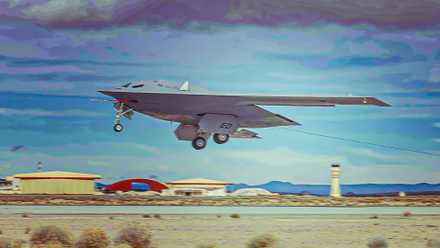
B-21 Vs. B-2: Which Stealth Bomber Is More Powerful?
Comparing the world’s best strike jets.
No More Hangar Queens: Streamlining The Flightline

The B-2 Spirit is a masterpiece of Cold War engineering, but it is also a maintenance diva. The B-2 is essentially locked to Whiteman Air Force Base in Missouri or a tiny handful of overseas hubs equipped with multi-million-dollar, climate-controlled B-2 shelter systems. If a B-2 flies a mission, it routinely requires over 50 hours of intensive ground maintenance for every single hour it spends in the air. Only a fraction of the B-2 fleet is ever ready to fly at any given moment, making American stealth bomber deployments rigid and highly predictable to adversaries.
Instead of keeping bombers parked at a single base where satellite tracking makes them predictable, the new squadrons will operate under the Bomber Task Force model. The Raider does not peel, melt, or degrade in austere environments, allowing the Raider to sit outside on a flightline in freezing rain or tropical heat without losing its low-observable signature. Instead of relying on permanent, air-conditioned mega-hangars, the B-21 can deploy to primitive, remote island airstrips across the Pacific using simple tents.
The current fleet lacks mass and flexibility; you cannot risk sending non-stealth B-1Bs or B-52s into heavily defended airspace, leaving the tiny pool of B-2s to do all the heavy lifting. ACE keeps a rotating, unpredictable number of stealth bombers moving through strategic hubs like Guam or Australia, keeping adversaries guessing. A fleet of B-21s paired with heavily modernized B-52Js creates a lethal, high-volume punch that vastly exceeds current AFGSC capabilities.
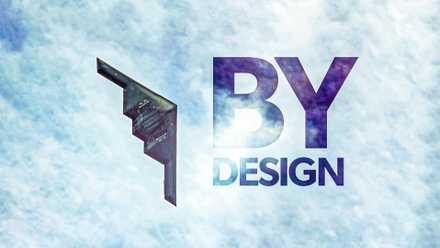
Why The B-2 Spirit’s Flying Wing Design Makes The Aircraft So Overpowered
The true power of the B-2’s engineering.
China’s Rising Threat To The First Island Chain

The B-21 Raider is the only weapon in the American inventory capable of stealthily penetrating dense missile defense bubbles on day one of a conflict with a near-peer adversary like China. Because China has spent the last decade ringing its coastline with thousands of advanced anti-ship and anti-aircraft missiles, many US aircraft and naval ships cannot safely get close enough to stop a fast-moving amphibious assault. Simultaneously, the Air Force’s current long-range strike capability is effectively on life support, creating an operational emergency.
The Air Force has just 19 B-2 Spirits, and due to intensive maintenance demands, only a handful of those are ready to fly on any given day. The B-1B Lancers from the 1980s are suffering from severe structural fatigue after decades of heavy use in the Middle East. Meanwhile, the 1950s-era B-52s are invaluable ‘arsenal ships’ in a permissive environment but simply cannot survive in contested airspace.
Specification | B-52H Stratofortress | B-1B Lancer | B-2 Spirit | B-21 Raider |
Quantity | 76 | 45 | 19 | 2 (Testing) |
Length | 159 feet (48.5 meters) | 146 feet (44.5 meters) | 69 feet (21 meters) | 69 feet (21 meters) 55 feet (16.8 meters) |
Wingspan | 185 feet (56.4 meters) | 137 feet (41.8 meters) | 172 feet (52.4 meters) | 140 feet (42.7 meters) |
Max Payload | 70,000 lb (31,750 kg) | 75,000 lb (34,019 kg) | 40,000 lb (18,144 kg) | 30,000 lb (13,608 kg) |
Max Speed | 650 miles per hour (1,046 kmh) | 900 miles per hour (1,448 kmh) | 630 miles per hour (1,014 kmh) | 600 miles per hour (966 kmh) |
Service Ceiling | 50,000 feet (15,240 m) | 30,000 feet (9,144 m) | 50,000 feet (15,240 m) | 50,000 feet (15,240 m) |
Range | 8,800 miles (14,162 km) | 7,455 miles (11,998 km) | 6,000 miles (9,656 km) | 6,000 miles (9,656 km) |
Getting the first batches of Raiders delivered rapidly allows the newly formed squadrons at Ellsworth Air Force Base to achieve initial operational capability before a capability gap overlaps with a crisis. More planes sooner means that aircrews can validate their tactics and iron out real-world technical bugs before a geopolitical threat reaches its peak point of risk.