dailynewsnblog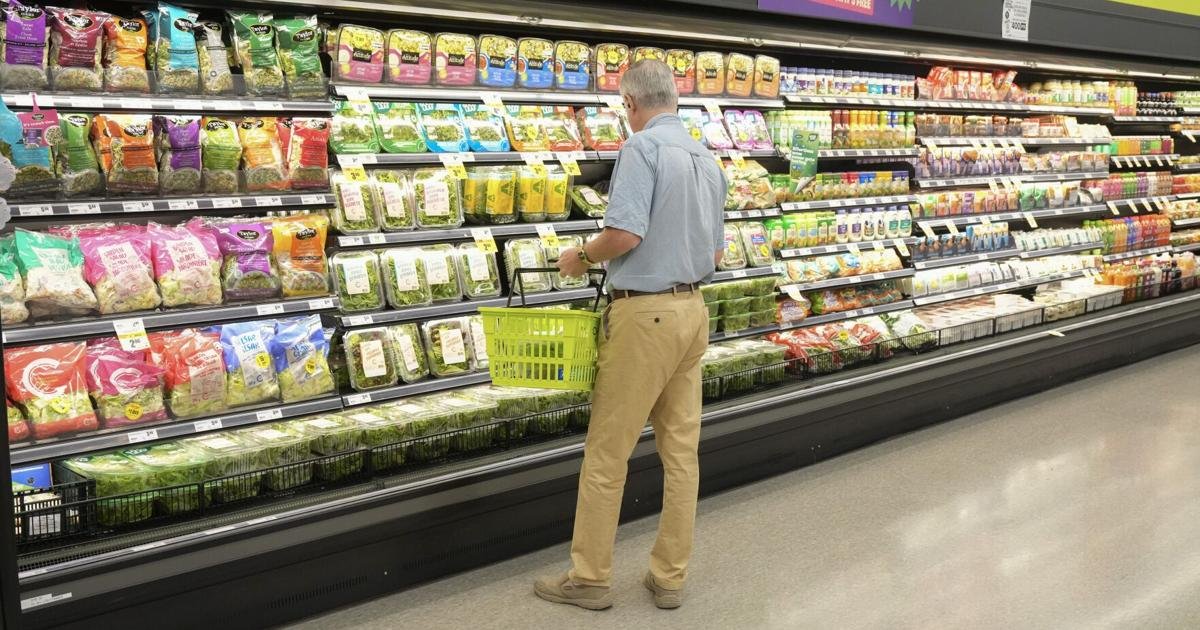

This is Bridging the Divide, a column bringing together Canadians from different backgrounds and experiences to tackle pressing issues facing our country. We hope these unconventional pairings will inspire new ideas to make Canada a better place for everyone.
Nothing drives home the reality of economic pressure more surely than rising grocery bills. And that is putting government-owned grocery stores on the political agenda.
The federal NDP is pitching non-profit stores as a way to lower food prices and challenge the dominance of Canada’s largest grocery chains. Cities including Toronto and New York are studying the idea. The United States military has operated a government-run grocery network for decades.
The experts in this debate agree food insecurity demands urgent attention. Where they disagree is whether public stores are the right response.
Aaron Vansintjan, a policy manager at Canada, recently co-authored an essay for the Canadian Centre for Policy Alternatives arguing that public grocery stores could reduce prices significantly for consumers. Michael von Massow, a food economist at the University of Guelph, counters that the stores would become costly subsidies that fail to address the root problem: too many people simply cannot afford to buy food.
Michael von Massow: Food prices have gone up considerably since the pandemic due to climate change and geopolitical instability, including the wars in Ukraine and Iran. Budgets are stretched and, without a doubt, there is an issue with food security right now.
Food insecurity comes from insufficient income, not from availability. There are very few places in Canada that don’t have access to food.
Aaron Vansintjan: Food security is not just an issue of income. At Food Secure, we are looking at ways to address food insecurity, including income support but also improving Canada’s food infrastructure and competition.
Canada suffers from a missing middle in food processing. We export raw foods and then import processed foods. We lack local processing and distribution networks, like small abattoirs or cold storage. Addressing corporate concentration is also important. (Canada’s five largest grocers — Loblaw, Sobeys, Metro, Walmart and Costco — now account for roughly 80 per cent of retail grocery sales.)
Public grocery stores help address all these issues. They add competition. They can help build infrastructure by creating demand for it. And they address income shortfalls through lower prices.
von Massow: But we need to ask whether it is actually viable to create competition for Canada’s large grocery chains and whether that would lower food prices.
Vansintjan: You are saying it’s not possible to create more competition?
von Massow: You have to consider that Loblaw has 2,500 stores and Sobeys has more than 1,600. Building infrastructure that can compete with them is going to be difficult.
If you look at Sobeys, its gross margins — the difference between what it pays for food and what it sells that food for — are about 25 per cent. Yes, the government could choose to subsidize that amount. But that addresses the problem in the wrong way.
People like me are not choosing between paying a heating bill and buying food this month. So how would you create these stores equitably across the country? I understand the argument for low-income communities. But would you also build them in Owen Sound, Regina and the Greater Toronto Area? And unless you build at scale, I don’t think you would achieve those savings.
Vansintjan: I have a question, Mike. How many Costcos are there in Canada?
von Massow: I don’t know the number off the top …
Vansintjan: It’s 100, and Costco brings prices down by about 20 per cent.
We modelled a pilot program of 50 stores and examined both the costs and the potential benefits for consumers. The cost was about the lifetime cost of a single F-35 fighter jet. Canada has already committed to buying the first 16 of them.
von Massow: Where are you going to put those stores?
Vansintjan: That’s for the government to figure out, and for researchers to explore further. We found that for every dollar the government invests, consumers could save about two dollars, making this a highly efficient program.
von Massow: I’d like to understand how you arrive at that. If you are building stores and subsidizing selling, administrative and distribution costs, how does that translate into double the benefit?
Vansintjan: The more you subsidize, the more consumers benefit. If you subsidize labour, rent and utilities and buy in bulk, that allows consumers to pay lower prices.
von Massow: I’m not disputing that subsidies would lower grocery prices. What I am disputing is how that creates a two-dollar benefit for consumers for every dollar the government spends.
I’m not convinced that you can run grocery stores more efficiently than the existing chains.
Vansintjan: This is preliminary modelling developed with help from American researchers who also worked for New York City Mayor Zohran Mamdani.
von Massow: I don’t agree that this is the best way to reduce food insecurity.
Vansintjan: But would you agree that we should look more into it? Would you agree with that?
von Massow: I find it hard. You’re saying that with 50 stores you’re going to be able to buy better than Loblaw does with 2,500 stores.
Vansintjan: Costco has 100 stores, and they buy better.
von Massow: I disagree that Costco is lowering prices by 20 per cent.
Vansintjan: It’s hard to measure, but there’s a reason why I go to Costco. Prices are lower.
von Massow: But here’s the rub. There are about 100 Costco stores in Canada, and the company is continuing to expand. The big players are still building. And Costco is not just buying in Canada. It has purchasing relationships with suppliers across the continent.
Vansintjan: The United States military commissary is a public grocery system that delivers savings of about 20 per cent through more than 200 stores. People love it. It is ranked the eighth most-loved supermarket chain in America. Distributors and producers also like working with the commissary because they get good deals. Employees are paid well. Many veterans choose to live near commissaries so they can keep shopping there in retirement.
von Massow: My first comment is that if military wages were high enough, people would not need subsidized grocery stores. You would be better off simply paying people more. And second, while the commissary discounts are about 23 per cent, the subsidy itself is between 25 and 30 per cent.
Vansintjan: That’s fantastic. That’s an efficient subsidy.
von Massow: No, it isn’t. You are only reducing prices by 23 per cent while spending between 25 and 30 per cent in subsidies. It is not even a one-to-one return. Military members would be better off if you simply gave them the money to spend at regular grocery stores.
Vansintjan: I think the commissary system’s results are great. And in Canada, we do not have eight major supermarket chains. We have five. So, adding another player to the mix could have a significant impact.
Consider libraries. We do not complain that the government spends more money on libraries than it gets back. We accept that libraries are a public service funded through tax dollars. We should think about food in a similar way. Food is a universal human right.
von Massow: We are not arguing about the objective. We are arguing about the best way to achieve it. You said the commissary system is efficient, but it is not even close to a one-to-one return.
If you build public grocery stores, you are not creating more demand. Canadians are not suddenly going to consume more food. And they will not necessarily lead to the construction of more processing facilities because one of the reasons we lack those facilities now is that we do not have the scale needed to compete efficiently.
Another problem with public grocery stores is that they provide access to everyone and dilute the value of the support to people who need it most.
If I go to a public grocery store, I will spend less. Then I might save a little more for a vacation. But subsidizing me is not the best use of our dollars.
Vansintjan: It’s not just the people who need it most who are struggling with food prices. It’s everybody. Even if you work at the federal minimum wage, you’re forced to use a food bank.
von Massow: It’s those people we need to give the money to.
Vansintjan: No, no, it’s everybody. We need a solution that’s universal. People don’t want to line up at a food bank. It makes them feel bad.
von Massow: Then give them money. That won’t make them feel bad.
Vansintjan: It’s not either-or.
von Massow: I would like to point out that Statistics Canada has shown that average wage increases have exceeded the rate of inflation. So, while people perceive that they’re worse off, most people aren’t. At the lower end of the income scale, the gap is growing wider. That is where we need to focus.
Vansintjan: We are trying to learn about public grocery stores, and you’re starting with: This will never work.
Vansintjan: When it already works.
von Massow: It doesn’t work. Those examples you’re giving are not working well.
Vansintjan: Then why has the commissary system run for over 100 years?
von Massow: Why? Because nobody’s doing the calculation that says it’s costing more than the value we’re getting out of it.
Vansintjan: Do you think we’re over-subsidizing libraries?
von Massow: I think the comparison to libraries is a specious argument.
Vansintjan: You don’t think people have a right to food?
von Massow: I do think people have a right to food. But I think the best way to guarantee that right is to give money to people who need it.
Vansintjan: Public grocery stores may not be a silver bullet. But I have not heard solutions from you about how to address corporate concentration or the lack of food infrastructure in Canada’s food sector. We need to ensure people have enough income, but we also need solutions that address those broader structural problems.
Opinion articles are based on the author’s interpretations and judgments of facts, data and events. More details