dailynewsnblog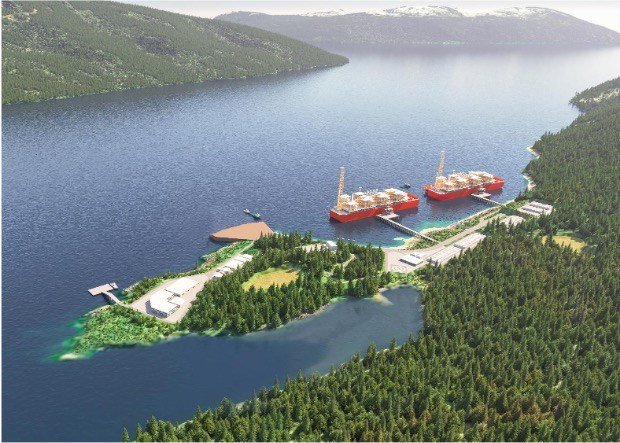

Last month in Vancouver, federal Energy Minister Tim Hodgson announced a non-binding agreement outlining SEFE’s (Germany’s state-owned energy company) intent to buy Canadian liquefied natural gas (LNG) starting in the early 2030s. The agreement reflects continued international interest in Canadian LNG and Canada’s potential as a source of global energy security. Yet bad policies continue to stand in the way of fully capitalizing on that potential.
The agreement shows exactly what this potential could mean. Germany has agreed to purchase up to one million tonnes of LNG annually through Ksi Lisims—a proposed 12-million-tonne-per-year export terminal on Pearse Island off the northwest coast of British Columbia, with construction potentially beginning in 2026 and operations expected to start in 2029. The agreement would mean much-needed investment and well-paying jobs in B.C.
But the opportunities for Canada go far beyond a single deal.
Canada has long been on the radar of global leaders as a long-term LNG partner. When Russia’s invasion of Ukraine in 2022 disrupted European gas flow and shook global natural gas markets, countries including Latvia, Greece, Poland, Ukraine, Japan and Germany scrambled for reliable alternatives and expressed interest in Canada.
At the time, however, Canada missed the opportunity when then-prime minister Justin Trudeau said there was no “strong business case” for developing the LNG industry. Now, with the war in Iran triggering massive disruptions to global energy markets, Canada has another chance to become a reliable global supplier—but it will only succeed if it removes the policy barriers that stifle the sector’s potential.
For example, Bill C-69, which became law in 2019, expanded the factors considered in federal impact assessments, including social, health, economic and gender-based effects. Not surprisingly, energy projects have stalled. According to a recent study, in Bill C-69’s first five years, just one project cleared the full assessment process (after roughly three and a half years of assessment). For context, under the previous system, 17 projects were approved in the same timeframe.
Rather than fixing the system, the Carney government introduced Bill C-5, which grants the federal cabinet—and in practice, the prime minister—the power to fast-track projects deemed in the “national interest.” This has done little to solve the problem. Project proponents must now lobby the government for special treatment. This hardly instils confidence and certainty for investors. Project proponents also warn that this new process could expose them to additional legal challenges related to Indigenous consultation requirements, further delaying approvals.
To make matters worse, the Carney government has doubled down on Trudeau-era policies that drive up the cost of building and operating projects including LNG facilities. Last December, the government announced tighter methane regulations, which will impose significant costs on the energy industry. And Ottawa plans to increase its industrial carbon tax, which will raise the cost of natural gas production in Canada and make the sector less competitive. No other major energy-producing country imposes a comparable policy burden on its natural gas sector.
Of course, higher costs and regulatory uncertainty will push energy investors elsewhere, and with them, the economic opportunities Canada’s LNG industry could deliver. A Conference Board of Canada estimate suggests that developing 56 million tonnes of annual LNG export capacity in B.C. could add $11 billion in economic activity (on average) per year and support about 96,550 jobs annually over the life of the projects. Yet of the 18 LNG export projects proposed in Canada over the last decade, only one has been built and just two more are under construction.
In light of the urgent need for reliable energy amid geopolitical instability, Canada has a chance to emerge as one of the world’s leading LNG suppliers. While the German deal is a start, to fully unleash Canada’s potential, the federal government must remove the policies standing in the way.
Julio Mejia and Elmira Aliakbari are analysts at the Fraser Institute.