dailynewsnblog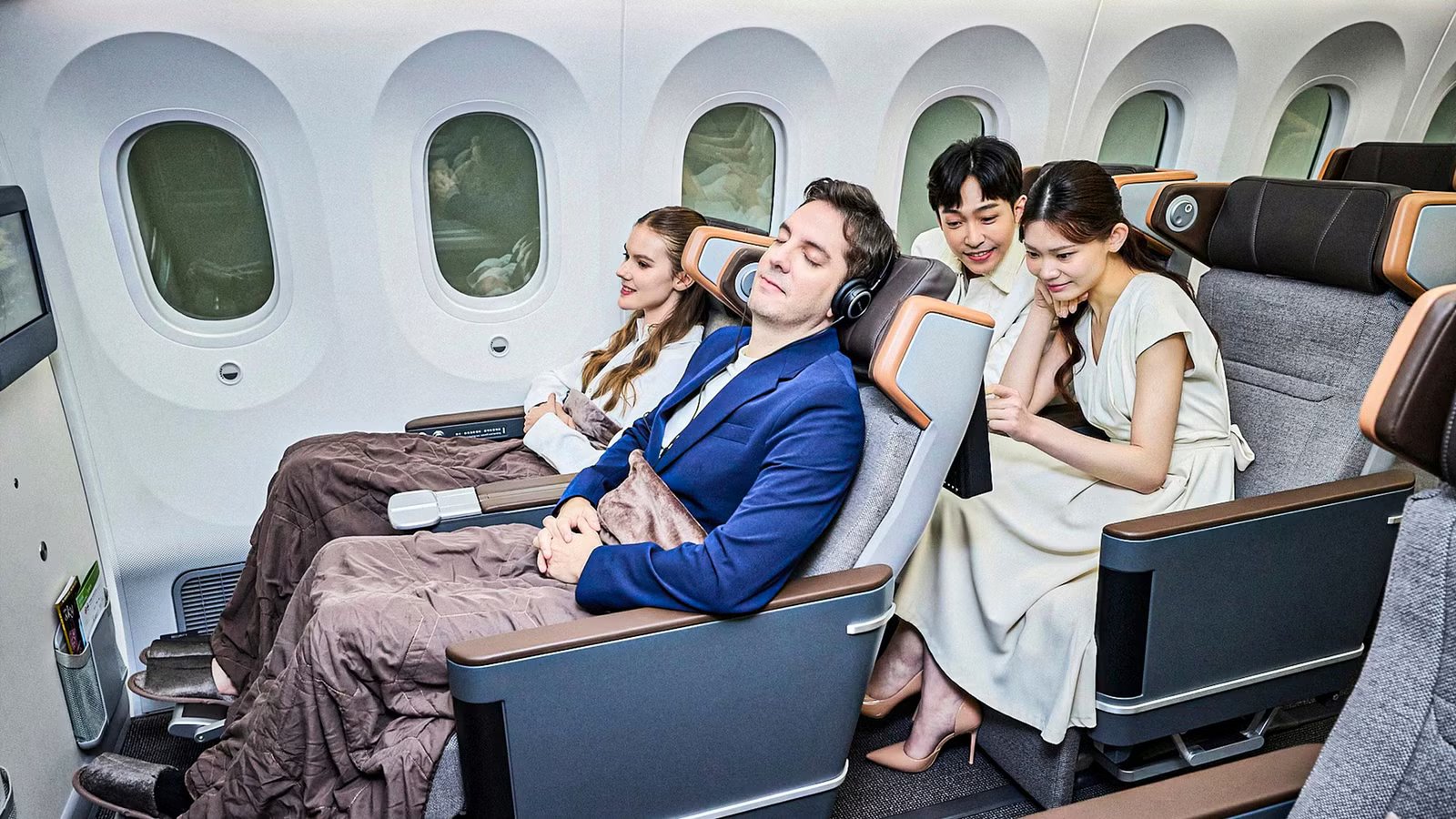
Gone are the days of focusing outright on the very front of the cabin, as airlines scramble to upgrade their premium economy cabins to stay relevant in the global airline market. Long-haul travelers are increasingly looking for an intermediate option that bridges the massive comfort gap between cramped economy seating and expensive business class suites. This guide explores how the very carrier that pioneered this cabin class over three decades ago has reclaimed its leadership position by introducing the most spacious version available today.
The evolution of this intermediate class highlights a broader structural trend in modern airline revenue management. Initially viewed as a risky experiment, the mid-tier cabin has transformed into the most lucrative part of long-haul widebody aircraft on a per-square-foot basis. Carriers worldwide have begun to invest billions of dollars to retrofit their fleets, and the focus has shifted from basic comfort upgrades to offering amenities that rival regional business class standards.
The Birth Of Premium Economy

The foundational architecture of the modern three-cabin layout traces back to a bold commercial proposition made in the early 1990s. At the time, the global aviation market remained strictly divided into conventional economy seating and ultra-premium first or business class options. Recognizing an unserved segment of passengers who were willing to pay a modest premium for extra legroom without funding a full corporate suite, EVA Air quietly engineered a brand-new hybrid product tier. This experimental concept would ultimately alter the strategic trajectory of long-haul passenger cabin design across the globe forever.
The new cabin tier officially debuted in 1992 on scheduled flights between Taipei and Los Angeles using the newly delivered Boeing 747-400 fleet. Named Evergreen Deluxe Class, the product offered passengers an impressive 38-inch (96.5 cm) seat pitch arranged in a spacious 2-4-2 configuration. This layout was a massive upgrade over standard economy, introducing wider cushions, enhanced meal services, and individual seatback entertainment screens during an era when shared cabin monitors were still the industry norm. The initial launch brought many around to the idea that a dedicated mid-tier cabin could generate exceptionally high demand on highly competitive transpacific trunk corridors.
While EVA Air was boarding its first revenue passengers, a parallel development was unfolding across the Atlantic. Virgin Atlantic introduced a remarkably similar mid-tier product in the exact same year, initially branding the cabin as Mid Class before eventually adopting the standardized premium economy name just two years later. A friendly historical dispute persists over which airline truly deserves the title of inventor, with Virgin Atlantic announcing its cabin slightly earlier while EVA Air successfully operated the first scheduled passenger service. Regardless of the definitive timeline verdict, the dual launch established the baseline criteria for a cabin class that would take nearly three decades to achieve universal global adoption.
The 42-Inch Dreamliner Upgrade

EVA Air has reclaimed its position at the top of the luxury hierarchy by deploying its latest cabin hardware, and iteration to its original concept. In 2025, the Taipei-based carrier introduced its fourth-generation premium economy seat onboard its newly configured Boeing 787-9 fleet. The advanced interior layout is somewhat of a deliberate attempt to reset expectations for mid-tier comfort on long-haul routes.
To achieve an unprecedented level of personal living space, the airline chose to alter the traditional interior density of the Dreamliner hull.
The redesigned cabin features an industry-leading 42-inch (106.7 cm) seat pitch, delivering significantly more legroom than what many international operators provide in short-haul business class configurations, accomplished by implementing a highly spacious seven-abreast 2-3-2 configuration across the widebody cabin. These customized seats utilize an advanced cradle motion system that simultaneously slides the seat cushion forward and upward, providing an effective recline of eight inches (20.3 cm) while completely preserving the personal space of the traveler seated behind.
Cabin Generation Profile | Baseline Seat Pitch | Fleet Configuration Layout | Core Seat Recline Dimension |
First-Generation (1992) | 38 inches (96.5 cm) | 2-4-2 Layout (Boeing 747) | Standard mechanical recline |
Fourth-Generation (2025) | 42 inches (106.7 cm) | 2-3-2 Layout (Boeing 787-9) | Eight-inch (20.3 cm) cradle motion |
This significant increase in spatial dimensions reflects a mature understanding of long-haul passenger ergonomics and physical comfort, especially as these expectations have evolved since the original inception of the product. By expanding the baseline pitch from the original 38 inches (96.5 cm) up to the current 42 inches (106.7 cm), the airline provides a tangible layout differentiation that stands out in a crowded marketplace. Each space is further optimized to maximize passenger productivity and relaxation during transpacific flight tracks, helping make EVA Air remain a standout choice for these routes.
How the Market Evolved

The global adoption of this intermediate cabin concept was initially slow, but it has recently experienced an extraordinary explosion in market volume. For many years, several major full-service network carriers resisted adding a third tier, fearing that it would take away from their highly profitable business class ticket sales. However, changing corporate travel policies and a massive surge in premium leisure demand eventually forced even the most stubborn holdouts to alter their fleet configurations.
The transformation of the global marketplace is best summed up by the rapid expansion of airlines adopting the concept of premium economy. For instance,  Emirates long remained a notable holdout against the mid-tier cabin but has now fully embraced the strategy, aggressively expanding its coverage across multiple global destinations using freshly retrofitted Airbus A380s, Boeing 777s, and newly delivered Airbus A350 airframes. Market research data clearly tracks this massive industry shift; the number of international carriers offering a dedicated premium economy product climbed from 42 in 2017 to 63 by 2022. This expansion represents an 84% surge in the number of equipped widebody aircraft operating across global flight tracks, a truly great number considering the downturn of the market at the beginning of the 2020s.
The rapid fleet expansion seen here is backed by massive financial valuations that highlight the incredible profitability of the segment. The global premium economy market reached an impressive valuation of $8.2 billion in 2024 and is currently projected to expand to $18.7 billion by 2033. The key is that the cabin occupies relatively little floor space compared to a fully flat business class pod, and so it generates some of the highest revenue margins per square foot of any area on the aircraft. As a result of this reality, it has turned the mid-tier cabin from an optional luxury addition into an absolute financial necessity for any airline operating long-haul international networks.
The New Competitive Landscape

The introduction of a 42-inch (106.7 cm) pitch firmly establishes a new industry benchmark at the absolute top end of the premium economy market. Dozens of fellow international network operators now offer a dedicated intermediate tier, but very few are willing to sacrifice cabin density to this extent. It is in the finer details of the products that you can now easily see how the Taiwanese airline has separated itself from its closest global rivals.
Catch what other flight trackers miss
Emergency squawks, holds, NOTAMs — live signals, no signup.
Open tracker
Catch what other flight trackers miss
Emergency squawks, holds, NOTAMs — live signals, no signup.
Open tracker
A closer inspection of the standard transpacific and long-haul competitive landscape shows a remarkably uniform product standard among top-tier operators. Elite East Asian competitors like Japan Airlines offer a 38-inch (96.5 cm) pitch arranged in a tighter eight-abreast 2-4-2 configuration on their 787 fleets. Similarly, All Nippon Airways maintains its mid-tier cabin at a 38-inch (96.5 cm) pitch with a seven-abreast 2-3-2 layout on its 777 aircraft. Across the globe, premier operators such as  Singapore Airlines, Cathay Pacific, and
  Air France likewise typically limit their premium economy space to a standard 38-inch (96.5 cm) pitch, typically utilizing an eight-abreast 2-4-2 alignment on their A350 flagships.
None of these prominent international carriers currently surpasses the 42-inch (106.7 cm) standard on scheduled routes, making the very airline that invented the category its undisputed modern leader. Most competitors choose to stop at 38 inches (96.5 cm) to squeeze more rows of seats into the premium economy zone, maximizing the sheer volume of tickets they can sell. EVA Air rejects this approach, which allows the airline to deliver an elite physical footprint that redefines consumer expectations for long-haul travel.

5 Things Passengers Don’t Know About Premium Economy
The cabin continues to become increasingly popular.
Tried & Tested

Maintaining a commanding position more than three decades after introducing the concept has massive commercial weight in an increasingly consolidated airline industry. The ability to continuously innovate within a category prevents a legacy brand from becoming commoditized by newer, lower-cost market entrants. The ongoing spatial leadership that EVA Air has deservedly established serves as an effective marketing tool and a shield protecting highly lucrative long-haul traffic corridors.
The deployment of this spacious fourth-generation seat is a powerful commercial differentiator for the carrier, as dozens of airlines have slowly followed its original template. What began in 1992 as a straightforward, basic comfort upgrade has officially transitioned into a luxury-focused sub-brand designed to capture a rapidly expanding segment of affluent travelers.
EVA Air’s product positioning is particularly effective at capturing business travelers whose corporate travel policies explicitly forbid booking expensive business class tickets. Having such a massive pitch when compared with its competitors means the carrier offers these corporate commuters a viable workspace and rest environment that far exceeds standard industry options. At the same time, it appeals directly to high-end leisure travelers who are willing to pay double the price of a standard economy ticket for a highly comfortable ride.
The Future of Mid-Tier Travel

The long-term trajectory of intermediate long-haul travel points toward a deeper blurring of the lines between mid-tier comfort and traditional business class luxury. As airlines continue to invest heavily in premium economy retrofits to capture their share of a surging market, physical dimensions will remain the primary battleground. The race to install larger entertainment screens, leg rests, and enhanced privacy shells shows no signs of slowing down across the industry, especially if premium demand continues to grow exponentially.
Unfortunately, not all premium economy cabins are created equal. Generic marketing names and reviews often need to be ignored and actually experienced to understand the true reality of the product, as premium economy can often be very hard to distinguish. Opting for a spacious seven-abreast layout over a dense eight-abreast alternative can totally transform the physical toll of a fourteen-hour transpacific journey.
The massive financial projection for this sector all but guarantees that premium narrowbody and widebody cabins will continue to expand. With the global premium economy market expected to more than double its valuation over the next decade, other international carriers may eventually be forced to match the 42-inch (106.7 cm) benchmark to protect their premium market shares. The enduring innovation that EVA brought to the world with uncertainty now makes sure that front rows of the economy cabin will remain an essential driver of global airline profitability for years to come.