dailynewsnblog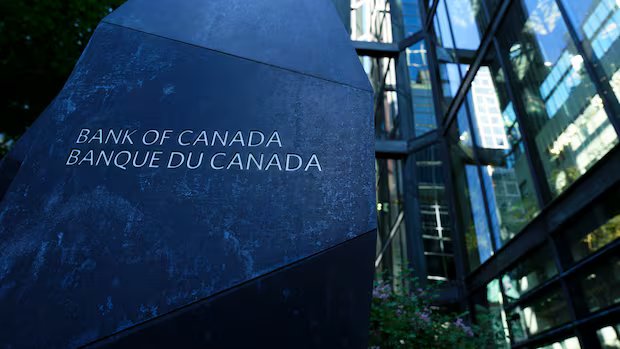

Listen to this article
Estimated 4 minutes
The audio version of this article is generated by AI-based technology. Mispronunciations can occur. We are working with our partners to continually review and improve the results.
The Bank of Canada held its key interest rate at 2.25 per cent on Wednesday, as the bank seeks to balance economic turbulence while keeping inflation from rising too much.
The decision marks the central bank’s fifth consecutive rate hold, as a number of factors have complicated the economic picture.
The central bank noted that the ongoing war in the Middle East, which has raised energy prices, has contributed to inflation, making life more expensive for Canadians.
But there has been “limited evidence” of high energy costs being passed through to consumer prices more broadly, according to the bank.
“Governing Council is continuing to look through the war’s near-term impact on headline inflation, but will not let higher energy prices become persistent inflation,” the central bank said in its rate announcement.
During a news conference following the release, Bank of Canada governor Tiff Macklem said that the longer oil prices stay high, the more likely it is that those costs bleed into the general economy, which would require the bank to change rates in response.
Canada’s overall inflation rate in April rose to 2.8 per cent, and Macklem added the bank expected it to hover around the three per cent mark before gradually easing toward the two per cent target.
Balancing risks
Although Canada’s unemployment rate fell to a five-month low in May as hiring strengthened, Macklem said the figures have been volatile month to month, and there has been little net change in jobs since January.
And new tariff threats by the U.S. continue to weigh on the economy, he added.
Front Burner29:29Can Canada avoid a deepening recession?
General economic weakness and rising inflation create a tricky situation for the central bank. In his prepared remarks, Macklem said raising the interest rate to keep inflation at bay could cause further economic slowing, while lowering the rate could make inflation worse.
“For now, holding the policy rate unchanged balances those risks,” he said.
That means the bank will be watching the key factors driving uncertainty and inflation — the trade war with the U.S. and the war in the Middle East, respectively — with a close eye, in case factors change that require rate moves in either direction.
Economists said the decision held few surprises. Before the release, a Reuters poll of 34 economists had expected the bank to sit on the sidelines.
“Very little new information from the Bank of Canada, as the June policy statement and opening statement were similar to April’s,” BMO Economics managing director Benjamin Reitzes said in a note to investors.
He added the bank’s line about the economy being “weak” was a bit of a shift, and likely a result of a surprising drop in Canada’s GDP in the first quarter of the year.
Statistics Canada reported a slight contraction in real gross domestic product over the first three months of the year — a 0.1 per cent annualized decline, coming off a one per cent drop in the fourth quarter of 2025.
That slight GDP dip has led to debate over whether Canada is in a recession — which Macklem weighed into, saying he didn’t believe the current reality meets the bar.

Tiff Macklem, when asked Wednesday whether he believes Canada is in a recession, said ‘when you look through the bumps, the economy hasn’t really grown in the last year, but it hasn’t shrunk either.’
He said that most economists define a recession as a “significant broad-based decline” in economic activity lasting at least one quarter. And while growth has been generally flat in many economic indicators over the past year, it hasn’t shrunk, according to Macklem.
“Based on the data we’ve seen today to date, the economy is weak, but it is not clearly in recession,” he said.
Plus, the bank noted that growth in the economy was expected to resume in the second quarter of 2026.
Reitzes says BMO is expecting the central bank to continue holding rates through to the end of the year.