dailynewsnblog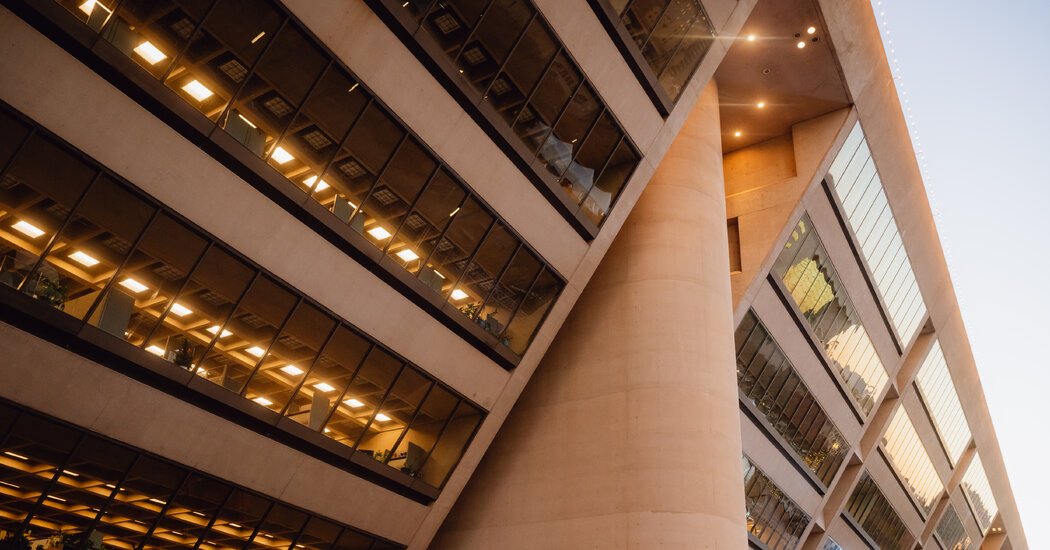
A Dallas County judge on Tuesday barred the Dallas City Council from holding votes at a meeting that could decide whether the city would move operations out of its building.
The Council was scheduled to meet on Wednesday to vote on items that could have determined whether City Hall should stay in its current location, an aging building designed by the famed architect I.M. Pei, or if the buildings functions should move, paving the way for developers to take over the land.
A vote over the fate of City Hall was originally not set for this week until a special meeting was scheduled late last Thursday night. That prompted two City Council members — Paula Blackmon and Adam Bazaldua — to file a lawsuit against the city to postpone the meeting. The city manager, Kimberly Bizor Tolbert, and the city secretary, Bilierae Johnson, are also named as defendants in the lawsuit.
“Shortcuts and gamesmanship cannot be used to write a blank check and avoid mandatory financial disclosures,” the lawsuit said. “The fate of the Dallas City Hall building is not a question for this Court: but it is the Court’s proper function to ensure that all rights are protected through a fair and democratic process.”
Ms. Blackmon and Mr. Bazaldua said in the lawsuit that they were denied a chance to request a postponement of the special meeting on Wednesday.
“The public has been denied adequate notice of what the City proposes to do with one of Dallas’s most iconic civic buildings,” the council members said in the lawsuit.
The council members had sought a temporary restraining order to postpone the votes, which the judge granted.
During a hearing on Tuesday afternoon in downtown Dallas, the judge, Eric V. Moyé of 14th District Court of Texas, said that one item on the agenda for the special meeting was too open-ended. That item would have allowed the Dallas city manager to “pursue opportunities for the redevelopment” of City Hall, according the special meeting agenda.
“There’s virtually nothing that the city could not do in this context, including sale of the property to anyone for any price,” Judge Moyé said.
Speaking to reporters outside the courtroom on Tuesday, Mr. Bazaldua said delaying any votes would buy the Council more time to determine what to do with City Hall.
“What the court ruled on today allowed for us to have sufficient time to get necessary information that I believe was not afforded to us before being asked to take a vote,” Mr. Bazaldua said.
Ms. Bizor Tolbert said in a statement that the city respected the judge’s decision and would work to make the agenda compliant with state law.
“We value and encourage continued public discussion of these items, as we have for the last year, and we look forward to receiving clear direction from the City Council on the next steps,” she said.
Judge Moyé scheduled another hearing for June 18 to determine whether a temporary injunction is needed.
At the City Council meeting on Wednesday, council members would have voted on items that would determine the fate of City Hall, such as whether to begin advance work toward moving staff and 911 operations out of the current building, or whether to approve a plan to make phased repairs to the building, which has housed City Hall since 1978.
Dallas has been embroiled in months of debate over what to do with the aging building. Preservationists have argued that a building designed by Mr. Pei, who also designed the Louvre Pyramid in Paris, should be repaired and maintained. But many developers have supported the possibility that City Hall could move elsewhere, allowing for new projects in the building’s neighborhood, on the south side of downtown Dallas.
The cost of the repairs has also been a point of contention. One report released this year estimated that it could cost up to $1 billion over 20 years to make the necessary fixes to City Hall. A more recent report found that repairs could be done in about 10 years at a cost of about $500 million.