dailynewsnblog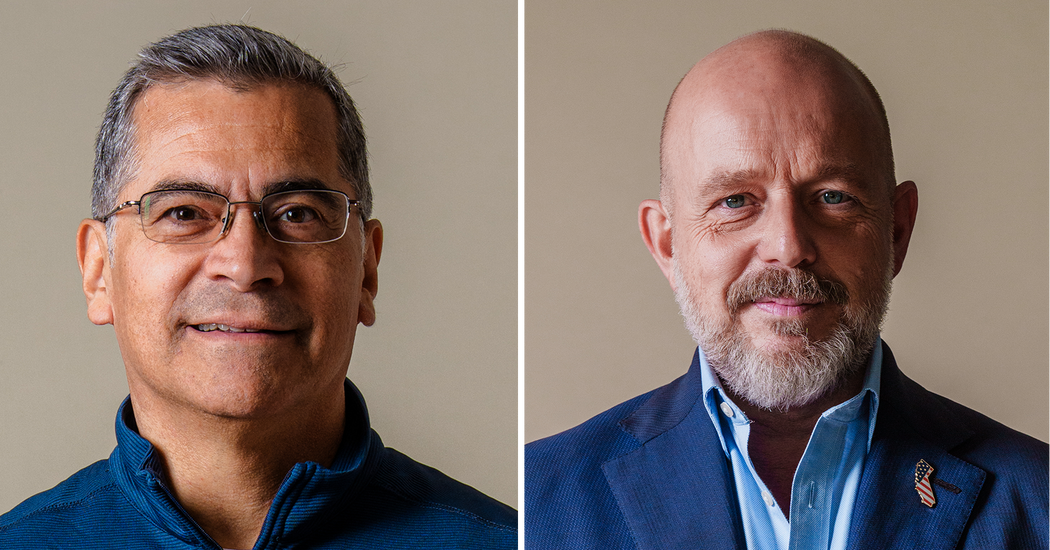
Steve Hilton, a Republican former Fox News host who was endorsed by President Trump, has secured the second spot in the November general election for California governor, The Associated Press determined on Tuesday. He will face Xavier Becerra, a Democrat who served in the Biden administration.
The candidates survived an unprecedented barrage of spending for a California governor’s race. Tom Steyer, a billionaire who ran as a progressive Democrat, devoted more than $216 million of his personal fortune toward his primary campaign, finishing third.
Under California rules, the top two finishers in the primary election, regardless of party, advance to the general election. There had been a chance that Mr. Steyer would face Mr. Becerra in an intraparty battle in November, but Tuesday’s outcome instead sets up a lopsided contest in a state where a Republican has not won the governor’s office in two decades.
The winner will replace Gov. Gavin Newsom, who cannot run again because of term limits and is considered a potential Democratic presidential candidate for 2028.
Mr. Steyer called on his supporters to unite behind Mr. Becerra on Tuesday and said that he understood “why so many people just couldn’t stomach voting for a billionaire,” referring to himself.
“It’s hard to blame them,” Mr. Steyer said in a statement, adding that he would continue fighting to “dismantle a system that only benefits billionaires.”
Mr. Hilton’s top-two finish seems to run counter to Mr. Trump’s claims in recent days that California elections are “rigged” to benefit Democrats. Mr. Hilton said on Tuesday that he takes the concern seriously, but that he has had lawyers monitoring the voting process and they have not seen signs of fraud.
The November matchup is one that Mr. Becerra and many Democrats had hoped for, knowing that Mr. Hilton was not just a Republican, but one endorsed by Mr. Trump, who remains deeply unpopular in California.
Days before the election, Mr. Becerra released an ad that highlighted the differences between him and Mr. Hilton, whom the ad called “Trump’s favorite.” While the ad ostensibly bolstered Mr. Becerra’s anti-Trump credentials, it also seemed designed to encourage Republicans to coalesce behind Mr. Hilton and give him enough support to finish second and prevent Mr. Steyer from reaching the general election.
Mr. Hilton has already begun his attacks on Mr. Becerra, casting him as a “career politician” who would perpetuate “more of the same” problems that the state has experienced during Mr. Newsom’s governorship.
Mr. Becerra’s spot in the November contest was determined last Friday, but Mr. Hilton’s position was confirmed only on Tuesday, a week after Election Day, after counties provided their latest vote counts.
California’s slow count, which is because of the large number of people who vote by mail and the cumbersome procedure for processing ballots that arrive in envelopes, has become a flashpoint in recent days. Both Mr. Becerra and Mr. Hilton said on Tuesday that they wished the state were able to count its votes faster.
Mr. Hilton on Tuesday called on the state to direct more money and staff to process ballots after each election. He also urged Californians to support a November ballot measure that would require voters to show identification and called on Mr. Becerra to join with him in supporting the Republican-backed measure.
“That’s the best way of showing Californians that we really are serious about giving this state the modern, secure, efficient election system that we deserve,” Mr. Hilton said during a campaign stop outside the offices of the Los Angeles County Registrar of Voters in Norwalk, Calif.
Mr. Becerra responded by pointing out Mr. Hilton’s ties to Mr. Trump and his claims of election fraud in California.
“That’s who Steve Hilton is aligning himself with,” Mr. Becerra said during a campaign stop at a Latin American market in Los Angeles. “Is that what we would expect of the next governor?”
He added that the voter ID ballot measure would make it more difficult for Californians to vote. He said, however, that he thought the state should devote more resources to vote tabulation.
Mr. Becerra is the first Latino to emerge from a governor primary in California and is well positioned to become the state’s first Latino governor of the modern era.
Mr. Hilton seems eager to compete for Latino voters. The day after Mr. Becerra was announced as a primary winner, Mr. Hilton staged a campaign event at a Mexican seafood restaurant in San Jose. (Last month, however, he lost some dining credibility when he praised a hard-shell offering from the original Del Taco fast-food restaurant as a “street taco.”)
Mr. Hilton, 56, grew up in England and was a top aide to Prime Minister David Cameron before moving to California so his wife could pursue her career in Silicon Valley. He became an American citizen five years ago.
He entered the contest with some familiarity among conservatives as a former Fox News host. He flexed his lively persona on social media over the course of the campaign and regularly injected quips in televised debates. He vowed to increase affordability by cutting taxes and regulations, and he railed against Democrats at nearly every turn. Some of Mr. Hilton’s largest campaign donations came from Rupert Murdoch, the conservative media mogul, and Sergey Brin, a founder of Google.
While his Trump endorsement may have been helpful this month, it will likely hamstring Mr. Hilton in the general election given the president’s low approval ratings in the state.
Mr. Newsom, along with other prominent Democratic leaders in California, did not endorse anyone during the turbulent primary. But they quickly voiced support for Mr. Becerra on Tuesday after it was clear that he would be the only Democrat in the November election.
Mr. Newsom said that Mr. Becerra “has the experience and grit California needs.” Former Vice President Kamala Harris, who worked with Mr. Becerra in the Biden administration when he was the health and human services secretary, praised his “calm, steady brand of leadership” and said that he “never shies away from the biggest fights.”
Mr. Becerra, 68, a former California attorney general, ran as a moderate and emphasized his roots as the son of working-class Mexican immigrants.
His low-key persona and moderate positions made him an unlikely winner in a political climate that rewards brash moments that proliferate on social media. Focusing on his background and his decades of experience, Mr. Becerra found a combination that helped him appeal to Democratic voters as well as political insiders, whose financial backing propelled his rise.
Mr. Becerra’s primary performance caps his extraordinary come-from-behind surge in the tumultuous race. He had been ignored and dismissed by political insiders, and was urged by his own party chairman to consider leaving the race in March. But the abrupt departure of Eric Swalwell, from both the race and Congress, amid sexual harassment accusations created a surprise path for a Democrat with extensive governmental experience.
Mr. Becerra quickly rose from the bottom of the polls to defeat several other Democrats, including Katie Porter, a former congresswoman; Matt Mahan, the mayor of San Jose; Antonio Villaraigosa, a former mayor of Los Angeles; and Tony Thurmond, the state schools superintendent.
Once polls showed Mr. Becerra in a strong position, business interests that opposed Mr. Steyer’s progressive agenda began spending big to help Mr. Becerra. Oil companies, real estate brokers, tech firms, electric utilities, health care businesses and other interest groups collectively poured about $54 million into supporting Mr. Becerra and opposing Mr. Steyer.
Orlando Mayorquín contributed reporting from Los Angeles.