dailynewsnblog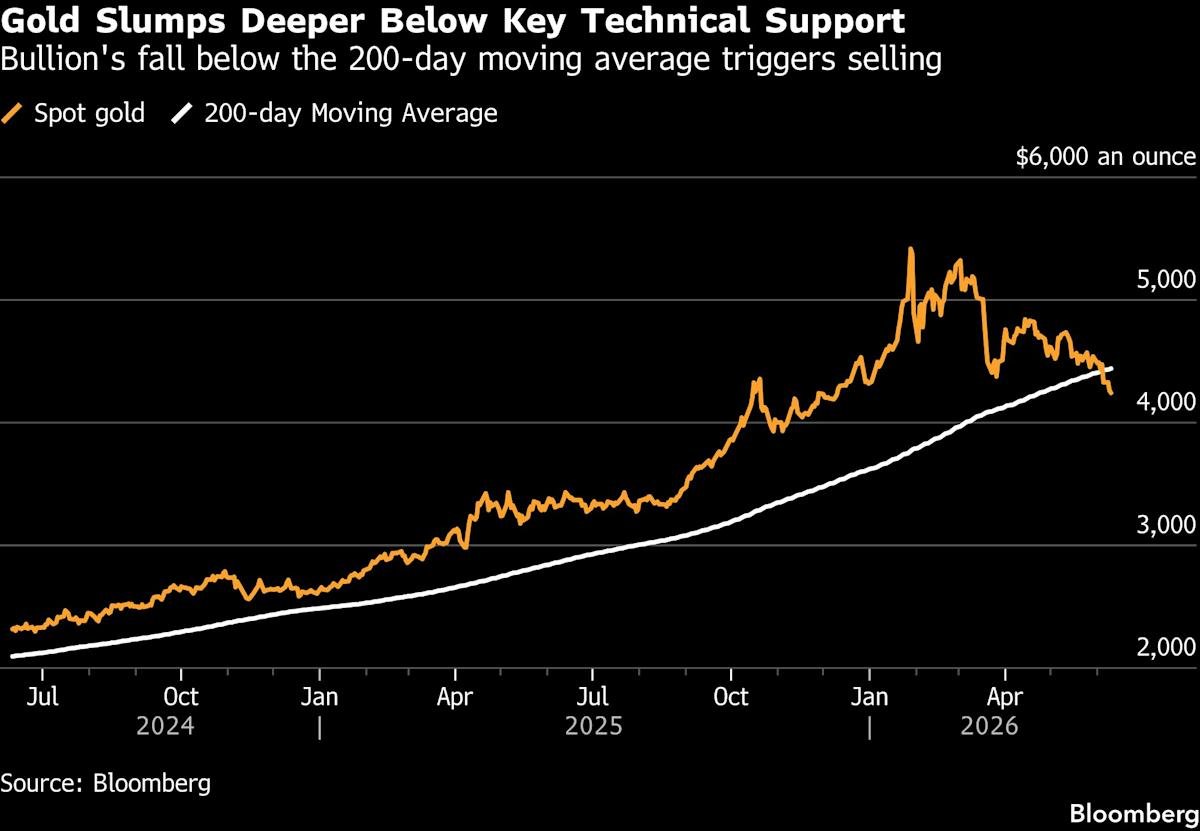
(Bloomberg) — Gold extended a decline after the US launched strikes against Iran in retaliation for the downing of a military helicopter, jeopardizing efforts to end the war that’s roiled global markets and raised inflation risks.
Most Read from Bloomberg
Bullion fell as much as 2% to below $4,175 an ounce on Wednesday, having slid 1.6% in the previous session. American forces struck Iranian sites near the Strait of Hormuz after President Donald Trump blamed Tehran for shooting down a US helicopter off the coast of Oman. Iran’s Mehr news agency reported that several explosions were heard on Qeshm Island and along the country’s southern coast.
The latest clashes threaten a fragile ceasefire and risk extending the near-total closure of Hormuz, a vital transit point for energy shipments from the Middle East to global markets. Iranian Foreign Minister Abbas Araghchi said in a post on X that the country “will leave no attack or threat unanswered” and the Islamic Republic later launched a drone strike on the US Fifth Fleet in Bahrain, state-run IRIB News reported.
Oil prices rebounded on Wednesday, further fueling concerns about global inflation and in turn making central banks more likely to hold interest rates steady or raise them — a headwind for non-yielding precious metals. The Brent crude benchmark rose as much as 2% to trade above $93 a barrel before paring gains after the US announced the end of its brief retaliatory campaign.
Gold is about a fifth below where it was trading before the Iran war broke out at the end of February. The metal’s recent decline through its 200-day moving average — a widely watched measure of long-term momentum — has triggered additional selling as it’s seen as an important level watched by institutional investors.
“We expect price action to become more vulnerable in the near term” as the prospect of a rate hike increases, Suki Cooper, global head of commodities research at Standard Chartered Plc, said in a note. More holdings in gold-backed exchange-traded products will be loss-making if bullion slumps further, which will “expose gold to further downside risk,” she said.
The next technical support level for gold is around $4,100 an ounce, Cooper said. While markets such as India are soft, China remains a bright spot for demand, with the local premium steady at below $10 an ounce, she added.