dailynewsnblog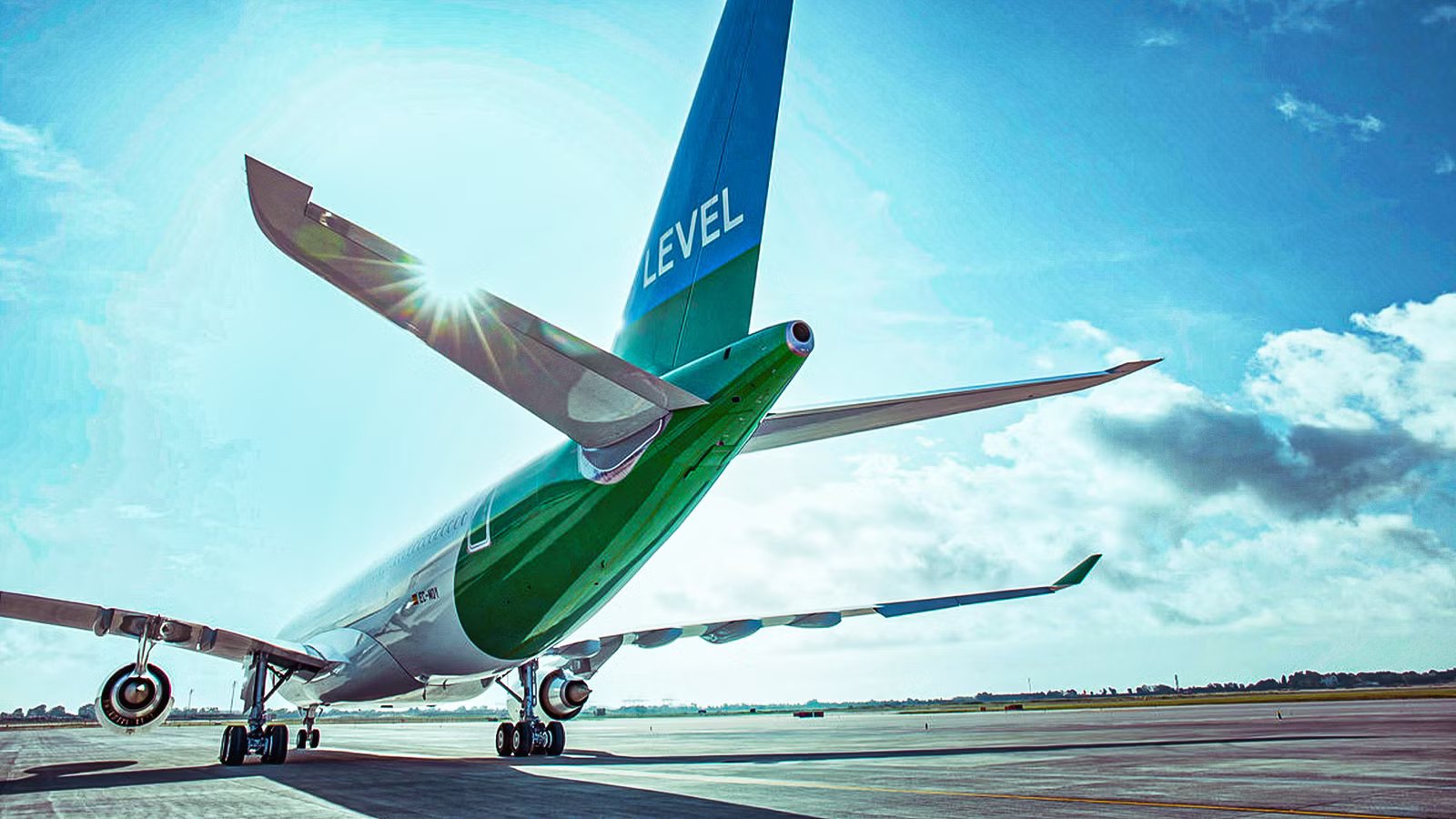
Over the past decade, many airlines have tried to find success operating long-haul low-cost flights across the Atlantic. Perhaps the most notable example is Norwegian Air Shuttle, which at the time of its closure in 2021 operated a fleet of 35 Boeing 787 aircraft.
Today, Norse Atlantic Airways, an airline that has largely jumped into the void left by Norwegian, continues to struggle with persistent losses and, as of writing, various reports claim the airline will soon be up for sale as cash is starting to get tight. Notably, Norse has been reducing its scheduled capacity for some time now, and a large part of the fleet is being leased out to other airlines, a diversification strategy that has also proven successful for struggling airBaltic. As of writing, Norse’s stock price is down a staggering 99% since its listing on Euronext Oslo (NORSE.OL) in 2021.
Besides Norwegian and Norse Atlantic Airways, many other smaller airlines have attempted to be profitable on low-cost transatlantic flights and have faced a similar reality: competition is tough, and airline economics simply don’t support the model. Especially not when compared to short-haul low-cost economics. Despite this, one airline has been operating with success for almost a decade and is preparing for continued growth, albeit on a smaller scale than Norwegian or Norse. LEVEL is an airline founded by the International Airlines Group (IAG) in 2017, largely in response to Norwegian’s growing long-haul presence in IAG’s core markets. Initially, LEVEL was not operated as a standalone airline, but solely as a brand with flights operated by  Iberia. In December 2024, the Spanish airline received its own Air Operators Certificate (AOC) and is now gearing up for future growth from its hub at
  Barcelona-El Prat Airport.
A Brief Overview of LEVEL

As is the case with most other airlines, LEVEL has experienced both setbacks and successes while trying to find its position in the dynamic airline industry. Three months after the airline was first announced in March 2017, routes to Oakland (OAK),  Los Angeles International Airport (LAX), Punta Cana (PUJ), and Buenos Aires (EZE) were launched from Barcelona (BCN). At the time of the airline’s launch, Spanish newspaper El Economista reported that ticket sales were exceeding expectations and that expansion to other European airports was being explored.
Around a year after LEVEL’s initial launch, the airline also commenced operations from Paris Orly Airport (ORY) using the AOC and crew of OpenSkies, another airline owned by IAG, instead of operating flights under Iberia’s AOC as was the case for LEVEL’s Barcelona operations. OpenSkies was founded by  British Airways in 2008 to operate flights between Europe and the United States in an effort to reduce the carrier’s dependency on
  London Heathrow Airport(LHR). After the LEVEL brand was introduced in the summer of 2018, the OpenSkies brand quickly disappeared, and the airline’s aging Boeing fleet was replaced by three LEVEL-branded Airbus A330-200s.
From Paris, LEVEL started operating flights to French overseas territories in the Caribbean, as well as Montreal (YUL) and  Newark Liberty International Airport (EWR). In 2019, the airline also launched a short-lived route between Paris and Las Vegas (LAS). Simultaneously, the airline also continued to expand operations from Barcelona with flights to Boston (BOS),
  New York JFK Airport (JFK), and Santiago de Chile (SCL). By 2020, amid the global pandemic, LEVEL withdrew completely from Paris following the closure of OpenSkies and reduced capacity in Barcelona.
While unrelated to the airline’s long-haul operations, it should also be mentioned that IAG used the LEVEL brand between 2018 and 2020 to establish LEVEL Europe alongside the group’s short-haul low-cost carrier Vueling, with bases in  Amsterdam Schiphol Airport (AMS) and Vienna (VIE). However, this endeavor never proved particularly successful, and by 2020 LEVEL Europe went into liquidation.
Record-Breaking Results: What’s Your Favorite IAG Member Airline?
Simple Flying reported earlier today that the International Airlines Group had released its 2025 full-year financial results, with the firm having enjoyed a record-breaking financial performance last year. IAG is the parent company of five major European airlines (Aer Lingus, British Airways, Iberia, LEVEL, and Vueling), but which of these is your favorite?
While, of these, I’ve had by far the most flights with British Airways, it is the quirks of Irish flag carrier Aer Lingus that win me over in my mind. Indeed, the airline’s shamrock logo is among the most notable in the skies, and I also love the concept of its ‘throne’ business class seats (although my one flight on Aer Lingus to date was a less luxurious regional ATR 72 service from Leeds to Dublin!). Which IAG airline is your favorite? How many have you flown with? Let us know your thoughts and experiences in the comments!
This Is LEVEL In 2026

After the pandemic, LEVEL continued to fortify its presence in Barcelona and optimize its network. Since then, a number of new destinations, such as  Miami International Airport (MIA), and Lima (LIM), have been added, while others, such as Cancun (CUN), and Punta Cana (PUJ) were terminated. Today, the airline operates flights to four destinations in the United States and another three in South America. The airline was initially also planning to operate its route to
  San Francisco International Airport (SFO) this summer with four weekly frequencies, but announced in April this wouldn’t be possible due to an engine shortage and supply chain constraints.
In 2025, the low-cost carrier was the largest in Barcelona in terms of long-haul capacity with a 16% market share, while holding a 46% market share in the South American market from Spain’s second-largest city. Compared to 2024, the IAG daughter carried 12% more passengers, following an impressive year-over-year growth of 21% between 2023 and 2024. Throughout 2025, LEVEL grew available seat kilometers by 9.6% while maintaining consistently high load factors, averaging 92.4%. Unfortunately, not much is known about LEVEL’s profitability and revenue share within IAG, with the company’s annual report explaining the limited size of the operating segment “does not exceed the quantitative thresholds to be reportable.” In the same report for FY25, Rafael Jiménez Hoyos, Chair and Chief Executive Officer of LEVEL, did state the following:
“This year, we completed another defining chapter for our airline, starting our operations under our own code, LL, expanding our team and strengthening our leadership in long-haul operations from Barcelona.”
LEVEL’s Route Network ’26 | |
|---|---|
Destination | Frequency |
Lima (LIM) | 3 weekly |
New York (JFK) | 3 to 6 weekly |
Miami (EZE) | 3 to 4 weekly |
Los Angeles (LAX) | 3 to 4 weekly |
Santiago de Chile (SCL) | 3 to 4 weekly |
Boston (BOS) | 3 weekly |
Buenos Aires (EZE) | Daily |
Source: LEVEL | |
The route network, as outlined above is, as of writing, operated by a fleet of seven A330-200 aircraft. Earlier reports suggest the Spanish airline originally planned to operate eight aircraft by 2026, but this aircraft has not been delivered as of writing, limiting the airline’s growth this year. The late delivery of this aircraft is also said to have been a factor leading to the suspension of flights to San Francisco. The seven A330s in the airline’s fleet are around 11 years old, with the oldest 14 years old and the youngest 7. Most aircraft have previously flown with the Spanish flag carrier Iberia, and several are still on lease from the airline.
For LEVEL, the Airbus A330-200 is currently a great fit as it provides the airline with operational flexibility, in combination with attractive ownership costs, as the aircraft are sourced from within IAG. The aircraft’s large relative fuel capacity compared to the large -300, allows LEVEL to comfortably operate deep South American routes with dense cabin configurations needed to achieve the required low per-seat costs. Furthermore, by partially limiting capacity, the airline can avoid the very lowest yields, which would put pressure on profit margins. Building upon this, the smaller capacity also simply reduces the risks of low demand on the thinner, low-frequency (mostly) point-to-point routes operated by LEVEL.

This Is Canada’s 2nd-Largest Airline In 2026
With over 150 aircraft transporting around 22.6 million passengers on more than 215,000 flights in 2025, WestJet is Canada’s second-largest airline.
Why LEVEL Succeeds Where Others Fail

Low-cost long-haul airlines typically struggle with high fixed costs and thin margins, while often operating in highly competitive markets. LEVEL has been able to mitigate many of the structural disadvantages through its strategic role within IAG. As part of one of Europe’s largest airline groups, the carrier benefits from access to aircraft, financing, distribution channels, operational expertise, and other resources that independent airlines must build from the ground up. These group synergies significantly reduce both risk and cost.
Besides the above, another important reason for LEVEL’s success can be attributed to the strength of its core market, Barcelona. In contrast to IAG’s British Airways, which benefits from strong premium yields in London, LEVEL benefits from the low-yield leisure profile of Barcelona. This makes Barcelona highly suited to LEVEL’s low-cost business model. In addition, Spain generates substantial long-haul VFR (visiting friends and relatives) traffic thanks to the country’s close historical, cultural, and linguistic ties with Latin America. Last but not least, Barcelona serves as the hub of IAG’s low-cost airline Vueling, allowing passengers from across Europe to connect to LEVEL’s long-haul network and supplement local demand.
Together, these factors solve one of the biggest hurdles low-cost long-haul airlines face: finding markets with sufficient low-yield demand while avoiding intense competition from established network carriers. Without Barcelona, LEVEL’s story may have looked very different. Perhaps the best illustration of this is the airline’s short-lived operations in Paris. There, stronger competition from both legacy airlines and other low-cost competitors such as French bee likely placed too much pressure on yields, while the pandemic provided a convenient opportunity to exit the market and double down on Barcelona.
Catch what other flight trackers miss
Emergency squawks, holds, NOTAMs — unique signals, live, no signup.
Open tracker
Catch what other flight trackers miss
Emergency squawks, holds, NOTAMs — unique signals, live, no signup.
Open tracker
It should also be noted that LEVEL adopted a far more disciplined approach to expansion than many of its low-cost long-haul peers. While several competitors rapidly added capacity in new markets and continued pursuing growth despite weak profitability, LEVEL’s parent company was willing to scale back where necessary. Furthermore, Barcelona was, and arguably still is, underserved from a long-haul perspective relative to the size of its catchment area. The combination of strong origin-and-destination (O&D) demand, limited premium traffic, and fragmented competition created a unique opportunity for LEVEL to establish itself in markets where it could often become the sole operator or face only limited direct competition.
Lastly, LEVEL’s role within IAG differs from that of a standalone airline. Unlike independent carriers that must generate sufficient profits to satisfy investors and fund future growth, LEVEL can also create value through strategic benefits. By maintaining a strong presence in Barcelona, the airline helps defend market share while strengthening IAG’s broader network. As a result, LEVEL does not necessarily need to be a large profit engine to justify its existence within the group.

Why Spain’s 3rd-Largest City Doesn’t Have Flights To The US
Could American Airlines be the one to finally establish transatlantic flights?
What’s next for LEVEL?

As mentioned earlier, LEVEL became a standalone airline within IAG after receiving its own AOC and IATA code in December 2024. This means the airline now has full operational and legal autonomy, clearing the path to future growth independently of Iberia. In practice, this means LEVEL now has greater agility to expand its fleet and add new routes in order “to achieve its strategic objectives.”
However, after the low-cost airline became an independent carrier, it stated it would continue to focus on its already existing route network, and as of writing, it appears LEVEL has done exactly that. While the fleet has grown with additional aircraft, it seems that this capacity was primarily used to reinforce its existing network, and no large scale network expansion has taken place. The only exception is the airline’s new three-weekly route to the Peruvian capital, Lima. While, as mentioned before, the connection to San Francisco has been suspended for the summer season.
This might soon change, however, as LEVEL hopes to receive a number of A330neo aircraft that IAG has on order from Airbus. Last year, the airline group ordered over 70 new aircraft from both Airbus and Boeing, including 21 A330neos, with deliveries expected around 2028. For LEVEL, this highly efficient twinjet is the ideal aircraft as it supports the fleet’s commonality, while reducing cost-per-seat even further. At the same time, the new aircraft will also improve the passenger experience compared to the older A330s currently in the fleet.