dailynewsnblog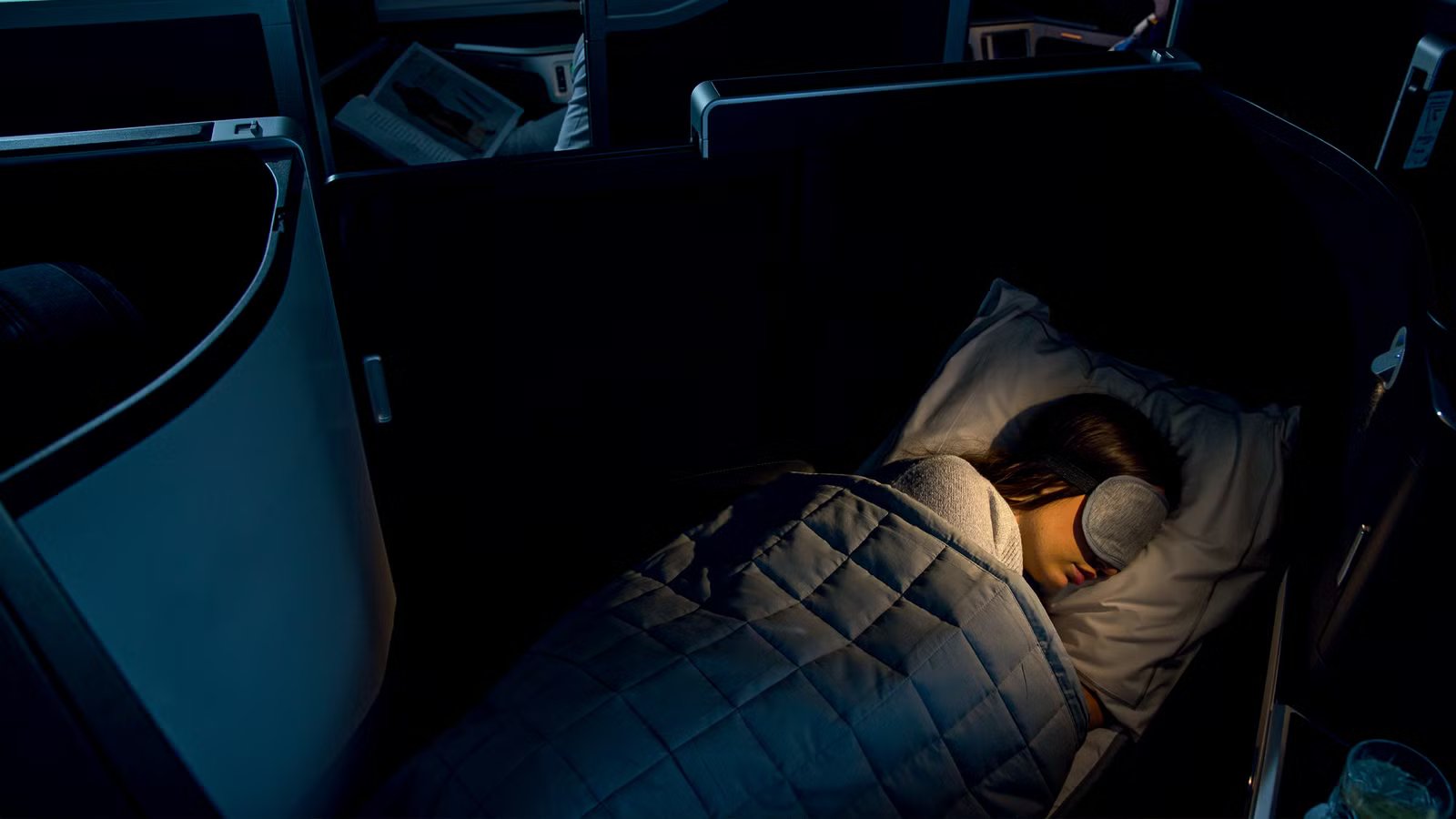
In March 2000,  British Airways became the first airline in the world to offer a fully flat bed in business class, launching a product on its London to New York route that redefined what the cabin class was expected to deliver. Within a few years, every major long-haul carrier was developing its own lie-flat product. The category that BA created became the global standard for premium travel.
What followed was a 26-year cycle of innovation, stagnation, and reinvention that tracks closely with the broader evolution of long-haul business class itself. BA went from leading the industry to trailing it, then reset with a product that brought it back to competitive parity, and is now preparing a third generation of the concept for an aircraft that has not yet entered its fleet. Here is how that cycle has played out and where it goes next.
March 2000: The First Fully Flat Bed In Business Class

In March 2000, British Airways launched a new Club World product on its Boeing 747 services from London Heathrow to New York JFK, and in doing so became the first airline to offer a fully flat bed in business class. The product was developed in partnership with London design firm Tangerine under the internal codename Project Dusk, and it was deployed on 747s configured with 96 business class seats. Before Club World, business class across the industry was defined by wider recliners, better catering, and faster airport processing. No carrier had demonstrated that a genuine lie-flat sleeping surface could be offered at a commercial scale in the middle cabin.
Tangerine’s solution to fitting 96 flat beds into a 747 cabin was the yin-yang layout, a configuration that alternated between forward-facing and rear-facing seats to use the available cabin width more efficiently. By staggering seat orientation, the design achieved a density that would not have been possible with all seats facing the same direction while still delivering a bed that lay fully flat. The layout was not intuitive for passengers accustomed to every seat facing forward, but it worked as an engineering exercise in fitting a product that had previously only existed in first class into a cabin that needed to carry three times as many people.
The impact on the rest of the industry was immediate. Within a few years, every major long-haul carrier was developing or deploying a lie-flat business class product of its own. British Airways had not won by making business class more luxurious in the traditional sense. It had proved that a real bed could be offered at scale, priced below first class, and operated commercially on the highest-demand routes in the world. That shift redefined what business class was expected to deliver and set the baseline against which every subsequent product has been measured.
How The Yin-Yang Layout Went From Revolutionary To Outdated

The yin-yang layout that made British Airways a pioneer in 2000 became its biggest liability by the mid-2010s. The core problem was that while BA kept the same fundamental design for nearly two decades, the rest of the industry moved on.  Qatar Airways introduced QSuites with closing doors in 2017. Delta launched door-equipped suites on its A350 the same year. Singapore Airlines, Cathay Pacific, and ANA all rolled out 1-2-1 configurations with direct aisle access, giving every passenger an unobstructed path to the aisle without disturbing anyone. British Airways’ alternating forward and rear-facing seats could not offer the same.
The most persistent complaint was the window seat. In the yin-yang configuration, window-seat passengers in certain positions had to step over or around the legs of the passenger next to them to reach the aisle. On a daytime flight, that inconvenience was manageable. On an overnight transatlantic sector where both passengers were trying to sleep, it was a genuine product flaw that competitors had solved years earlier. The rear-facing seats were a secondary issue. Some passengers found sleeping or sitting facing the tail of the aircraft disorienting, and while BA argued the orientation made no practical difference at cruise, passenger preference consistently favored forward-facing seats.
By the late 2010s, British Airways was selling a business class product on its flagship transatlantic routes that looked and felt a generation behind what passengers could book on competing carriers for comparable fares. The airline that had defined the category in 2000 had allowed nearly 20 years to pass without a fundamental redesign, and the gap between Club World and the best products on the market had grown wide enough that it was affecting booking decisions. The case for a complete replacement rather than another incremental update had become unavoidable.
Here’s How Much A Business Class Ticket On Qatar Airways’ Boeing 777-300ER Actually Costs In 2026
Onboard the 777-300ER, you’ll have four booking options, each with a stellar offering.
Club Suite And The 2019 Reset

Club Suite debuted in August 2019 on British Airways’ first Airbus A350-1000, replacing the yin-yang layout with a 1-2-1 reverse herringbone configuration that gave every passenger direct aisle access. The seat is a customized version of the Collins Aerospace Super Diamond, adapted by BA to include a sliding privacy door at every position. The fully flat bed measures 6 feet 6 inches (198 cm) in length, and each suite includes a 17 inch (43 cm) high-definition entertainment screen, digital seat controls, and 40% more personal storage than the previous product. High-speed WiFi is available throughout the cabin.
The shift from yin-yang to 1-2-1 addressed the two most criticized aspects of the old product in a single move. No passenger steps over anyone to reach the aisle. No passenger faces the rear of the aircraft. The privacy door, while not full-height, provides enough enclosure to create a genuine sense of separation from the cabin and the aisle, which the open yin-yang layout never offered. The overall effect is a product that brought BA from trailing the industry to competing directly with the door-equipped suites that Delta, Qatar Airways, and others had been offering for two years.
What Club Suite did not do was arrive on the entire fleet at once. The A350-1000 carried it from day one, but BA’s much larger fleet of 787s and 777s continued flying the old Club World cabin for years while the retrofit program worked through the fleet. That meant passengers booking BA business class could not be certain which product they would receive without checking the aircraft type. The rollout has been gradual rather than instant, which created a period where the best and worst business class products in any major carrier’s fleet were operating simultaneously under the same brand.
The A380 Retrofit And 110 Business Class Seats On One Deck

As of early 2026, the Club Suite retrofit across British Airways’ fleet is largely complete on its smaller widebodies. The entire 787-8 fleet has been converted, all 777-300ERs carry the new product, and over 95% of Heathrow-based 777-200ERs have been fitted for passengers flying BA out of Heathrow on most long-haul routes.
The major 2026 milestone is the A380. British Airways began retrofitting its A380 fleet in mid-2026, converting the entire upper deck to a 110-seat Club Suite cabin. That is a significantly larger business class section than any other aircraft in BA’s fleet carries, and it makes the A380 the airline’s most premium-dense widebody. The retrofit also introduces a new First Class product on the lower deck, the first new BA first class cabin in many years. The combination of a refreshed first class and a full upper deck of Club Suite positions the A380 as the flagship of BA’s fleet for the remainder of the type’s service life with the airline.
The scale of the A380 Club Suite cabin creates something BA has not previously offered. With 110 suites on a single deck, the aircraft becomes viable on routes where premium demand is deep enough to fill that capacity at a level that justifies the operating cost of the A380 itself. London to New York, London to Los Angeles, and a handful of other high-yield routes are the likely candidates. The A380 retrofit is not just a cabin refresh. It is a repositioning of the aircraft within BA’s fleet, shifting it from a capacity tool to a premium product platform.
The Subtle Signs That Give 1st Time Business Class Passengers Away, According To Cabin Crew
Passengers may have a lot to hide if they plan to blend in on their first business class journey
The 777-9 And What Comes After Club Suite

British Airways has 24 Boeing 777-9s on order, with deliveries expected from 2027 pending the aircraft’s certification. The 777-9 carries a wider cabin cross-section than either the A350 or the 787, which gives BA’s design team more room to work with when developing the next generation of business class seat. The additional fuselage width opens layout and suite size options that are not physically possible on the narrower widebodies that currently carry Club Suite, and BA is expected to use the 777-9’s arrival as the platform for its most significant business class redesign since Club Suite launched in 2019.
Details of what the 777-9 business class will look like have not been publicly confirmed, but the direction of the industry provides a clear indication of the baseline BA will need to meet. Full-height doors, larger suites, companion seating options, and integrated technology packages are now standard on the newest products from Delta, United, Qatar Airways, and Cathay Pacific. Whatever BA introduces on the 777-9 will need to match or exceed those products on day one, because unlike the yin-yang era, the gap between launching a competitive product and falling behind the industry has compressed from decades to years.