dailynewsnblog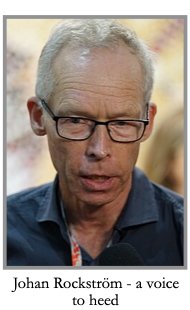

Gross Domestic Product (GDP): a monetary measure of the total market value of all of the goods and services produced by a country in a year.
Economists love the GDP, their magic measuring stick. Without it, how might they judge the success or failure of nations? Always we are told how societies are faring based on the behaviour of their Gross Domestic Product.
Yet the GDP wasn’t intended for such generous application. Indeed, when it was developed in 1934 by Simon Kuznets, an economist and statistician, he warned against using it as a measure of well-being, which he said could not be inferred from measuring income.
Nonetheless, it became the main tool for measuring a country’s economy and from there to an instrument for measuring national development and progress generally.
Unfortunately, it’s a bad choice. It presents a host of problems. It omits free labour, thus devaluing the work of housewives and volunteers. It doesn’t account for society’s biggest current problems: increasing inequality and environmental degradation. Perversely, it includes the cost of harms, such as those caused by global warming, thus turning them into goods.
Perhaps worst of all, it encourages endless economic growth—bigger is always better. At one time that wasn’t a problem, the Earth seemed infinite. But now we have come face to face with the fact we live on a finite planet and we are running into boundaries.
The Stockholm Resilience Centre, a joint initiative between Stockholm University and The Royal Swedish Academy of Sciences, is paying close attention to those boundaries.
To determine what is necessary to safeguard the Earth’s resilience and stability, the Centre has assessed the safe limits for human pressure on nine critical processes. The processes include climate change, biosphere integrity, land-system change, freshwater change, nutrient flows, ocean acidification, atmospheric aerosol loading, ozone depletion and pollution.
According to the Centre, the process boundaries “are scientifically defined guardrails that ensure the Earth’s health. Stay within them, and the Earth stays our dependable home—breach them, and we risk irreversible damage to our very own life support system.”
The boundaries were first proposed by a group of 28 internationally renowned scientists and fully assessed for the first time in 2023. The bad news is that, according to the assessment, seven out of nine boundaries have already been crossed.
According to Johan Rockström, world-renowned environmental scientist and founder of the Centre, the GDP-based growth model that’s driven global development for 200 years “is obsolete.” He believes we have simply reached a “saturation point” on our planet. Our Earthly home is saturated with the exploitation of resources and pollution. It’s had enough.
According to Rockström, ”We now have to be smart and operate within finite budgets of a safe operating space—one carbon budget, one nitrogen budget, one biodiversity budget, one freshwater budget that we all need to share.” On the bright side, he believes we can do this, we can live within our means. There are solutions to our environmental problems.
Putting GDP-based growth behind us will be a challenge, particularly when the United States, the world’s most powerful economy, is on a narcissism-fuelled rejection of limits.
A society’s real wealth lies not in how much it can produce but in its equality, environment, and happiness. We need to remind ourselves of that and adapt accordingly before all nine boundaries are crossed.