dailynewsnblog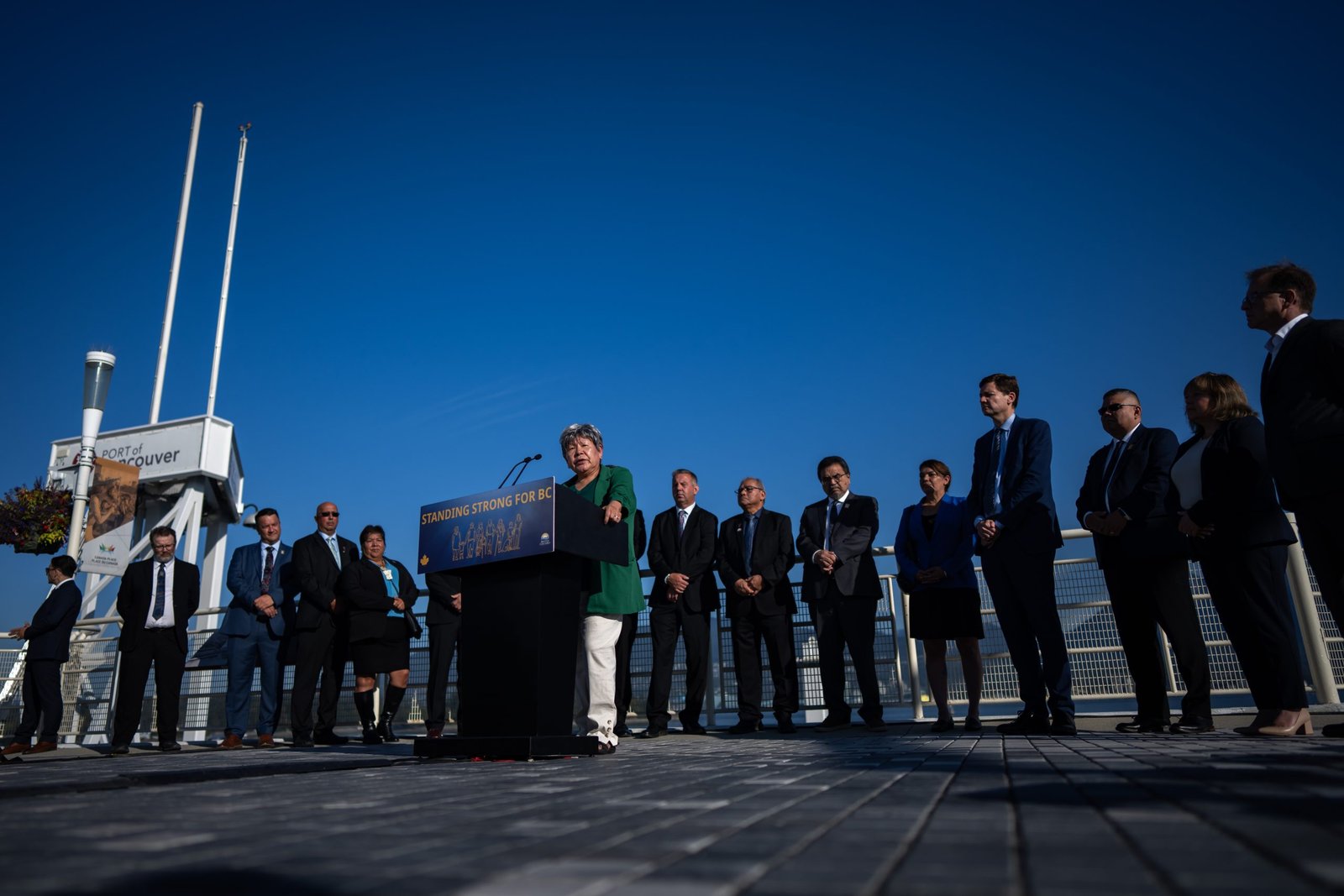
Welcome to Economic Insights, your twice-weekly deep dive into the major projects and policy shifts shaping the Canadian economy.
Stories we are following:
- The proposed Ksi Lisims LNG project in British Columbia has resolved an imminent legal threat. Metlakatla First Nation and the Lax Kw’alaams Band have agreed to drop their judicial review challenging the project’s federal approval and sign a benefits agreement with the project proponents instead.
- A government source tells iPolitics the government initially thought it could table legislation for project review reform just as the parliamentary sitting came to an end, but an unexpectedly strong response from the public in the consultation period forced a change of plans.

Two First Nations to drop legal challenge and sign deals with Ksi Lisims LNG (iPolitics)
The Ksi Lisims LNG project on B.C.’s north coast reached benefit agreements with three First Nations, including two that posed an imminent legal threat.
- The pivot: An industry source tells iPolitics that Metlakatla First Nation and the Lax Kw’alaams Band have agreed to drop the judicial review they launched last autumn after they secured benefits and climate-focused business opportunities tied to the proposed 12-million-tonne-per-year liquefied natural gas facility.
- Updating the lines: The deals also include amendments to the nations’ benefit agreements for the Prince Rupert Gas Transmission project. That is the pipeline infrastructure designed to feed the marine terminal. According to the Metlakatla First Nation, the changes were necessary to better “reflect developments” since original contracts were signed back in 2015.
- Shifting economics: The turnaround marks a stark shift from last fall, when court documents showed Metlakatla casting serious doubt on the project’s financial feasibility and lack of buyers.
- Global swaps: Ksi Lisims locked in a deal in late May with German utility giant SEFE to purchase one million tonnes annually. On Monday, another German utility, Uniper, confirmed it is actively exploring its own supply deal. Five of the plant’s 12 million tonnes of annual capacity are now spoken for, though as iPolitics previously reported, most of the cargo bought by German utilities will likely be swapped on global markets rather than heading straight to Europe.
- The final trigger: The project’s backers—the Nisga’a First Nation, Houston-based Western LNG, and Rockies LNG—are expected to make a final investment decision by the end of this year.

Public pressure pushed federal project review reforms to fall sitting (iPolitics)
The Carney government’s ambition to reform the project review process has collided with strong public pushback, forcing the Privy Council Office to extend the clock on the consultation period.
- The original rush: The government initially believed it could fast-track and table formal legislation to overhaul the federal project assessment process before the upcoming summer parliamentary recess. However, a government source with knowledge of the matter told iPolitics that thousands of comments poured in during the initial 30-day window, signaling “a lot of appetite” for deeper discussions.
- What’s on the line: The proposed reforms include a one-year timeline for federal project decisions, creating a centralized Indigenous consultation hub, and exempting pipelines from Impact Assessment Agency reviews and keeping them under the technical purview of the Canadian Energy Regulator.
- The pushback: Last week, advocates from environmental groups like Ecojustice descended on Parliament Hill to “draw a line in the sand” and demand Carney abandon any legislation that would “sacrifice the environment and climate at the altar of political convenience.”
- Industry’s view: Major industry players don’t appear to be particularly upset by the delay. Lisa Baiton, head of the Canadian Association of Petroleum Producers, told iPolitics that while reducing red tape is vital, “from industry’s perspective, the priority remains a stable, streamlined and predictable regulatory framework… we agree it is incredibly important to take the necessary time to get this right.”
- New timeline: Intergovernmental Affairs Minister Dominic LeBlanc stretched the engagement window to July 22, 2026. Legislation is set to be tabled in the fall sitting.
By the numbers:
$27: The average Alberta TIER credit price last week, down almost 20 per cent since the implementation agreement was released in late May. Alberta plans to implement a minimum price floor of $60 starting in 2030.
$200B: The maximum projected cost of the Toronto-to-Quebec City high-speed rail corridor according to Bloc Québécois modeling, starkly contrasting the federal government’s $60B to $90B estimates.
75 days: The total length of the extended public consultation period for the Carney government’s project-review discussion paper, after initial 30-day timelines sparked intense backlash from First Nations and environmental coalitions.
Major projects watch:
– The Parti Québécois says it will withdraw la belle province from the high-speed rail project if it forms government in the fall, citing the risk of cost overruns. It’s unclear how that would work in practice. Proactive disclosure documents suggest Quebec has signed a document of some kind pledging to help Ottawa advance the project.
– The Impact Assessment Agency of Canada (IAAC) has released its draft impact assessment report for the proposed Marten Falls Community Access Road. The road is set to facilitate mining in northern Ontario’s Ring of Fire. The draft report says the project is expected to yield “net positive sustainability benefits to a low extent,” largely driven by economic reconciliation. However, the regulatory body notes that the project will also bring irreversible, long-term adverse federal effects, including a “moderate extent” of cumulative strain on local social infrastructure and significant localized disruptions to traditional Indigenous hunting, trapping, and fishing. It also says the construction does not contribute to Canada’s near-term climate change or biodiversity commitments. A public comment period on the draft conditions is now underway.
– In Manitoba, legislation to create a new Crown-Indigenous corporation to work with the Major Projects Office and the Arctic Gateway Group on the proposed Port of Churchill Plus project is being hung up. Some First Nations worry the entity would override the government’s duty to consult. “I always worry about setting these things up and then they become this separate group now that starts making decisions on behalf of First Nations governments,” said Grand Chief Jerry Daniels of the Southern Chiefs’ Organization. More from Gabrielle Piché with the Winnipeg Free Press.
– Eldorado in Saskatchewan is celebrating the production of the first copper concentrate at McIlvenna Bay, one of the first projects to be referred to the Major Projects Office. The company says it’s on track to launch commercial production in the fall of 2026.
– Minister of Transport Steven MacKinnon has launched the public consultation process on the future of Billy Bishop Toronto City Airport. The engagement will run until July 24. This is an open consultation process, with no decisions made at this stage,” reads a press release. This comes as the Ford government in Ontario passed legislation to make the airport a ‘special economic zone’ where municipal and provincial rules can be suspended.
– Bruce Power has returned its Unit 3 to service more than seven months ahead of schedule following its Major Component Replacement project. The renewed unit is now set to provide power over decades.
Headlines: