dailynewsnblog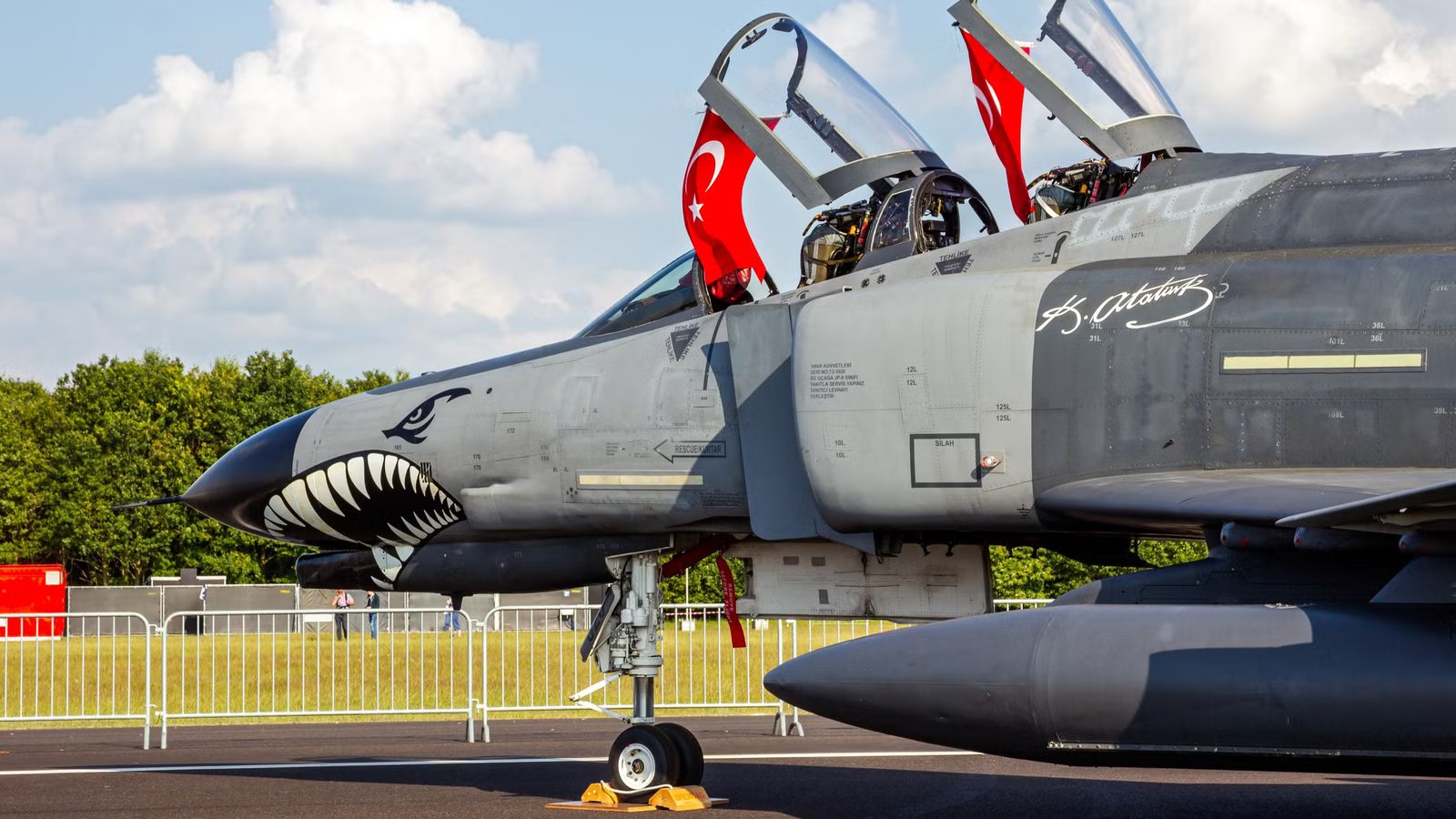
First flown in 1958, the McDonnell Douglas F-4 Phantom II continues to defy expectations well into the 21st century, remaining operational, relevant, and, remarkably, still airborne in several parts of the world. This article will explore why the F-4 Phantom refuses to fade into history, by examining its evolution, current operators, and the unique roles that keep it flying today.
At a time when fifth-generation stealth fighters dominate headlines, the continued service of a Cold War-era jet might seem anachronistic. Yet the Phantom’s story talks about reinvention. From heavily upgraded strike platforms in NATO air forces to reconnaissance, and even private ownership in the United States, the F-4’s survival highlights how sound airframe design, mission flexibility, and cost-effectiveness can, in some cases, be more important than technological novelty.
Born For Speed And Power: How The F-4 Phantom Became A Cold War Icon

The McDonnell Douglas F-4 Phantom II was born out of a late 1950s US Navy requirement for a fleet defense interceptor capable of long-range, high-speed, and heavy weapons loads. Its first flight in May 1958 marked the beginning of one of the most prolific and adaptable combat aircraft families of the Cold War era.
Although the initial design prioritized missile armament over an internal gun, combat experience, especially in Vietnam, prompted a series of tactical and structural changes that broadened the Phantom’s mission set and cemented its reputation. Over time, the Phantom transitioned from a pure interceptor into a true multirole workhorse used for air superiority, ground attack, reconnaissance, and electronic warfare.
The Phantom’s design combined two powerful General Electric J79 engines, a large airframe with substantial internal volume for fuel and systems, and a two‑crew cockpit that separated flying and systems management tasks.
Production and global service tell the rest of the story. Between 1958 and 1981, more than 5,000 F‑4s were built and delivered to the US Navy, US Marine Corps, and United States Air Force as well as to many allied air forces. Exports and licensed upgrades extended the Phantom’s footprint to Europe, Asia, and the Middle East, where local maintenance, avionics retrofits, and mission‑specific modifications kept airframes flying into the 21st century. The combination of a proven airframe, a large spare‑parts supply chain, and a clear upgrade path explains why aircraft conceived in the 1950s remained operationally useful for decades.
How Different Air Forces Kept The F-4 Relevant

The reason the F-4 Phantom has not been retired globally lies in how different users have adapted it to niche but critical roles. Instead of competing directly with modern stealth fighters, the few remaining operators employ the Phantom by optimizing its service strengths: payload, speed, endurance, and ruggedness. These qualities make it ideal for strike missions, reconnaissance, and training roles that do not require low observability.
The United States was the Phantom’s largest and most influential operator, flying the aircraft with the US Navy, US Marine Corps, and US Air Force between 1960 and 1996. During that period, the F-4 evolved from a missile-only interceptor into a gun-armed, multirole strike fighter, shaping everything from air combat tactics to SEAD doctrine in Vietnam and more.
In Europe, the United Kingdom operated the Phantom with both the Royal Navy and Royal Air Force(RAF), heavily modifying it with Rolls-Royce Spey engines to suit carrier and interceptor roles. West Germany, Japan, and South Korea used the Phantom as the backbone of their Cold War air defense and strike capabilities, while Israel refined the aircraft into a precision strike and reconnaissance platform that directly influenced later Western upgrade paths. Iran’s large pre-1979 Phantom fleet further cemented the type’s reputation for long-range strike and durability in harsh operating environments.
Air Force | Service entry | Variants operated | Primary roles | |||
|---|---|---|---|---|---|---|
USAF/USN/USMC | 1961 (USN/USMC), 1963 (USAF) | F‑4B/J(Navy);F‑4C/D/E/G(USAF);RF‑4variants | Interceptor;fighter‑bomber;SEAD(F‑4G);recon(RF‑4) | |||
RAF/RN(UK) | 1968–1969 | FG.1(F‑4K),FGR.2(F‑4M) | Fleetairdefence(FG.1);interceptor/strike/recon(FGR.2) | |||
Luftwaffe(WestGermany) | 1971 (RF‑4E) / 1973 (F‑4F) | RF‑4E;F‑4F | Airdefenceprimary;latermultirole/striketasks | |||
JASDF(Japan) | 1971(deliveries from1971) | F‑4EJ;RF‑4E | Airdefence/interceptor;recon(RF‑4) | |||
IAF(Israel) | 1969(first deliveries1969) | F‑4E(+manylocalupgrades) | Airsuperiority;strike;recon | |||
IRIAF(Iran) | 1968–1971(deliveries in1968–71acrossD/E/RFtypes) | F‑4D,F‑4E,RF‑4E | Long‑rangestrike;maritimestrike;recon | |||
HAF(Greece) | 1974 | F‑4E(AUPupgrades) | Strike;airdefence;maritimeroles | |||
TuAF(Turkey) | 1974 | F‑4E;RF‑4E | Strike;recon;airdefence |
This enormous historical user base is another reason the Phantom remains in the skies today. Hundreds of airframes remained in storage worldwide long after frontline retirement, allowing modern operators to select low-time aircraft for upgrades or secondary roles.
Apart from air forces, another flying Phantom in 2026 will be visible in the US, a new F-4D, according to FIGHTERJETS.
How Many F-4 Phantoms Are Left?
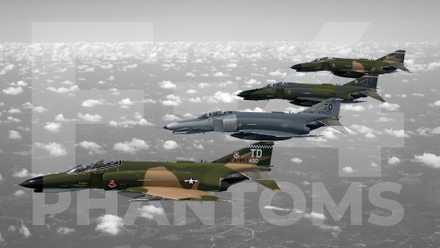
Almost 100 McDonnell Douglas F-4 Phantom IIs are still in service around the world today.
Greece’s Upgraded F-4 Phantom: How The Hellenic Air Force Modernized A Classic

Greece remains one of the most famous Phantom operators, having flown the type since 1974. After the retirement of the RF-4E with their Vietnam livery, the Hellenic Air Force (HAF) has invested heavily in keeping its F-4E fleet relevant through comprehensive modernization programs.
The Peace Icarus 2000 upgrade transformed the F-4E Phantom II AUP into a highly capable strike platform. The upgrade included the AN/APG-65GR radar, similar to early F/A-18 Hornets, the CPU143/A central air data computer, the MMRC modular mission computers, and modernized cockpits with multifunction displays. The Litening II airborne laser designator allows the F-4EAUP to engage ground targets with precision-guided munitions from high altitude, avoiding short and medium-range defenses. Besides that, the update allows the F-4E to use the AIM-120 AMRAAM air-to-air missile. These enhancements allow the aircraft to conduct deep strike and maritime attack missions, roles particularly relevant in the complex Aegean operational environment.
Currently, the last operator of the Phantom in Greece is the 338th Fighter-Bomber Squadron of the 117th Combat Wing of the Hellenic Air Force. These aircraft, in Aegean Ghost livery, are frequently seen performing dramatic low-level flights through terrain such as the Canyons of Peloponnese, showcasing both pilot skill and the Phantom’s enduring low-altitude performance.
The Greek Phantom’s continued service is also a strategic decision. By retaining the F-4, Greece preserves a high-payload strike option while devoting more advanced fighters like the F-16V and Rafale for air superiority tasks. This layered force structure ensures operational flexibility and demonstrates how older platforms can remain relevant when intelligently integrated.
Turkey’s F-4E 2020 Terminator: One Of The Most Advanced Phantom Upgrades Ever

Republic of Türkiye’s use of the F-4 Phantom represents one of the most ambitious upgrade programs ever applied to the aircraft. Known as the F-4E 2020 “Terminator,” the Turkish variant reflects a deliberate effort to extract maximum capability from a proven airframe.
The Terminator upgrade, developed with Israeli assistance in the beginning of the 2000s, introduced advanced new Head-Up Display and Hands-On Throttle And Stick avionics, Elta EL/M-2032 multimode airborne fire-control radar, new electronic countermeasures, structural reinforcement, and, of course, modern weapons integration: Turkish Phantoms are optimized for long-range strike and reconnaissance, carrying heavy payloads such as AGM-142 Popeye standoff missile, AGM-65 Maverick air to ground missiles, and laser guided bombs. Their continued participation in multinational exercises, from the Anatolian Eagle to the most recent Poggio Dart 2025 alongside the Italian Air Force, demonstrates that they remain interoperable within NATO frameworks.
For Turkey, the Phantom also serves as a hedge against delays or political challenges in acquiring newer aircraft. By sustaining a capable strike fleet using upgraded F-4s, Ankara maintains operational depth and strategic autonomy — another example of why the Phantom persists where geopolitical realities demand flexibility.

Iranian Air Force Will Finally Retire Its F-14A Tomcats: Russian Su-35SE Replacement
Iran seems poised to finally retire its worn-out F-14 Tomcats are the new Su-35 Flankers enter service.
Iran’s F-4 Phantom Fleet: How Sanctions Failed To Ground A Cold War Fighter

Iran is often cited as the most unexpected remaining operator of the F-4 Phantom. Decades of international sanctions, limited access to spare parts, and persistent regional conflict would seemingly make sustained operations impossible. Yet the Islamic Republic of Iran Air Force (IRIAF) continues to fly some F-4D and F-4E aircraft, primarily in strike and reconnaissance roles.
Despite steady attrition over the years, and reported losses linked to Israeli and US strikes against regional proxy infrastructure, Iran has demonstrated a notable ability to keep its Phantoms airworthy. Indigenous maintenance programs, reverse-engineered components, and localized parts fabrication have allowed the fleet to survive well beyond its expected lifespan. Perhaps the most technically impressive aspect is the continued operation of the General Electric J79-GE-17 turbojet.
With no access to factory-new hot-section components, Iran has reportedly developed indigenous overhaul processes for turbine blades, combustion liners, and afterburner components. While thrust margins and engine life are almost certainly reduced compared to original specifications, operational profiles suggest the aircraft remain capable of high-subsonic and limited supersonic flight, sufficient for regional strike missions. Iranian F-4s are also believed to have received limited upgrades, including improved navigation systems and compatibility with domestically produced weapons.
Iranian F-4 Phantoms were a central tool of Iranian airpower for decades. Their operational history spans deterrence, high-intensity conventional war, and post-war regional security missions.
Pre-1979 power projection: Operated in large numbers, IRIAF Phantoms formed the backbone of Iran’s long-range strike and maritime attack capability, supporting regional deterrence and rapid response missions across the Persian Gulf.
- Iran–Iraq War (1980–1988): F-4s conducted deep-strike missions against Iraqi airbases, oil facilities, and command infrastructure, participated in major opening-phase operations such as Operation Kaman 99, and later adapted to low-level and maritime strike roles as Iraqi air defenses improved.
- Maritime and “Tanker War” operations: Iranian Phantoms were used extensively in anti-shipping missions in the Persian Gulf, exploiting the type’s range and payload to threaten oil traffic and naval targets.
- Post-war border security: In the 1990s, F-4s continued to fly airspace patrols and interception missions, including engagements against intruding aircraft along Iran’s eastern borders.
- Modern deterrence role: In the 21st century, Phantoms have primarily been used for exercises, patrols, and signaling during periods of heightened regional tension rather than direct combat.
Taken together, these roles illustrate why the Phantom retains significance in Iranian service. Its continued operation is rooted not in nostalgia, but in a combat history that once placed the F-4 at the center of Iran’s ability to project airpower and impose strategic costs on its adversaries.
Why The F-4 Phantom Refuses To Become Obsolete

The F-4 Phantom’s continued presence in the skies is not an accident or an anachronism. It reflects a unique convergence of robust engineering, adaptable design, and mission relevance. From NATO exercises to canyon-hugging flights in Greece and private-sector airshows in the United States, the Phantom continues to deliver value where it counts.
As long as air forces and defense organizations require a high-speed, heavy-payload platform that is proven, flexible, and cost-effective, the F-4 Phantom will have a role. Its legacy is ongoing and has not yet faded into history. In an era obsessed with the new, the Phantom stands as a reminder that the right aircraft, intelligently used, never truly becomes obsolete.
Catch what other trackers miss
Emergency squawks, holds, NOTAMs — live signals, no signup.
Open tracker
Catch what other trackers miss
Emergency squawks, holds, NOTAMs — live signals, no signup.
Open tracker