dailynewsnblog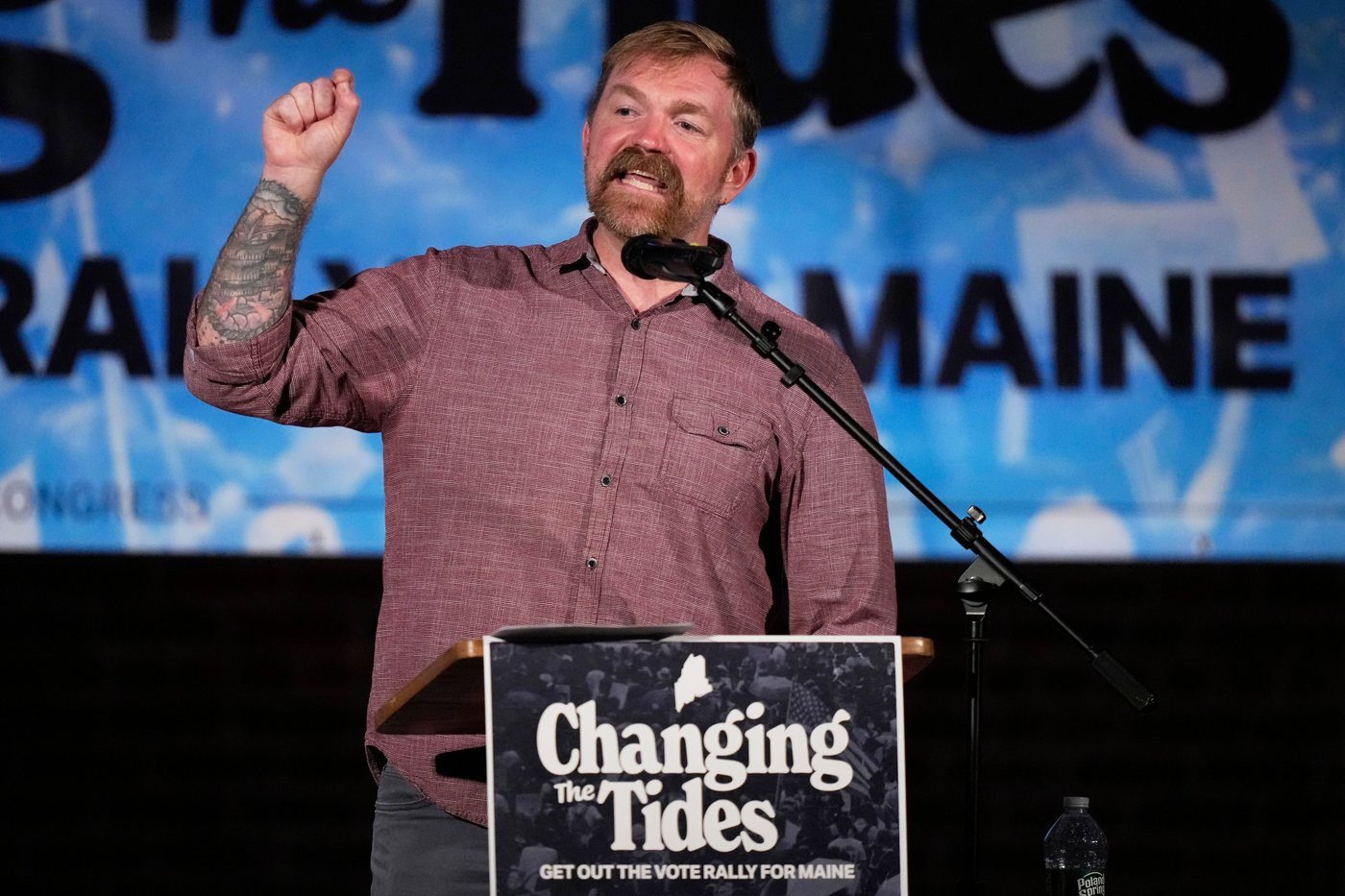
PORTLAND, Maine (AP) — Graham Platner has attracted a following of enthusiastic supporters and been confronted with a string of controversies as he has transformed from a political unknown into the leading Democratic candidate for U.S. Senate in one of the year’s most critical races.
Platner is running in Tuesday’s primary for the chance to face longtime Republican Sen. Susan Collins, a contest that Democrats see as a must-win as the party tries to claim control of the Senate in November.
Platner’s path to the nomination grew easier in late April when Democratic Gov. Janet Mills dropped out citing a lack of money, though her name still appears on the primary ballot because she suspended her campaign late in the race. The only other Democratic candidate is David Costello, a former government official in Maryland who has not campaigned aggressively.
Platner has been dogged by political controversy, including sexually explicit text messages he reportedly sent to women while he was married and former girlfriends’ claims that he could be demeaning toward women. His background has made some Democrats anxious about their chance to flip the important seat.
He said during an event days before Tuesday’s primary that he wants to “take this seat back for working Mainers” by beating Collins.
“We can build a government by working people, for working people,” he said during a rally Friday in Bar Harbor. “We need to build a world in which everyone in this country has the time to live up to their full potential.”
Maine voters on Tuesday also will choose Republican and Democratic nominees for governor in crowded contests to replace Mills. In the 2nd Congressional District, Democrats will choose a nominee to face former Gov. Paul LePage, who is unopposed in the GOP primary. Democratic U.S. Rep. Jared Golden is stepping down, giving Republicans hope of winning back a district that President Donald Trump easily won in 2024.
The primaries will involve the use of ranked choice voting, in which voters can rank the candidates on their ballot in order of preference. If no candidate breaks 50% of the popular vote, the bottom finisher is eliminated, and voters’ second choices come into play. The tabulations continue until a candidate achieves a majority of the total votes, meaning results may not be known for days.
Platner energized Democratic voters
Platner, 41, is a Marine veteran and oyster farmer who was chair of the planning board in the small town of Sullivan. He has drawn hundreds of people to his rallies around the state, filling theaters with cheering supporters. He has focused his campaign on fighting the high costs he says hold down the middle class and said he got in the race to focus on income inequality.
He had early support from progressive champions like Sen. Bernie Sanders, a Vermont independent, helping to boost his candidacy. Senate Democratic leader Sen. Chuck Schumer backed Mills, 78.
Platner campaigned as an outsider willing to take on billionaires and the Washington establishment, including Collins.
His background has also generated criticism from both the right and the left.
Old online comments made by Platner in which he appeared to endorse political violence, dismiss rape in the military and criticize both police officers and rural America surfaced last year. Platner apologized for the comments and said he was struggling with post-traumatic stress disorder and depression at the time he wrote them.
He’s also faced questions about a skull-and-crossbones tattoo recognized as a Nazi symbol. Platner said he got the tattoo on his chest during a night of drinking while he was on leave in Croatia. He has maintained that he was unaware until recently that the image had been associated with Nazis, and he has since covered the tattoo with a different design. Platner has said he didn’t know the origin of the symbol; a former girlfriend told New York Times that he did.
More recently, he went on the defensive amid reports that he previously exchanged sexually explicit text messages with several women while married. Platner hasn’t directly denied the existence of the texts but instead criticized the aide who talked to news outlets and accused the media of running gossip.
The New York Times last week reported about his relationships with previous girlfriends, some of whom viewed him positively and others who described him as volatile and insulting. One woman said Platner twisted her arm during an argument and locked her in a room. Platner’s campaign disputed the allegation.
Collins is unopposed in the GOP Senate primary
A matchup between Platner and Collins would pit a progressive with no experience in high office against one of the most powerful legislators in the Senate, and one of its few remaining moderate Republicans.
First elected in 1996, Collins is the only Republican senator left from New England and widely seen as one of the most vulnerable members of the party up for reelection this year, though she has survived several past challenges.
Collins has said her experience and key position as chair of the powerful appropriations committee are two reasons to send her back to the Senate.
“It has been 92 years since a Maine senator was chair of the Senate Appropriations Committee, the most powerful committee in the Senate,” Collins said in May. “When I took over last year I realized I had a once in a century opportunity to help the state of Maine and pursue national priorities as well.”
Primaries for governor and 2nd House District are also on the ballot
In the governor’s race, Democrats are choosing between Maine Secretary of State Shenna Bellows; former Maine Senate President Troy Jackson; former Speaker of the Maine House of Representatives Hannah Pingree; energy executive Angus King III; and former director of the Maine Center for Disease Control and Prevention Nirav Shah.
The Republican ballot for governor is even more crowded. Republicans will choose between former U.S. Assistant Secretary of State Bobby Charles; healthcare executive Jonathan Bush; former Maine Senate Majority Leader Garrett Mason; University of Maine System trustee Owen McCarthy; former Paris, Maine, selectman Robert Wessels; and business owners David Jones and Ben Midgley.
In the 2nd Congressional District, former Maine Secretary of State Matt Dunlap, state Sen. Joe Baldacci, former U.S. Senate candidate Jordan Wood and social worker Paige Loud are on the ballot for the Democrats. The winner will face LePage, a Trump ally.
Patrick Whittle And Kimberlee Kruesi, The Associated Press