dailynewsnblog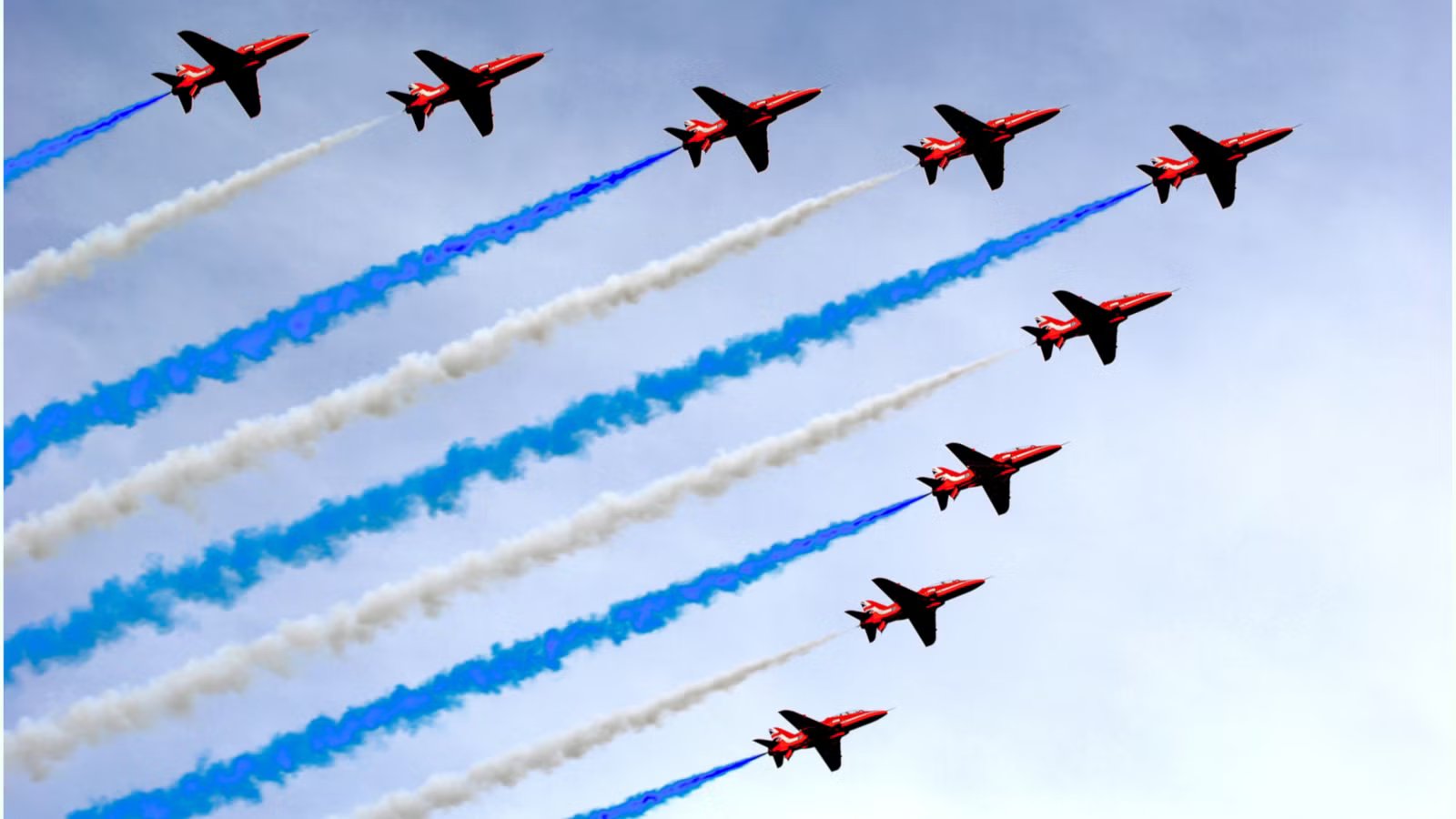
As the sun dipped over the Saronic Gulf on the evening of May 10, 2026, the waterfront of Flisvos Marina in Palaio Faliro transformed into something extraordinary. Thousands of spectators packed the Athens Riviera in front of the monument to Emperor Constantine Palaiologos, craning their necks skyward as the sky above the Greek capital was claimed, for one magnificent hour, by some of the finest aircraft and pilots on earth.
Integrated with data from the official Hellenic Air Force website, AMNA, Global Firepower and The Aviationist, this article tries to make the reader experience what we lived, from the warbirds roar, the clean formation flights of jets of the Hellenic Air Force and the ones from NATO Tiger Meet, the Red Arrows, and the elite of the Hellenic Air Force, the team Daedalus and Zeus aerobatics.
A Century Of Wings: The Significance Of The Spitfire And The Harvard

The 95th anniversary of the Hellenic Air Force (HAF) recalls a history of survival, resilience, and transformation, from a service that flew Farman III biplanes over the Balkans in 1912 to one that today fields the fourth-generation Dassault Rafale and soon expects the Lockheed Martin F-35.
Greek aviation was first established in 1911 with help from French experts, and the air force participated in the Balkan Wars, World War I, the Asia Minor War, and World War II. In 1930, the Aviation Ministry was founded, establishing the Air Force as the third independent branch of the Hellenic Armed Forces, merging the Army Air Service and the Naval Air Service into a single Royal Hellenic Air Force. The following year, 1931, the Hellenic Air Force Academy, known as the Icarus School, was founded. It is from that formal 1931 independence that the 95-year count runs, making 2026 the centennial milestone’s penultimate chapter.
No aircraft carries the weight of that wartime story more viscerally than the two that bookended the historical segment of the May 10 display: the North American T-6G Texan (known in Greece as the Harvard) and the Supermarine Spitfire. During the German occupation of Greece, the Air Force was rebuilt in exile under the Greek Air Force Ministry based in Cairo. Three squadrons operated under the command of the British RAF, including the 335 and 336 Fighting Squadrons, flying Hawker Hurricanes and Spitfire V types.
In Greek service, the T-6 was known as Harvard, following the British tradition, and it became inseparable from the Air Force Academy at Dekeleia. Greece received its first Supermarine Spitfire Mk Vb/Vc aircraft from the British in the Middle East at the end of 1943, initially equipping the 336 Interceptor Squadron and afterward the 335 Interceptor Squadron. After extensive military action over North Africa and Yugoslavia, the Greek Spitfires returned to Greece in October 1944. After serving in the early battles of the Greek Civil War, the Spitfire was eventually relegated to training duties at the Air Force Flight School, yet its legacy never faded.
MJ755, the only airworthy Greek Spitfire, belongs to the Hellenic Air Force Museum and returned to flight status after an extensive restoration in the United Kingdom was funded by the Ikaros Foundation, which also supports its upkeep and operation, as stated on the Hellenic Air Force Website. As reported by Scramble.nl, the T-6G came back to the skies in 2024. Post-war, the Academy’s flight training was carried out on Harvard and Spitfire aircraft, a combination that shaped generations of Greek pilots. The roar of the engines of both types airborne above the Athens waterfront connected modern Greece to one of its most turbulent chapters, but also to its origins.
The Hellenic Air Force: Past, Present, And The Road To The F-35

Greece’s air force today is very different from the one that scrambled Hurricanes and Spitfires over the Aegean in the 1940s. Despite not being in the top three largest air forces in the world, the HAF currently fields approximately 42,500 personnel and around 560 aircraft across eight types of aircraft, as stated by Global Firepower, serving as a cornerstone of NATO’s southern flank. It’s not one of the world’s largest Air Forces,
The Cold War years saw rapid jet-age expansion, with North American F-86 Sabres, Republic F-84 Thunderjets, and eventually the iconic McDonnell Douglas F-4 Phantom II entering service, the latter becoming a defining aircraft for decades. More recently, the HAF has been in the midst of a major fleet rationalization. As Simple Flying has reported, Greece has operated a broad mix of fighters simultaneously: F-4s, multiple F-16 variants, and Dassault Mirage 2000-5s, leading to calls for a leaner, more capable force. The May 10 display illustrated this transition perfectly with a formation flyover of the above-mentioned aircraft plus the Rafale, a symbolic combination of past and present.
The future is firmly pointed toward fifth-generation capability. Greece has been actively pursuing the F-35A acquisition to complement its growing Rafale fleet, with Defense Minister Nikos Dendias previously describing to AMNA the F-35 as a “force multiplier” and declaring, “We are witnessing a change of era”. The 95th anniversary flyover, set against the blue waters of the Saronic Gulf, felt like an ideal visual metaphor for a service navigating that change with confidence.
Why The F-4 Phantom Won’t Be Retired Anytime Soon
A Cold War icon defies expectations, remaining relevant in the 21st century. Discover the secrets behind the F-4 Phantom’s enduring legacy.
The Red Arrows: Diamond Nine Above Athens — A Rarer Sight Than Anyone Knew

Of all the performers at the Flisvos display, none drew more collective gasps than the Royal Air Force Aerobatic Team. The reason for the team’s presence in Greece is the SPRINGHAWK exercise, a five-week pre-season training period that allows the Red Arrows to perfect and polish their new display each year.
Greece provides more guaranteed weather conditions compared to what the team typically finds flying out of their RAF Waddington base in Lincolnshire. The SPRINGHAWK 2026 schedule placed the team at Tanagra Air Base throughout April and well into May, flying up to three sorties per day to hone their routines ahead of the summer season.
Catch what other flight trackers miss
Emergency squawks, holds, NOTAMs — live signals, no signup.
Open tracker
Catch what other flight trackers miss
Emergency squawks, holds, NOTAMs — live signals, no signup.
Open tracker
The red BAe Hawk T1 jets performed a sneak pass from behind the crowd in their full Diamond Nine configuration, but that wasn’t the only surprise: seconds after their appearance, they turned their smokes on, and instead of their signature red, white, and blue smoke trails, the colors of the Union Jack, they used just white and blue, to paint the Greek Flag against the darkening Mediterranean sky. For their Greek hosts, the team treated the occasion with the ceremonial weight it deserved: nine Hawk T1 jets in the Diamond Nine, one of the most recognizable formations in global aviation.
What the crowd did not yet know, what even the RAF had not yet publicly announced, was that those nine aircraft would soon become a rare luxury. On May 24, 2026, it was confirmed that the Red Arrows would downsize from nine jets to seven for most displays until at least 2030, in a conscious effort to conserve spares and flight hours for their aging Hawk T1 aircraft. From now until at least 2030, the Red Arrows will fly with seven aircraft rather than the usual nine, due to the age of their engines.
The full Diamond Nine will be reserved for the King’s Birthday Flypast and July 4th celebrations in the USA, as reported in detail by The Aviationist. The Athens audience on May 10, therefore, enjoyed one of the season’s final complete Diamond Nine performances at a regular public airshow, a fact that makes the footage and memories from Flisvos considerably more precious than anyone realized at the time.
NATO Tiger Meet: The Tigers Arrive At Floisvos

The Red Arrows were not the only international guests contributing to the Mediterranean spectacle. Aircraft participating in Exercise NATO Tiger Meet 2026 also featured in the Flisvos flypast, providing a direct visual link between the 95th anniversary celebration and the major NATO exercise unfolding simultaneously at Araxos Air Base in the Peloponnese.
As previously documented by us at Simple Flying, the exercise ran from May 4 to May 15, hosted by the 335 Mira, the oldest squadron of the Hellenic Air Force, marking Greece’s second time hosting the event after the 2022 edition. Located in the northwestern Peloponnese near Patras, Araxos offered direct access to extensive training areas and the broader Athens Flight Information Region.
The formation flying over Flisvos that evening captured the Tiger spirit: tiger-striped jets and operationally-configured fighters swept low over the coastline in a tight, disciplined pass that reflected the composite air operations crews had been perfecting at Araxos all week. Behind the spectacle lay extremely demanding operational flying, with participating crews executing Composite Air Operations involving dozens of aircraft launched simultaneously in coordinated strike packages. The crowd saw the polished result; the full story ran considerably deeper.
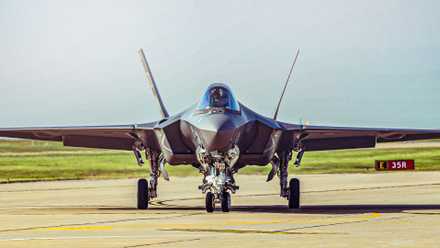
Here’s What The Secret Symbols Painted On US Air Force Fighter Jets Actually Mean
Kill markings track victories and missions on combat aircraft, evolving from WWII symbols into a regulated system still used on modern USAF jets.
Daedalus: Myth, Turboprop, And Precision

If the Spitfire represented Greece’s past, the Beechcraft T-6A Texan II Demo Team “Daedalus” embodies the bridge to its present. Flying the Beechcraft T-6A Texan II, the turboprop trainer that serves as the HAF’s primary pilot-selection and basic flight training aircraft, the Daedalus team delivered a solo display combining agility, low-altitude precision, and mythological resonance.
The name comes from Greek mythology: Daedalus was a skilled architect and craftsman who escaped from the labyrinth in Crete flying with wings made of various feathers, threads and beeswax. As reported on the Hellenic Air Force website, the team was formed in September 2005 at Kalamata Air Base, initially performing at Tanagra before building an international following. The T-6A Texan II is powered by a Pratt & Whitney PT-6A-68 turboprop engine providing 1,100 shaft horsepower, with a climb rate in excess of 3,300 feet per minute and a maximum cruise speed of 310 mph (500 km/h).
The Hellenic Air Force fleet consists of 25 standard T-6A and 20 T-6A-NTA models, the latter carrying six under-wing hardpoints capable of carrying air-to-ground weapons for a limited light-attack role. The demo aircraft wears a distinctive livery: a waving Greek flag across its upper fuselage and the mythological figure of winged Icarus on its underside, both complemented by representations of the Greek Flag and the labyrinth on the tail surface. The stabilizer fin hosted a decoration dedicated to the Tiger Meet.
Over Flisvos, the solo pilot showcased hammerhead turns, Cuban eights, knife-edge passes, and low-altitude aileron rolls at the margin of the crowd line, the sound of the PT6 turboprop carrying clearly above the sea breeze. It was a masterclass in what a trainer aircraft, and the pilots who learn in it, can do.
Zeus: Block 52+ Lightning Above The Aegean

The undisputed headline act of the evening, as it tends to be wherever it performs around the world, was the HAF F-16 Demo Team “Zeus.” Named for the father of the Olympian Gods, the team brought its characteristic combination of raw speed, high-G energy, and precision aerobatics to the seaside crowd in a display that lasted roughly 12 minutes, but felt considerably longer and fascinating.
The Zeus team was established in February 2010, trained by the USAF’s Viper West F-16 Demo Team at Hill Air Force Base in Utah, as reported by European Airshows. During the show, the demonstration pilot reaches 0.94 Mach, climbs from 300 feet (100 meters) to 15,000 feet (5 km), and is exposed to acceleration forces of up to 9.5G. The team uses an F-16C Block 52+, which maintains its operational Aegean Gray scheme rather than a special paint job, a deliberate choice that underscores combat readiness.
The Zeus Team distinguishes itself with a dynamic routine that highlights the F-16’s full capabilities, often flying with conformal fuel tanks — a configuration shared only with Poland’s Tiger Demo Team in Europe. The burner rolls, high-alpha slow passes, and vertical climbs that punctuated the Flisvos display drew audible reactions from the crowd each time — a reminder that for all the nostalgia of the Spitfire and the spectacle of the Red Arrows, the Block 52+ remains one of the most capable and charismatic combat aircraft on the planet.
Against the light of a May evening over the Saronic Gulf, with the ancient city of Athens stretching inland behind the spectators and the distant silhouettes of the Aegean islands on the horizon, the sight of the HAF’s demo F-16 pulling a 9G break turn, afterburner blazing, smoke trail curling behind it, and flares released, summarized the entire message of the 95th anniversary in a single frame: a century of flying from Farman biplanes to Fighting Falcons, and still very much looking upward.