dailynewsnblog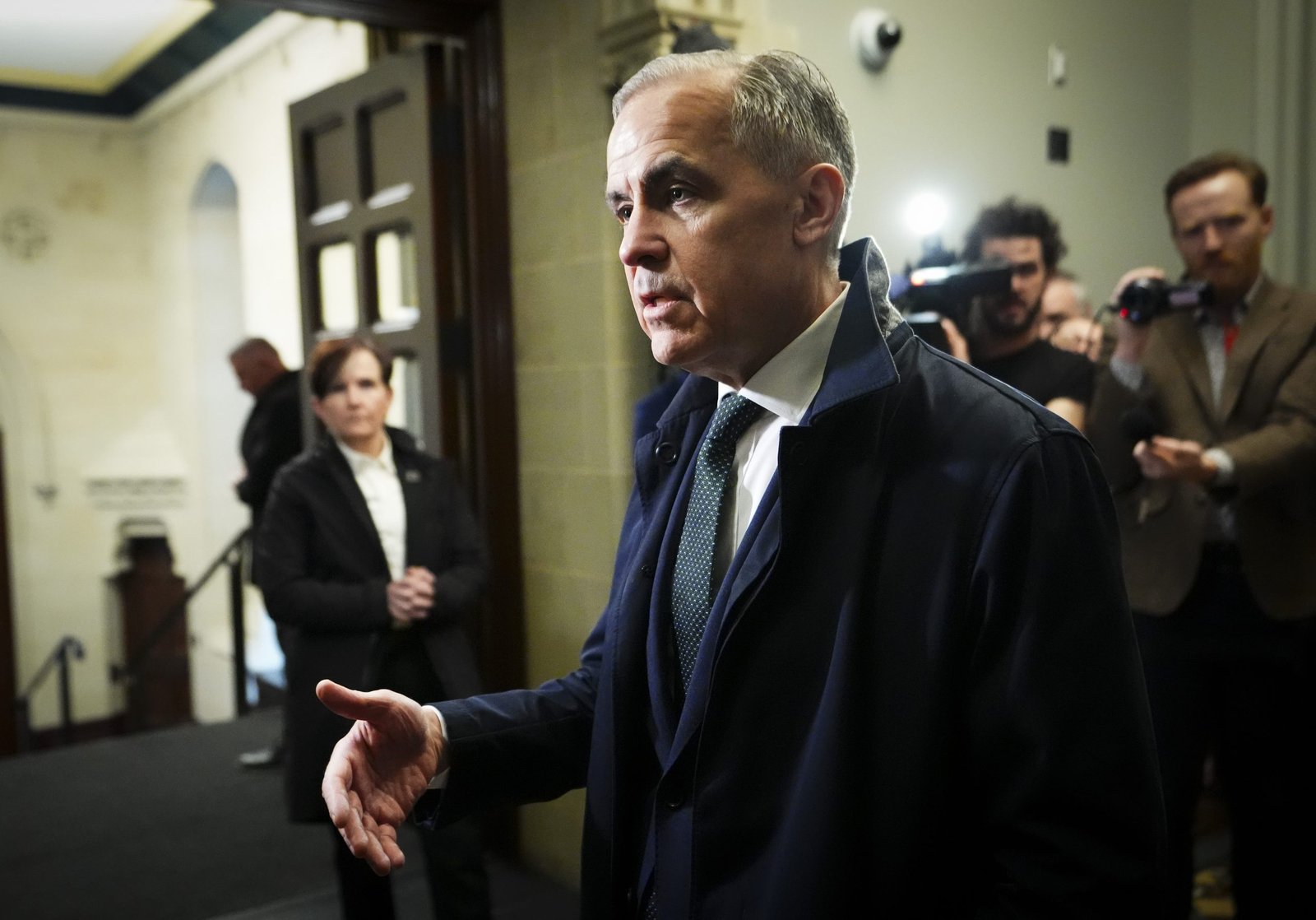
Zoë Craig-Sparrow, vice-president for Justice for Girls, accused the Liberals of using “delays, lies and misrepresentation” to justify their slow pace in passing the bill.
Indigenous advocates are ramping up the pressure on the Liberals to pass legislation ending the divisive second-generation cutoff before the end of the spring sitting later this month.
It comes after iPolitics reported late last month that a government source said it’s unlikely Bill S-2 would pass before the break because of the number of people that still want to testify about the legislation at committee.
BACKGROUND: Bill S-2 unlikely to pass before summer recess
Members of the Indian Act Sex Discrimination Working Group are demanding a meeting with Prime Minister Mark Carney to explain why Bill S-2 must be passed before the House rises for the summer, which is currently scheduled to happen on June 19.
Sharon McIvor, a founding member of the working group, had submitted a parliamentary e-petition calling for S-2 to pass as it stands, and it received nearly 14,300 signatures.
Zoë Craig-Sparrow, vice-president for Justice for Girls, a member of the working group, accused the Liberals of using “delays, lies and misrepresentation” to justify their slow pace in passing the bill. She noted the government’s Building Canada Act passed last spring in only 20 days despite concerns from Indigenous communities.
“This is not nothing new from the government here, but the reality is that we have incredible First Nations women leaders who prime minister should be meeting and discussing this with,” Craig-Sparrow said in an interview last week.
“This is an issue of a violation of the charter and discrimination and forced assimilation in our Canadian laws. …This is an egregious violation of our rights in this country, and I would think that that’s something the prime minister would be paying urgent attention to.”
iPolitics asked the Prime Minister’s Office about the meeting request, but they deferred to Indigenous Services Minister Mandy Gull-Masty.
Bill S-2 was drafted to comply with the Nicholas ruling last year from the B.C. Supreme Court that ordered Ottawa to restore Indian status to the descendants of enfranchised First Nations peoples.
But it has faced an uphill battle in Parliament after senators passed amendments that would end the controversial second-generation cutoff, which denies Indian status to people who had a non-First Nation parent and grandparent.
The Senate amendments would allow status to be passed on to a child if at least one of their parents were recognized as having status.
The government said it supports ending the cutoff but requires more time to consult, noting the one-parent rule isn’t unanimously supported by First Nations.
These consultations are already ongoing, and are expected to wrap up over the summer.
Many Indigenous leaders that testified during parliamentary hearings on S-2 have supported the Senate amendments, warning that keeping the second-generation cutoff in place would lead to some First Nations losing all their status members in the coming decades.
But some First Nations communities have expressed concerns that implementing a one-parent rule would create financial burdens as they would be obligated to provide services and housing to new members.
After passing in the Senate last fall, S-2 was moved to committee in the House in February.
There have been five meetings on the bill at committee as of Monday, but it’s unclear when the next one will take place.
Referencing the iPolitics story, Craig-Sparrow said there are only 12 witnesses left to hear from at committee “who haven’t even responded to them about coming to testify,” while the Conservatives have already “exhausted their witness list.”
Those witnesses could all still testify over the next few meetings, she said, but the committee has prioritized other work, spending last week focusing on their studies on federally recognized Indigenous communities without treaties and affordability challenges in Northern Canada.
“I’m personally confused if there is so many witnesses and so many people to testify why they can’t seem to hold a meeting on this, and why they continue to delay going to clause-by-clause and voting on this in committee, and bringing it to the house before the summer.”
The committee is set to spend its next meeting on Tuesday discussing a draft report for its study on Indigenous policing and public safety.
As is the case for meetings on draft reports, it will be closed to the public.
Liberal MP and committee chair Terry Sheehan told iPolitics recently that it’s difficult to predict the pace of the review of S-2 as members voted to hold concurrent studies on Indigenous policing and Arctic affordability, the latter of which was proposed by the Conservatives.
Conservative and Bloc Quebecois MPs on the committee are calling for S-2 to pass quickly with the Senate amendments in place, but could be outvoted by the Liberals, who now have a majority after changes to the composition of committees were made earlier in the spring.
READ MORE: Feds lose bid for court extension of Nicholas ruling
The government is also facing a court deadline to pass the measures in S-2 responding to the Nicholas ruling.
The B.C. Supreme Court ruling originally gave Ottawa until the end of April to make those reforms, a nearly one-year window. During the hearings, lawyers for the government conceded the existing rules on enfranchisement violated the Charter.
As that deadline drew closer, lawyers for the federal government went back before the court asking for a six-month extension. A temporary one-month extension was granted to await a ruling, though a B.C. Supreme Court judge ultimately decided last month against giving the government more time, as iPolitics first reported.
The deadline wasn’t automatically reinstated as the government has a 30-day window to appeal.
Ryan Beaton, a partner at Juristes Power Law who represents the plaintiffs in the Nicholas case, said he believes Ottawa will wait until the final days to launch its appeal, which could drag out the process even longer.
Gull-Masty has promised to introduce separate legislation to deal with the cutoff, but only after the consultations wrap up.
She wouldn’t commit to a timeline when asked by iPolitics in April, saying only she would turn her attention to next steps in the fall
“I’m going to see, but I’m very committed to do this in an expeditious way.”
Craig-Sparrow said she’s not optimistic.
“I don’t have faith that we’re going to see standalone legislation come out of this. The reality is we continue to see the consultation being weaponized against us,” she said, accusing the government of sowing confusion by noting that many First Nations want to develop their own citizenship rules, which don’t have the legal effect of Indian status.
“It’s more than a violation of our rights, it’s also super insulting to our intelligence and patronizing. But the reality is what government is continuing to do is confuse the full situation, because Bill S-2 as amended, being passed right now does not prevent the minister from developing her own standalone legislation.”
In a statement, Gull-Masty’s office said the minister remained “committed to forwarding legislative reform options that address the second-generation cut-off and section 10 voting thresholds in a manner that reflects the perspectives and priorities of First Nations.”
”It is a critical and deeply personal issue for many individuals, families and communities, and addressing it meaningfully is an important part of advancing reconciliation,” read the statement.
The minister’s office said that the ongoing consultation process has “already proposed diverse solutions” to the second-generation cutoff, including “options beyond the single-parent rule amendment introduced by the Senate.”
The office added that the government has an “obligation to carefully and appropriately consider and consult on all proposed solutions, in accordance with First Nations’ right to self-determination.”