dailynewsnblog
Boeing 787 Dreamliner pilots might find themselves pulling in over half a million dollars annually. At least, that is if they can rack up enough hours at the right airline. 777pilots, based on similar factors like region and rank, might also see this figure reach similarly lucrative heights in extreme cases. However, with 777 captains tending to max out at around $350,000, the jump between this average and the salaries that the most well-paid 787 pilots could earn is stark.
Of course, there are exceptions, and the way each carrier compensates 787 and 777 pilots, respectively, differs. But there does appear to be a disparity of sorts, meaning piloting one widebody can clearly be more financially rewarding than flying the other on some airlines.
United Airlines Clearest For Disparity

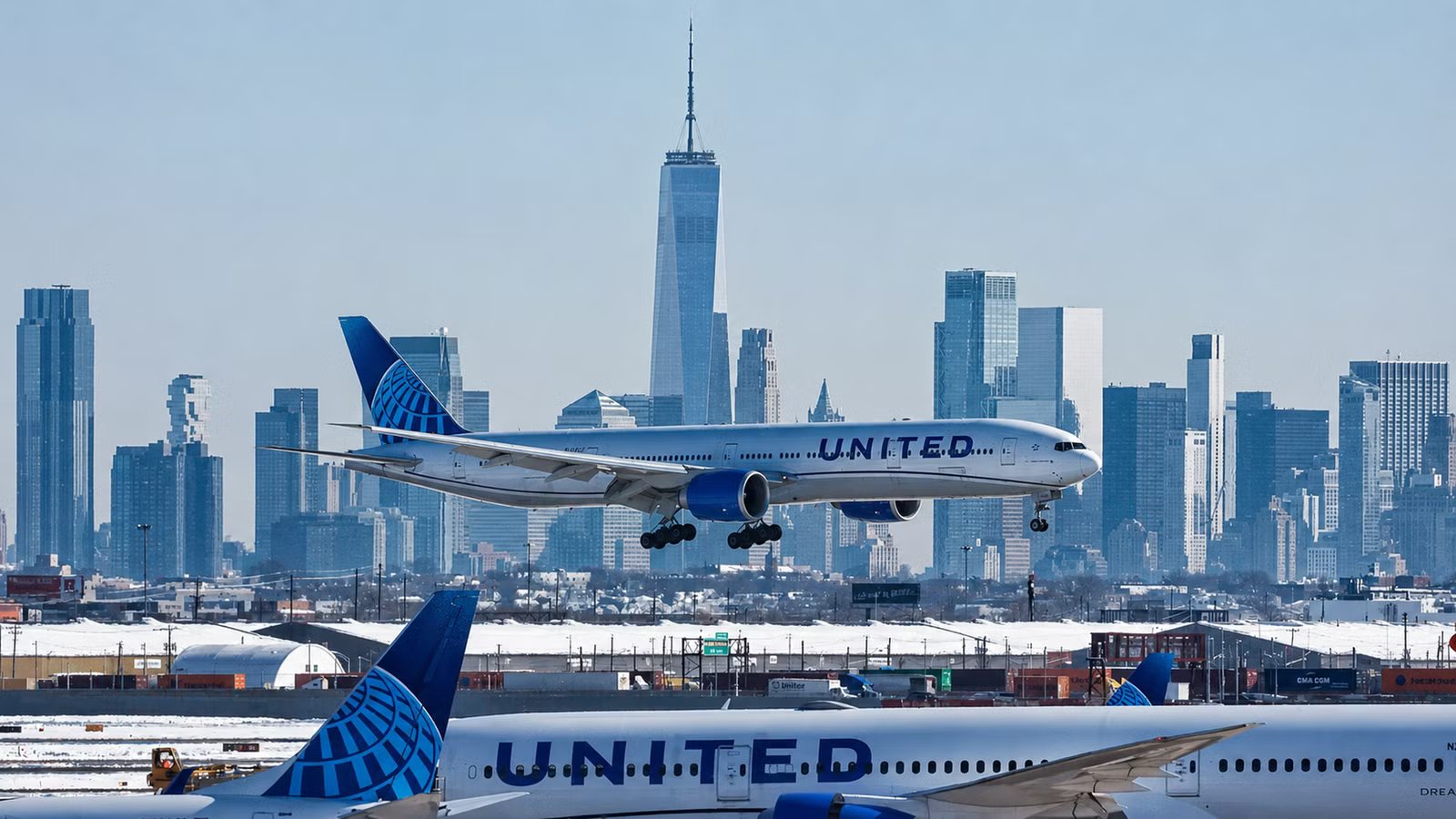
 United Airlines offers a useful example, given that it is among those known to pay its 787 pilots more than those on the 777. United is, in fact, where one might find their salary sitting well north of $500,000 annually. This is based on more than just aircraft type, incorporating international trip premiums, per diem pay, overtime, and even retirement contributions, so it will only be possible for those deep into their careers.
As a rule, widebody crews are usually paid more than those on narrowbodies. At United, this means captains of widebody aircraft like the 787 could earn up to $465.13 per hour currently, compared with the $373.33 per hour of those commanding a Boeing 737. Experience plays a large part, though, with new first officers given significantly less. According to United’s website, all new recruits are compensated at a rate of $125.52 an hour as of this year.
Cut to twelve years later, these same pilots will have received annual pay rises, and most would have found themselves eligible for promotion to captaincy. With the additional responsibility comes an even greater increase in pay; ultimately, 787 experienced captains will qualify for the top $465.13 hourly rate at United. Pilots with the same seniority and experience in charge of United’s 777 are said to make $438 per hour in the meantime, offering one of the clearest examples of the disparity that some may face based on aircraft type. These figures are only for flight hours, which typically run from pushback to engine switch-off, and form just a single element of salaries.
American Airlines: Some Maintain Uniform Salary

 American Airlines, conversely, maintains a uniform base salary for its 777 and 787 pilots, indicating the variation seen at United is by no means the norm. Salaries for pilots of the duo sit at the top end of the airline’s pay scale, in line with the majority of the industry when it comes to widebody versus narrowbody compensation.
Figures from career platform Airmappr show that experienced widebody captains after 12 years of service can fetch $455.96 per flight hour at American. This is approximately $333 for experienced first officers on the same aircraft, $320 for those in their first year of captaincy on narrowbodies, and roughly $120 per hour for fresh recruits.
All this means that experienced American widebody captains will earn upwards of $410,364 annually, while those starting off their career at the airline are paid closer to $108,000. Again, these numbers are approximate and account solely for flight hours, but they provide a useful comparison of American’s standard pay scales. In practice, pilots at the airline will actually receive far more each year when overtime, premium pay, and profit sharing are factored in.

A Look At The Salaries Of The US Big 3 Airline Pilots In 2026
Airlines are in a fierce competition for top talent, and pilots are reaping the rewards.
Aircraft Type Is Just One Factor, So How Does Pilot Pay Actually Work?

Realistically, how much those in the cockpit are paid relies on far more than the type of aircraft. As mentioned, international trip premiums, per diem pay, overtime, and retirement contributions are among the variables that can play a part, alongside base and hourly flight time rates, most importantly. So many factors can make calculating pilot pay a convoluted process, particularly because airlines tend to avoid publishing rates in too much detail.
Key elements of salaries include base and hourly pay rates, which provide a fixed monthly figure and pay for time actually spent flying, respectively. Per diem allowances are another major factor, providing compensation for time spent away from a crew’s home airport. The latter typically starts at $1.70 and can reach several dollars per hour in the US, so it can mean the difference of tens of thousands of dollars over the course of a year for long-haul, widebody pilots in particular.
Alongside other additional benefits like paid time off or premium pay, pension contributions are another huge bonus that can really bump up how much a pilot makes on paper. Major carriers like  Delta Air LinesAmerican and United are known for their solid pension plans. Contributions have reportedly hovered around 16% to 18% in recent years, and are often paid regardless of how much the employee actually contributes.
How Much Does Pilot Pay Really Vary?

The extensive list of factors touched on above explains why pilot salaries vary widely, and why those on the 787 at United have the potential to make in excess of $500,000. Average pay is, of course, well off this.
In 2024, the median annual wage for airline pilots, copilots, and flight engineers was $226,600 in the US, according to the Bureau of Labor Statistics. Those in the lowest-paid 10% earned less than $98,560, while the highest 10% made in excess of $239,200. Note that the range of roles included those at major airlines, charter carriers, courier firms, and so on.
Catch what other flight trackers miss
Emergency squawks, holds, NOTAMs — live signals, no signup.
Open tracker
Catch what other flight trackers miss
Emergency squawks, holds, NOTAMs — live signals, no signup.
Open tracker
Union-negotiated deals have meant crew at a range of major US airlines have seen their pay drastically increase of late. In the case of United, the current $465.13 hourly rate for the most experienced 787 pilots is set to jump to $498.25 next year as part of a contract. On the surface, that will make for a difference of between $558,156 and $597,900 over the course of a year.
5 Reasons Why Pilots Prefer The Boeing 787 Dreamliner
The aircraft offers exceptional long-haul capabilities.
What Do 777 Pilots Make Globally?

It is important to recognize that United’s 787 senior captain pay offers a benchmark towards the higher end of the salary range for widebody pilots. American similarly often outdoes the wider industry on compensation for its pilots, with veterans pulling in upwards of $400,000 and potentially even $500,000 at the very top end.
Considering many of these will be flying the 777, working at American can mean earning well above some peers on the same aircraft around the world. New Delhi-based pilot training institute Golden Epaulettes Aviation places the typical earnings of 777 captains around the world between $220,000 and $350,000-plus.
Boeing 777 Pilot Salary Overview in 2026, from Golden Epaulettes Aviation:
Position | Annual earnings |
First Officer | $96,000 – $180,000 |
Senior First Officer | $144,000 – $216,000 |
Captain | $220,000 – $350,000+ |
Region | Captain’s annual salary |
Middle East | $250,000 – $350,000 |
North America | $220,000 – $330,000 |
Europe | $180,000 – $280,000 |
Asia-Pacific | $200,000 – $320,000 |
Location is an important determinant, however, and whether one is based in Europe or the Middle East can mean the difference of tens of thousands of dollars, if not more. Per Golden Epaulettes’ figures, 777 captains in Europe average from $180,000 to $280,000, against the $250,000 to $350,000 of those in the same role at a Middle Eastern airline. This just goes to say, region is among the seemingly endless list of variables that affect how much airline pilots can make, alongside the aircraft type they work on.
Why Might Some Airlines Pay 787 Pilots More?

Where there are disparities between the amounts 787 and 777 pilots get, as at United, the reasons may partially boil down to the aircraft themselves. Each family of aircraft originates from different eras, and so their respective models rely on contrasting technologies.
Boeing started development of the 777 back in 1989, before the aircraft debuted commercially in 1995. The 787 program was then officially launched in 2004 ahead of the jet’s entry into commercial service in 2011. While both share a unified type rating, the 787’s advanced fly-by-wire system can mean differences in handling, alongside updated fully integrated software-driven interfaces. These may be subtle, perhaps, but they mean switching between the workhorse 777 and the modern clean-slate 787 leaves pilots with differences to get their heads around.
Boeing 777 and Boeing 787 specifications, from AeroTime:
Specification | 777-200 | 777-200ER | 777-200LR | 777-300 | 777-300ER | 787-8 | 787-9 | 787-10 |
Length (feet/meters) | 208.9 / 63.7 | 208.9 / 63.7 | 208.9 / 63.7 | 242.5 / 73.9 | 242.5 / 73.9 | 187 / 57 | 206.7 / 63 | 223.1 / 68 |
Wingspan (feet/meters) | 199.9 / 60.9 | 199.9 / 60.9 | 212.6 / 64.8 | 199.9 / 60.9 | 212.6 / 64.8 | 196.9 / 60 | 196.9 / 60 | 196.9 / 60 |
Seating capacity (2-class) | 313 | 313 | 317 | 392 | 392 | 248 | 296 | 336 |
Range (nautical miles/km) | 5,120 / 9,480 | 7,510 / 13,900 | 9,290 / 17,205 | 5,845 / 10,820 | 7,370 / 13,650 | 7,305 / 13,530 | 7,565 / 14,010 | 6,330 / 11,730 |
That said, any pay gap between those on the 777 and 787 can equally be explained by seniority-based bidding mechanics. Indeed, such systems mean that it is usually the most experienced pilot, who earns more anyway, who is most able to secure routes on the 787. Why many airlines may find themselves paying more to those on the 787 than the 777 could well be down to the simple fact that it is their most senior staff opting to fly the advanced model.