dailynewsnblog
Artificial Intelligence
Jeff Bezos Is Funding a Wild Hunt for the Brain’s ‘Core Algorithm’Steven Levy | Wired ($)
“The goal, Reardon tells me, is to build ‘a synthetic artificial intelligence brain that runs on 50 watts or less.’ It should adapt to its conditions, be as nimble as a human mind, and burn a tiny fraction of an LLM’s compute power and energy. The proof of concept is thriving inside our skulls.”
Biotechnology
Researchers Are Using AI to Create Vaccines—and It’s Working
Ed Cara | Gizmodo
“An experimental pan-coronavirus vaccine developed with AI has just passed a phase I trial in the UK. Scientists at the University of Cambridge used AI to find a kink in the armor of coronaviruses, including SARS-CoV-2, the cause of covid-19. …The researchers are also hoping to use their platform to develop broadly effective vaccines against flu and the Ebola virus.”
Computing
China Has Approved the World’s First Invasive Brain-Computer Chip—Here’s What’s NextYou Xiaoying | MIT Technology Review ($)
“This March, the implant Dong [Hui] uses became the first invasive BCI product in the world to be approved for use beyond clinical trials. It’s now available to some patients with paralysis in their limbs due to spinal cord injuries. We spoke to a range of experts to understand why the device was able to reach this global milestone, what makes this moment so significant, and what to expect next.”
Biotechnology
Huge Study of Alzheimer’s Genetics Identifies New Drug TargetsChris Simms | New Scientist ($)
“The biggest genetic study of Alzheimer’s disease so far has identified 127 gene locations that are associated with the condition, of which 48 are new. The study also pinpoints several genes that could be prioritized as drug targets and cell types linked to a higher genetic risk of the condition.”
Artificial Intelligence
This AI Weather Startup Is Out-forecasting Government AgenciesTim Fernholz | TechCrunch
“One simple way to understand it, WindBorne’s chief product officer Kai Marshland says, is that WeatherMesh-6 ‘is as accurate five days out as a traditional forecast is the day before,’ particularly on surface temperature measurements. WeatherMesh-6 produces a forecast every hour, as opposed to every six hours, as traditional models do, and its resolution is now down to 3 km in the continental US.”
Computing
Microsoft’s Next-Gen Quantum Chip Cuts Timeline to Useful Quantum ComputingTom Warren | The Verge
“Microsoft claimed last year that it had made a key breakthrough in quantum computing with Majorana 1, the company’s first quantum processor. While physicists were immediately skeptical of Microsoft’s claims, the software giant is announcing Majorana 2 today, the next generation of its topological quantum chip.”
Space
SpaceX’s Next Big Business Could Be Building Stuff in SpacePassant Rabie | Gizmodo
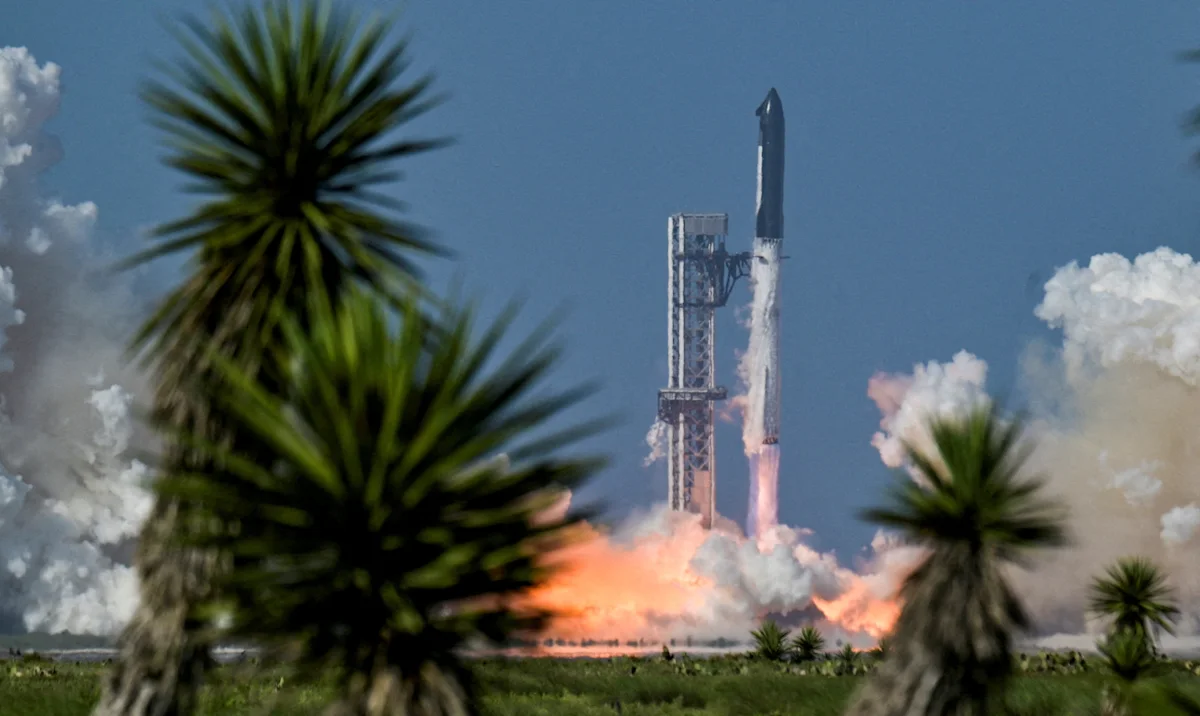
“The FAA recently approved test flights of the company’s [Starfall] reentry vehicles. …With Starfall, SpaceX would add in-orbit manufacturing to its business portfolio. The idea of in-orbit manufacturing has been around for decades, using the microgravity environment to manufacture materials that would otherwise be impossible to produce on Earth.”
Future
China Aims AI at Predicting Who Could Pose a Political RiskJulian E. Barnes | The New York Times ($)
“A Chinese company has been trying to develop artificial intelligence-powered technology that would enable authoritarian governments to not just monitor dissidents but also potentially predict who could become one in the future. The work, which appears to be in the research stage, is ripped out of dystopian science fiction, offering a glimpse of a world in which an authoritarian state is able to move against its citizens before they begin any public dissent.”
Artificial Intelligence
AI Evaluators Struggle with Models That Know When They’re Being TestedRocket Drew | The Information ($)
“AI researchers are starting to make progress on a confounding problem: AI models are getting better at telling when they are in an evaluation. …If models act differently during testing, that could mean they get released with undesirable tendencies. It could also undermine their creators’ ability to show off test scores to potential clients.”
Biotechnology
Moderna Gets $50 Million to Develop MRNA Ebola Vaccine Against BundibugyoBeth Mole | Ars Technica
“The global health organization Coalition for Epidemic Preparedness Innovations (CEPI) announced Monday that it will ‘urgently accelerate development’ of three vaccine candidates against Bundibugyo ebolavirus (BDBV), pledging a little over $60 million in the effort to extinguish an outbreak currently raging out of control in the Democratic Republic of the Congo.”
Computing
World’s First Underwater Data Center Is Now Online, Powered by WindBronwyn Thompson | New Atlas
“Just over seven months from completing phase one of this mega-project, Chinese engineers have finished the build and switched on the world’s first underwater data center (UDC) powered by offshore wind turbines. What’s more, it doesn’t need freshwater and cuts land use by more than 90% compared with above-ground centers.”
Artificial Intelligence
Gemini Spark Is the Most Impressive and Terrifying AI Experience I’ve Had YetDavid Pierce | The Verge
“On the one hand, this is one of the most astonishingly impressive AI experiences I have ever had. …On the other hand, I can’t shake the deeply creepy feeling I get from the whole thing. What Spark did feels sort of magical, and very invasive. It’s weird that Spark is so casually telling me the names and ages of my children, reminding me that it knows where I live, and finding information I know for a fact I’ve never volunteered to Google.”