dailynewsnblog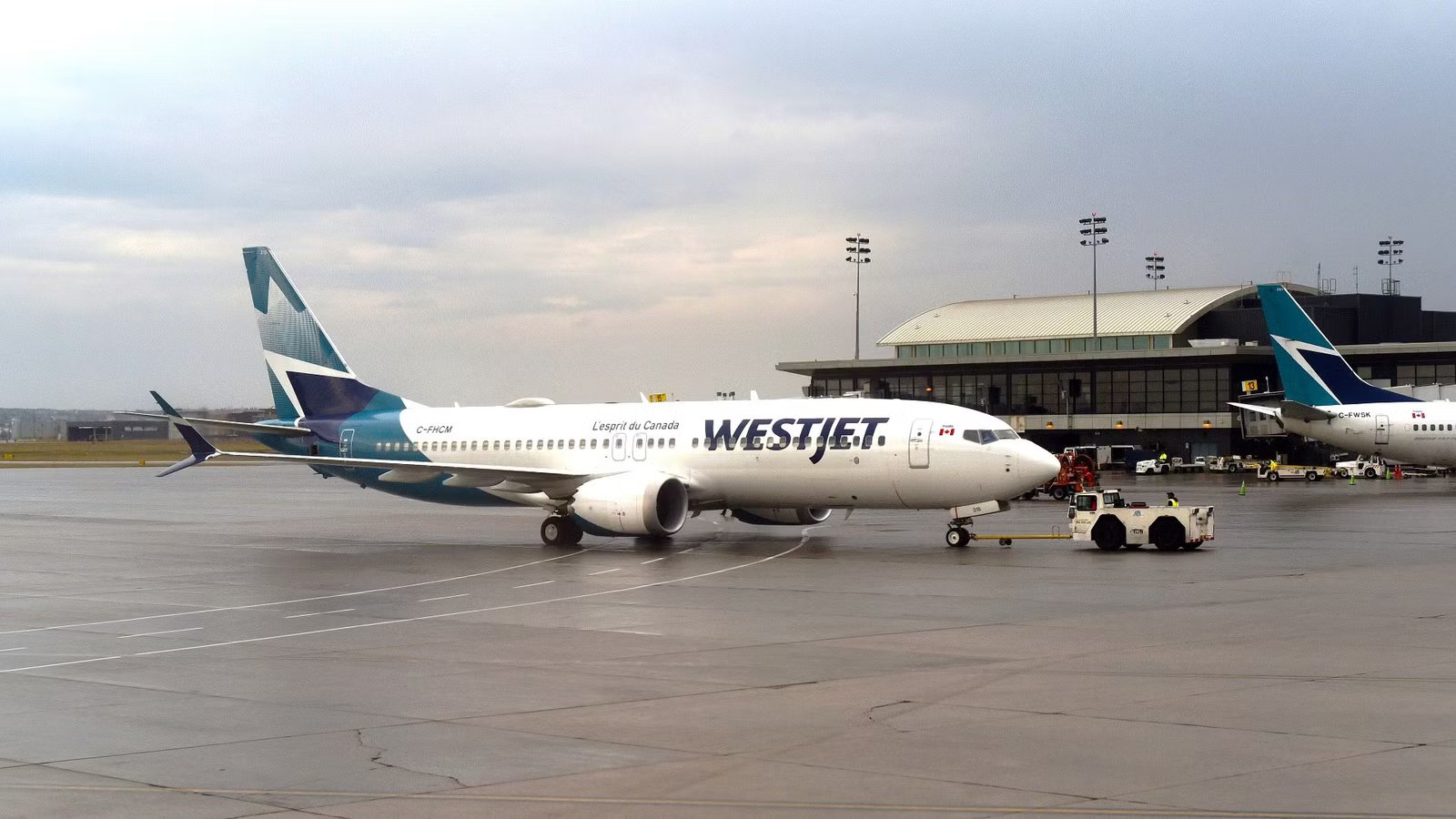
As the unstoppable tide of time drags us ever closer towards the peak summer season, Halifax Stanfield International Airport (YHZ) in the Canadian province of Nova Scotia is gearing up for a very busy few months as far as transatlantic traffic is concerned. Indeed, data from Cirium, an aviation analytics company, shows that there are 40.2% more European departures scheduled from Halifax this Q3 than in 2025.
This huge boom is a result of both the addition of new routes and minor frequency boosts on the airport’s existing transatlantic corridors. While starting from a fairly low base, the 40.2% year-on-year growth rate in European departures from Halifax between July and September 2026 compared to the same period last year far, outstrips the growth figures for North America (3%) and Canada (7%).
Five New Routes

This Q3, Halifax / Stanfield International Airport will handle 725 one-way departures to Europe, compared to 517 in Q3 of 2025. While this figure represents a 40.2% increase, seats and available seat miles have increased by even larger factors, rising by 42.3% and 44.7%, respectively. This shows that not only are flights being added, but they are also flying farther and using larger jets.
Five Q3 routes are brand new for Halifax compared to the same period last year: Air Canada to Brussels, Edelweiss Air to Zürich, and WestJet to Copenhagen, Lisbon, and Madrid. Throughout Q3, their total departure frequencies will range from 26 (Edelweiss Air to Zürich) to 66 (WestJet to Lisbon). WestJet CEO Alexis von Hoensbroech commented last year on the importance Halifax plays in its network.
“With shorter flight durations, competitive pricing and seamless access to key European destinations and cultural hubs, WestJet is proud to call Halifax the airline’s Atlantic gateway to Europe.”
The Bigger Picture

Even before this year’s boom, Halifax was already a steady Canadian destination for transatlantic traffic, with the facility serving as an ideal aerial gateway for European travelers wanting to explore Canada. In this vein, several more routes from last Q3 are present again this time around, such as Discover Airlines’ flights from Frankfurt Airport (FRA) in Germany (79 in Q3).
Meanwhile, Air Canada will continue to operate daily service between Halifax and London Heathrow Airport (LHR) in the UK. With 92 rotations this Q3, it is Halifax’s top transatlantic route by frequency. Elsewhere, Icelandair flies nonstop from Halifax to its main hub at Reykjavík Keflavík International Airport (KEF), although it has cut ten flights from its Q3 schedule year-on-year, dropping from 36 in 2025 to 26 in 2026.
Perhaps unsurprisingly, given its aforementioned confidence in Halifax as a transatlantic gateway, Canadian carrier WestJet accounts for the remainder of the facility’s European routes. Among the existing intercontinental destinations that it will continue to serve from Atlantic Canada this summer are Amsterdam, Barcelona, Edinburgh, Dublin, London Gatwick, and Paris.
8-Hour Nonstop Flights: WestJet Launches This New Boeing 737 MAX Route
WestJet celebrates its largest-ever European network from Halifax, the airline’s 737 MAX 8 will operate four-times weekly flights to Copenhagen.
Widebodies Are Rare In Halifax

With Halifax’s longest runway (05/23) clocking in at an impressive length of 10,500 feet (3,200 meters), the airport is more than capable of handling large widebody passenger aircraft. However, despite this, and its wide range of European routes on offer this summer, only two of these corridors will be served by twin-aisle jets: Edelweiss to Zürich with the Airbus A350 and Discover to Frankfurt with the A330.
Meanwhile, all of its remaining European routes, operated by Air Canada, Icelandair, and WestJet, favor narrowbody jets, with the Boeing 737 MAX 8 as the aircraft of choice in each case. Halifax’s northeasterly location means that the type has more than enough range to reach Europe, and, as a lower-capacity jet, the MAX represents less of an economic risk on these ‘long thin’ routes than if an airline needed to fill a widebody in order to make it work.