(Bloomberg) — Credit heavyweights like DoubleLine Capital LP and Oaktree Capital Management are buying debt now that can perform well if the artificial intelligence boom turns into a credit bust.
Most Read from Bloomberg
While prices and valuations on bonds aren’t yet frothy, the market will undoubtedly reach those levels in the coming months or years as technology companies pour trillions of dollars into AI, said Robert Cohen, portfolio manager at DoubleLine.
Investing in debt tied to AI is difficult because many of the securities for sale now will not mature for decades, when current technology may be obsolete. Data centers face a heightened risk of overbuilding because the properties take a long time to construct and many projects are launching at once, Cohen said.
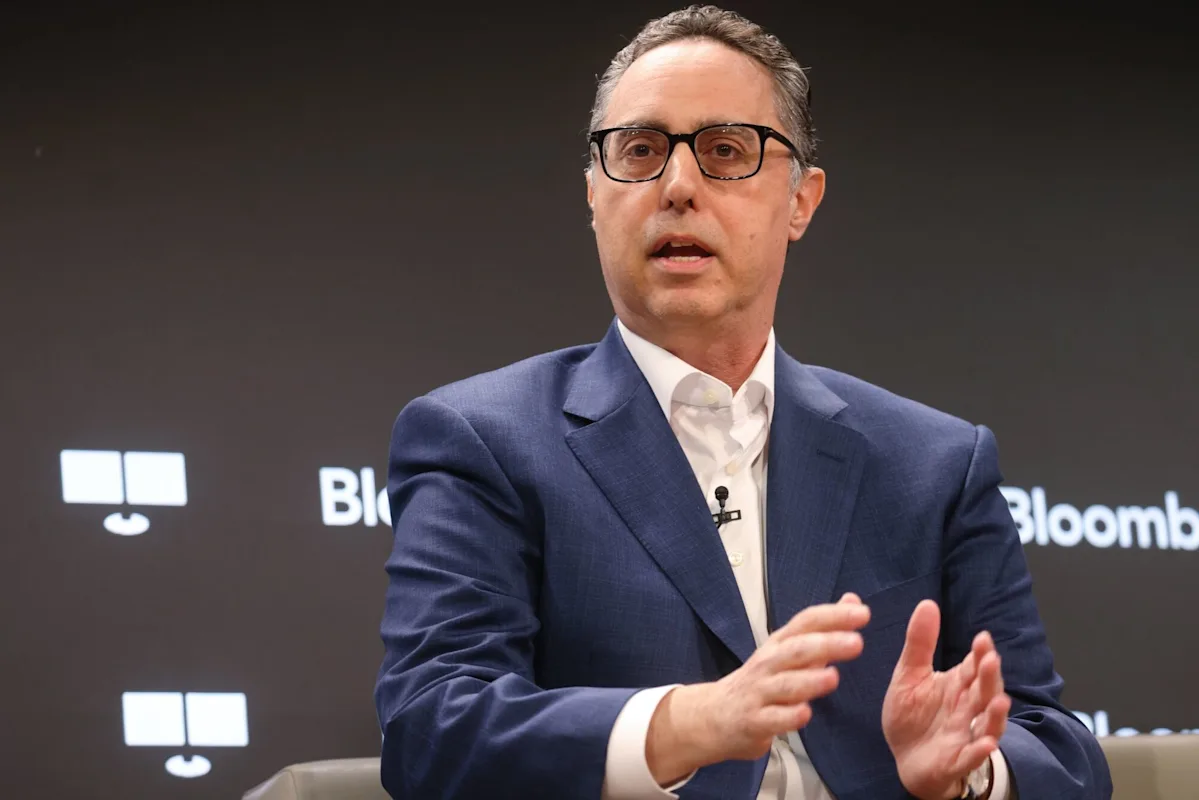
“You have to think about what credit will survive a deep cycle,” Cohen said, speaking at the Bloomberg Global Credit Forum on Wednesday. “You want credits that either through structure or just a very strong balance sheet will survive.”
At the same time, companies are flooding the market with so much debt that money managers cannot afford to ignore them. The big US tech firms known as hyperscalers have sold more than $155 billion of unsecured bonds globally, already up more than 45% from their entire issuance last year, according to a May 21 report by Barclays.
And there’s additional debt beyond hyperscaler notes. This week alone, Hut 8 Corp., a data center company, sold around $4 billion of high-grade bonds to fund a project in Texas, while a $36 billion bond sale to purchase chips for Anthropic, an AI model developer, is moving closer to completion.
Plenty more borrowing is coming. Bloomberg Intelligence estimates that companies will spend around $5 trillion on capital expenditure for AI over the next five years, much of which will come from debt.
Oaktree invests as if there could potentially be speculative excess in the future, even if it doesn’t know whether there will be. The market is in the early stages of data center financing, said Christina Lee, co-portfolio manager in private credit at Oaktree.
“We need to be selective because we really don’t know yet who the winners and losers of this competitive set will be,” Lee said. “Data center financing is a really large and growing opportunity set. We’re just in the early innings of it.”
In a note in December, Oaktree co-founder Howard Marks said investors have to buy the debt carefully.
“I’d advise that no one should go all-in without acknowledging that they face the risk of ruin if things go badly,” Marks wrote. “But by the same token, no one should stay all-out and risk missing out on one of the great technological steps forward.”
Losses on the debt that goes bad could be higher than investors are used to, said Dan Ivascyn, group chief investment officer at Pacific Investment Management Co., in a video in late May. With so much debt coming, there will likely be chances to secure good investments, and Pimco is hoping to leverage its size to capture those compelling opportunities.
“It’s not a sector where we want to be overweight just given the uncertainty, the volatility, the need to predict how companies are going to make money in this space,” Ivascyn said, adding, “But because of the massive funding needs, you can be defensive in terms of overall exposure and unlock tremendous value.”
Historically, big tech revolutions have produced speculative excess, Ray Dalio, founder of hedge fund Bridgewater Associates, said on Bloomberg Television this week.
“Nobody can get it exactly right. You have to either spend a ton of money to capture your market share and don’t worry about whether it’s too much or not, or you don’t spend enough money and you lose your market share.”
DoubleLine’s Cohen defines a credit bubble as when investors provide debt financing to companies which need real growth just to service their obligations. Historically, technological booms have tended to result in this kind of froth.
“What’s the probability that we will be in an AI bubble? I’ll put maybe 100% on that,” Cohen said.
Click for a podcast with Goldman Sachs on how robust demand from pensions and insurance companies will support corporate debt through macroeconomic headwinds and record supply.
Week In Review
-
Apollo and Blackstone finalized a $35 billion financing package for Anthropic to expand its AI infrastructure, marking the latest mega-deal in the artificial intelligence race.
-
An Nvidia-linked data center project’s bond sale attracted $17 billion of investor orders, or four times the size of the offering, underscoring relentless appetite for debt tied to the buildout of AI infrastructure.
-
A data center tied to CoreWeave is set to get funding from an $850 million junk-bond sale by Elk Grove Village Property.
-
Private credit fund redemptions are ramping up again after seeming to abate. Investors in Cliffwater’s flagship fund sought to redeem about 17% of their shares, prompting the fund to enforce a 5% cap, the industrywide standard. Meanwhile, Blackstone limited redemptions from its flagship private credit fund for the first time after investors sought to withdraw 10% of the shares.
-
Borrowers are rushing to Europe’s leveraged loan market to reprice debt, as they seek to capitalize on favorable credit conditions to cut their funding costs.
-
Banks led by UBS are looking to offload more than $700 million of debt they’ve held on their balance sheets for months after funding Echo Global Logistics’ acquisition of ITS Logistics with their own cash.
-
QXO Building Products saw terms improve on a $6 billion financing package to fund its purchase of rival TopBuild, which attracted more than three times the amount of demand from investors.
-
UBS is set to raise Additional Tier 1 capital in US dollars, its first foray into the market since Switzerland paused plans to tighten rules on the riskiest type of bank debt.
-
Luxury retailer Saks Global Enterprises won court permission to exit bankruptcy, after shutting its discount businesses and closing unprofitable stores so as to focus on selling the high-end goods for which it has long been known.
-
Surging memory costs are pushing GoPro to the brink. The action-camera maker warned of risks to its ability to continue as a going concern and is seeking financing to avert a default.
-
Manchester United is looking at tapping the private placement market to refinance $425 million of debt due next year.
-
Merlin Entertainments, a theme park operator, is facing pressure on its debt as it seeks to refinance junk bonds worth more than $800 million, with some of its bonds sliding close to levels that would typically indicate distress.
-
Venezuela hired Hogan Lovells US as legal counsel, a key step as it begins what is expected to be one of the largest sovereign debt restructurings in decades.
On the Move
-
Dominic Goh and William Wallace have been appointed co-heads of fund finance solutions at SMBC. They will report to Juan Kreutz, the bank’s head of structured finance solutions.
-
Forza Investment Group has brought back Brendan Hall, a former research analyst at the firm, as a director. Hall will focus on special situations and credit opportunities in the public and private markets. He most recently worked at Jain Global.
-
NatWest Group named Scott Roose, who is based in London, as interim head of its primary capital markets business. Before joining NatWest as head of US capital markets in 2023, he worked at Credit Suisse. Roose is replacing James Tayler, who has been named as head of coverage, large corporates and financial institutions group at NatWest.
-
Armin Peter, a veteran debt capital markets banker who spent more than 17 years at UBS, has been appointed managing director, markets, at the Dubai Financial Services Authority. During his time at UBS, Peter held several senior roles, including global head of debt syndicate and head of sustainable banking for EMEA.
–With assistance from Hannah Webster and Nabila Ahmed.
Most Read from Bloomberg Businessweek
©2026 Bloomberg L.P.


 dailynewsnblog