dailynewsnblog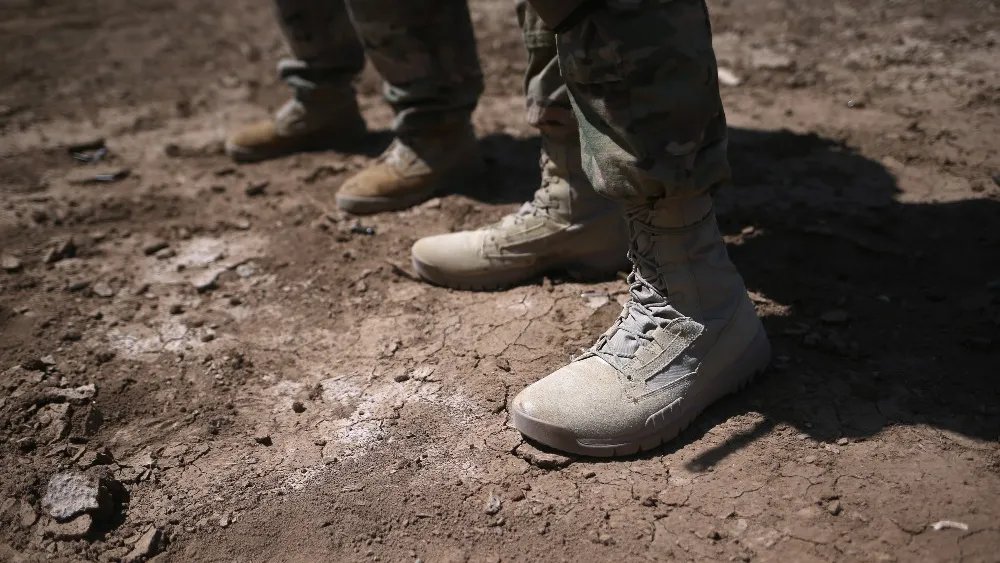
Domestic footwear manufacturers were dealt a stinging legislative blow on Thursday when lawmakers voted decisively against a bill that would have mandated that the United States military exclusively purchase American-made combat boots.
The Better Outfitting Our Troops Act (BOOTS)—which passed in the House of Representatives during markups for the 2024 and 2025 National Defense Authorization Act—was struck down in a 38-18 vote, a stunning reversal from previous sessions when “every member of [the] committee at the time supported it by unanimous consent,” sponsor Rep. Jared Golden (D-Me.) said in his remarks.
The bill’s objective is to require that all footwear worn by members of the armed forces be made by U.S. producers—a condition that proponents say would ensure military readiness by reducing reliance on foreign makers for products essential to American national security.
The bill would strengthen compliance with the Berry Amendment, which lawmakers have said contains a “loophole” that allows troops to purchase additional footwear that isn’t made in the U.S. That critical gap has led to the purchase of about 1 million pairs of foreign-made boots that aren’t Berry Amendment-compliant.
“The loophole has produced three compounding harms: domestic manufacturers are squeezed out, investment in U.S. capacity is frozen, and national security is left at risk to the biggest opponents: private equity firms and the Chinese Communist Party,” Rep. Golden said ahead of the vote, referring to China’s dominance in the footwear sector.
Last year, Golden’s bill passed in the House but failed in the Senate, precluding its inclusion in the NDAA. The legislation’s surprising failure this week is a disappointment for American footwear manufacturers intent on receiving more business from the federal government—essential, they have said, as the military’s patronage would allow them to scale their domestic production capabilities for shoes of all kinds.
Rep. Golden pointed to Boston-based New Balance, for example, which has said that it wants to produce Berry Amendment-compliant boots at its Skowhegan, Me. Manufacturing plant, supporting jobs in his home state.
The U.S. Footwear Manufacturers Association (USFMA), which represents New Balance and dozens of other American footwear firms and supply chain operators from Red Wing Shoe Company to Belleville Boot Company, Signet Mills, Lakes Rubber & Plastics, Dela Incorporated, YKK Americas, Lalaland Production and Design, Koobz, ComunityMade and more, has been lobbying on behalf of the BOOTS Act, saying capturing a bigger piece of the footwear production market via government patronagte would create jobs and contribute to the health of domestic industry.
The group’s executive director, Bill McCann, was disappointed by the outcome of the vote.
“Last night’s vote was a setback, but it is not the end of this fight,” he told Sourcing Journal.
“American factories and American workers can manufacture every combat boot currently available to U.S. servicemembers—and they are ready to do so. We need to do a better job making that case to Congress and to the military, and we will,” he added.
Cost may be the crux of the issue, as it often is. According to McCann, many footwear firms have chosen to offshore production “not because American manufacturers lack the capability or capacity, but because overseas production costs a fraction of what it costs to make the same boot in the United States.”
“That is a business decision driven by profit margins—and it is hollowing out the Berry Amendment,” he said. This could create vulnerabilities in the country’s readiness, he believes—and the existing legislation is not doing enough to ensure that boots are bought from U.S. producers.
“A law designed to protect American manufacturing has little meaning when the majority of boots purchased by servicemembers are imported,” he added.
“In my view, this outcome will significantly impact the growth of domestic manufacturing—especially as we look ahead to potential conflicts in Southeast Asia, where supply chain resilience will be critical,” said Alexander Zar, CEO of Lalaland Production and Design, a USFMA member and the largest leather goods manufacturer in Los Angeles.
“There was strong lobbying suggesting that the U.S. lacks the capacity to meet demand locally,” Zar said. “However, from our experience, capacity follows demand. If programs are committed domestically, manufacturers can and will invest to scale production. While costs may be higher in the U.S., these are offset by job creation and broader economic benefits.”
Lalaland has made significant investments into essential technology and innovative automated processes in recent years to meet what Zar hopes will be a growing demand for American-made footwear.
“At Lalaland, we have already invested in a Desma direct attach system to support programs like Garmont, with the intention of meeting Marine Corps testing requirements and offering a compliant domestic alternative,” he said, referring to one of the most popular global producers of boots worn by the U.S. military. “Without policy support, however, we are left competing against significantly lower-cost production in Vietnam—where labor costs are a fraction of U.S. rates—which makes meaningful competition extremely challenging.”
“More broadly, it is concerning that we continue to rely heavily on Southeast Asian supply chains despite growing geopolitical risks. Strengthening domestic manufacturing capabilities should be a strategic priority,” he concluded.
What Lalaland and producers like it are asking for is “not a subsidy or a guarantee,” McCann added. “They are asking for the opportunity to compete—against each other, on a level playing field, for the business of the men and women who serve this country. The capacity is there. The commitment is there. The quality is there.”
The Senate will vote on its own version of the bill next week for inclusion in the NDAA.
“The BOOTS Act will be back. When it is enacted, it will send a clear demand signal to an industry that is more than ready to answer it,” he added. “We remain committed to that outcome.”