dailynewsnblog
Long-haul flights can be challenging for passengers and crew alike. There are two meal and beverage services: the first is about 45 minutes into the flight and the second is about two hours before landing. It may seem to passengers that there is nothing going on during the flight, as they don’t see the crew during the night service, but that is far from the reality. In this guide, we discover what the crew are really doing during a 14-hour flight, when all seems to be quiet.
Although the meal and beverage services are the busiest time, the crew are serving hundreds of passengers at any one time. The breakfast service can take around an hour to an hour and a half, and the main meal from two to two and a half hours. Passengers only see the crew for a few moments while they are serving them and during the cabin security checks before takeoff and landing. However, the crew has to rest during long flights, and half will continue service while the other half rests.
A Quiet Cabin?

After the meal and beverage service have finished, the cabin lights are dimmed, and passengers drift off to sleep. Passengers tend to have the perception that nothing is happening, but that is far from the reality. During those mid-flight hours, when things are quiet, half of the crew are on their rest period in the crew rest area. The other half are still on their feet working, and duties continue throughout the night, and the crew swaps over before the next meal service.
The Cabin Crew on duty have to remain alert during the flight in case of any emergency, medical or otherwise, and coffee and water are essential for staying awake. They also try to get some rest before the flight or adjust their sleep pattern to adapt more easily. During this quiet spell, they will eat their crew meal when time allows, answer call bells, and handle passengers’ requests in the galley as well as their usual duties.
Catch what other flight trackers miss
Emergency squawks, holds, NOTAMs — live signals, no signup.
Open tracker
Catch what other flight trackers miss
Emergency squawks, holds, NOTAMs — live signals, no signup.
Open tracker
The crew rest schedule is a legal requirement applicable to both flight crew and cabin crew. There are ‘augmented’ flight crew, additional crew if you will, that swap over during the flight for safety. There are separate rest areas for the flight crew and cabin crew. The senior cabin crew member will make the schedule for the cabin crew, organizing the service time and splitting the mid-flight time into two rotations so that one half works whilst the other half rests. They swap over at midpoint, but none of the crew are ever fully off duty.
Safety Never Stops

During this perceived quiet time, the cabin crew complete security and cabin checks every 20 minutes to monitor the cabin. The flight crew are also frequently checked upon. Lavatory checks are conducted regularly to ensure that smoke detectors have not been deactivated and that there is nothing flammable in the waste bins. They also clean the area and restock with supplies. Every 30 minutes or so, the cabin crew on duty walk through the cabin with trays of water and fruit juice for passengers to take.
Cabin crew remain situationally aware at night to detect anything out of the ordinary that could lead to an emergency situation. Unusual noises, odors, or cabin conditions are actively monitored. There may be a change in engine noise; for example, a power bank may cause a fire in an overhead locker, or a passenger may fall ill in a lavatory. The crew have to remain alert and aware at all times. Any abnormality is immediately reported to the senior cabin crew member and, if necessary, to the flight deck.
The cabin crew also scan the passengers for any signs of illness, distress, or a potentially disruptive passenger. These scenarios have to be dealt with immediately. Medical emergencies can be life-threatening, so they must be dealt with straight away. Often, airlines also have the MedLink service, which can help to diagnose conditions and their treatment. Distressed or disruptive passengers should be taken to a quiet area, and the situation de-escalated to avoid panic in the cabin.
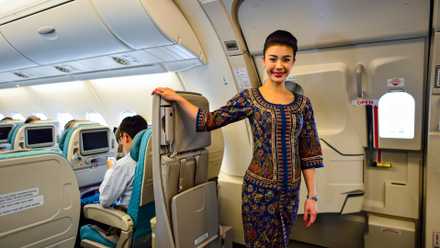
How Cabin Crew Rest & Sleep On Transoceanic Flights
A closer look at the hidden world of cabin crew rest areas on ultra-long-haul flights.
The Galleys Are Always Busy

The galleys are extremely busy places, but considerably small, and have to be kept very clean and organized. As soon as the seatbelt sign is switched off, the cabin crew start to prepare carts for the bar service. One crew member looks after the galley and starts heating meals and preparing hot beverages whilst the bar service starts. Then the meal carts are set up, ready for the main service. The bar carts are then swapped to serve hot beverages. The meal carts go out to clear the trays and offer water and soft drinks.
In the business class cabin, the service is much longer than in economy, although all services start at the same time. So, often the cabin crew working in economy will go and help in business class to speed things up. First class is different as service is on demand when the passenger wishes. Once the meals are cleared in, the cabin is frequently checked for trash. Trays of drinks and snacks are set up in the galleys and ready for the cabin crew to take out every 30 minutes. The cabin crew answer call bells and take drinks or any other items as necessary.
Prior to the light breakfast meal on long-haul flights, the galley crew member heats up the meals and prepares the hot beverages. The crew start to set up the meal carts with juice and water, and tea and coffee. Bar paperwork and duty-free reconciliation are completed, and customs declaration forms are prepared for arrival. During a seemingly quiet time, the galleys are a hive of activity and act as small commercial kitchens, and are hot, busy, organized, but with a continuous flow of activity.
The Hidden Crew Rest Areas

Crew rest areas are hidden from the passengers’ view and are typically above or below the main cabin, accessed by a hidden door, sometimes with a code. The flight crew has their own crew rest area at the front of the cabin, close to the cockpit. The cabin crew rest area is either close to the tail or in the cargo area. They have bunk beds either side to side, above and below, or ‘coffin’ style, and can be curtained off for privacy.
Depending on the type and size of the aircraft, there can be between six and ten bunks for cabin crew in the designated area. Each bunk has a pillow and a blanket, but crew often take their own for added comfort. Every bunk has a seatbelt, reading light, and storage space. The senior crew member usually takes the bunk nearest to the door in case there is an emergency. There is safety equipment in the crew rest area, as well as an intercom. The crew rest areas can be cramped, cold, and not the most comfortable, but essential on a long-haul flight.
On the Boeing777-300ER, flight attendants climb stairs to a rest area with eight bunks in two rows of four, separated by partition walls and curtains. On the Airbus A350, a ladder-style staircase leads to adjacent bunks. Junior cabin crew usually take the smaller bunks. Some long-haul flights have curtained-off seats in the cabin, such as the Airbus A321XLR and the Boeing 767 (the last center row of economy).
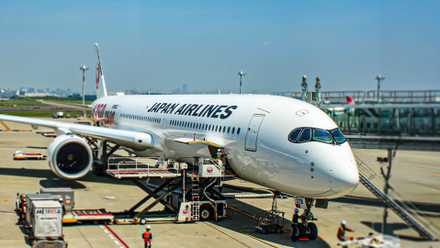
Inside The Airbus A350-1000’s Secret Crew Rest Areas
From overhead bunks to cockpit rest areas, here is how the A350-1000 supports its long-haul crews.
Rules And Regulations For Crew Rest

Minimum rest is mandatory for flight crew and cabin crew working long-haul flights. For duty periods exceeding 14 hours, cabin crew are entitled to a minimum of three hours of uninterrupted rest, increasing to 4.5 hours for duties over 18 hours. Airlines typically staff these flights with augmented crew, more than the minimum usually required. This allows for the crew rest periods to be equally rotated whilst still having enough crew available to cover all safety aspects.
The flight duty period from signing on to engines off must not exceed 13 hours, plus one hour of discretion. Cabin crew must also have a minimum of 12 hours of rest prior to reporting for duty. The flight crew duty period is one hour more restrictive than the cabin crew. According to the FAA, the maximum duty day is 14 hours and 18 hours with two additional cabin crew. For a scheduled duty period of 14 hours or less, the scheduled rest must be ten hours. Over this, airlines must allow for a minimum of 12 hours.
The longest flight any flight attendant has worked was around 14 hours, according to a CNN interview in 2024. For the forthcoming Qantas Project Sunrise flights exceeding 19 hours, crew will be on duty for over 24 hours, missing two complete nights of sleep. At that long duration, the regulated rest periods become more medically significant and not just a comfort measure. Structured galley preparation during the quiet periods becomes an anchor of predictable routine in an otherwise disorientating duty period.
In Conclusion

On long-haul flights, the cabin crew remain busy during the flight and have to stay awake and alert outside of their crew rest period. Although it is quiet and the lights are dimmed so passengers can sleep, the crew continue to check the cabin and lavatories every 20 or 30 minutes. They also take out trays of water and juices for any passengers that may be awake. Cabin crew scan the cabin for anything unusual that may occur.
Crew rest is very important on long-haul flights, although not always the most comfortable experience. Rest periods are mandatory and required by regulations. The time between the end of meal service and the start of breakfast service is split into two shifts. Half of the crew go on crew rest whilst the other half continue to work. There are two crew rest areas on board: one for the flight crew at the front of the aircraft and one for the cabin crew at the rear.
Although passengers may assume that nothing is happening during the quiet time on a night flight, there is still quite a lot going on behind the scenes. Half of the crew are trying to sleep above or below the passenger cabin, whilst the others are staying alert to any issue that may occur. Cabin checks and refreshments are served discreetly and quietly in the cabin, and the galleys stay bustling and busy all night.