dailynewsnblog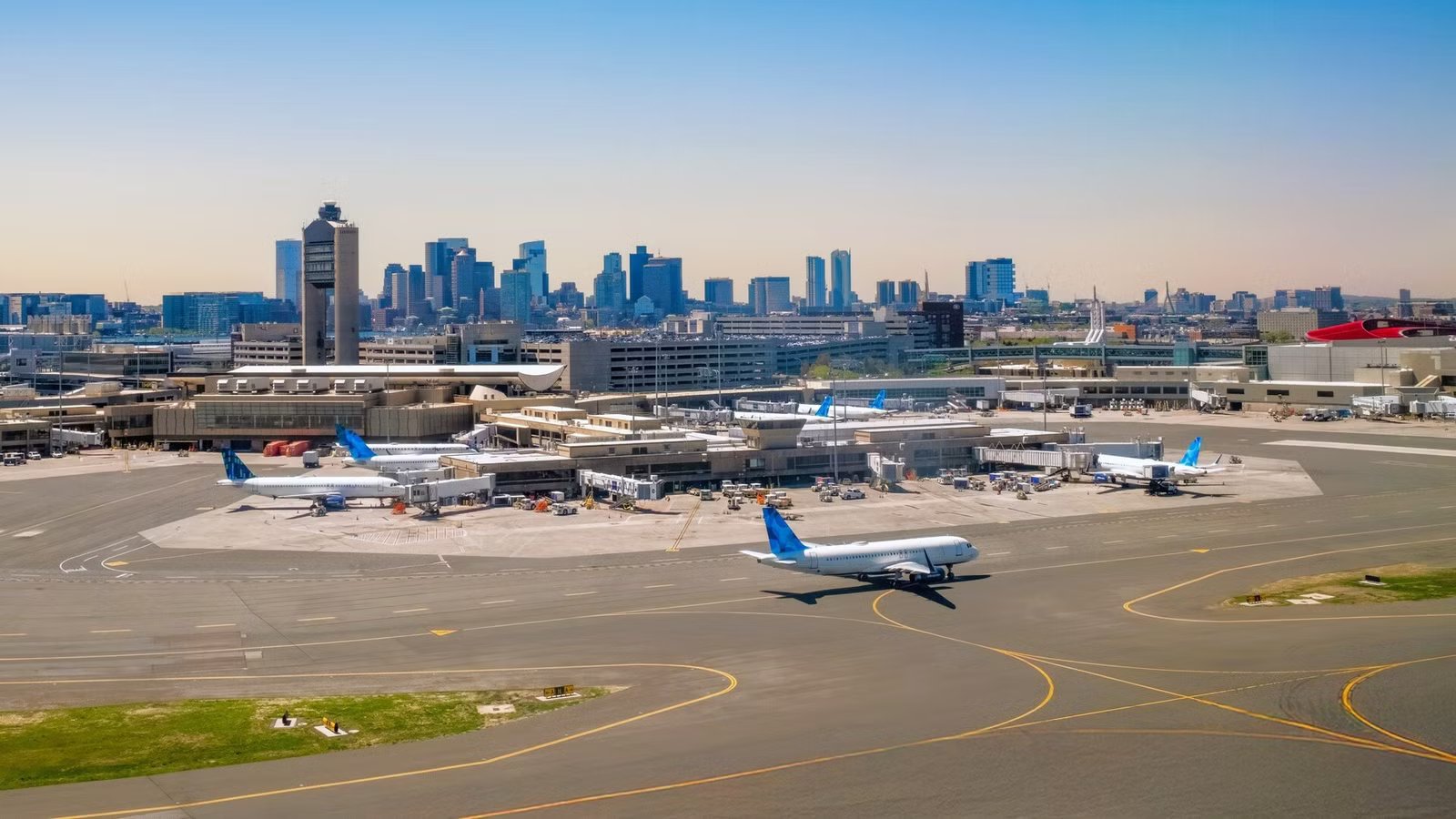
 Boston Logan International Airport (BOS) has become the testing ground for a first-of-its-kind idea in US aviation: what if passengers could clear TSA security before they ever reached the airport? That is now being trialed by the Transportation Security Administration (TSA) in Massachusetts, where eligible passengers can check in, drop bags, pass through security screening, and board a secure bus from a remote terminal in Framingham, around 25 miles west of Logan.
On the surface, the TSA is pushing this as a passenger convenience story. It offers cheaper parking, fewer lines, and a less stressful way to reach one of the country’s busiest airports. But the bigger idea is more interesting. Boston Logan is effectively testing airport terminal unbundling: separating functions such as parking, check-in, bag drop, security screening, and gate access from the physical terminal building itself. If the concept works, it could change how large airports think about congestion, catchment areas, and the passenger journey.
Boston Logan Moves TSA Screening Off-Site

The new pilot began on June 1 and is being run in a partnership between the TSA and the Massachusetts Port Authority (Massport). It is currently available to passengers flying on  Delta Air Lines or JetBlue from Boston Logan between 05:30 AM and 04:00 PM. Rather than driving all the way to Logan, passengers can begin their airport journey at the Logan Airport Remote Terminal in Framingham.
The process is designed to mirror key parts of the airport experience. Passengers reserve a spot online, arrive at the Framingham facility, check in for their flight, print a boarding pass if needed, check bags, and then pass through TSA screening with TSA officers and airport-style screening equipment. Once screened, they enter a secure environment and board a dedicated bus that takes them directly to the secure side of Boston Logan.
Ha Nguyen McNeill, a TSA senior official, was buoyant at the opening of the new venture:
“This pilot program is all about creating options for our travelers. TSA is constantly looking at new ways we can make the checkpoint experience smoother and faster for passengers, while our security posture remains equally strong.”
The pricing is also deliberately simple. The Framingham remote screening service costs $9, with children under 18 able to ride free with a ticketed adult, and parking at the remote site is available for $7 per day. Reservations can be made in advance, with Massport recommending that passengers book ahead because capacity is limited. The system also recommends a bus that is scheduled to arrive at Logan at least 45 minutes before departure, which is critical because the bus is no longer just airport transportation; it is part of the secure passenger flow.
The airlines have also reacted positively to the development, with Charlie Schewe, Delta’s director of sales, having the following to say:
“This forward-thinking program is exactly the kind of innovation we want to be part of – elevating the journey and getting people to their destination seamlessly. We’re excited to work alongside Massport to bring this to life.”
Why Travelers May Prefer The Remote Terminal

For passengers, the benefits are easy to understand. Boston Logan can be difficult to reach, particularly for travelers coming from the western suburbs. The final miles into the airport can involve traffic, tunnels, terminal roadways, curbside congestion, expensive parking, and the uncertainty of TSA lines. The Framingham option offers a different proposition: park cheaply, clear security away from the terminal, and arrive at Logan already screened.
Passenger Pain Point | Remote Terminal Benefit |
|---|---|
Long TSA checkpoint lines | Screening happens before reaching the airport |
Expensive airport parking | Framingham parking is listed at $7 per day |
Curbside congestion | Passengers avoid terminal drop-off traffic |
Checked baggage stress | Bags can be checked at the remote terminal |
Family travel friction | Children under 18 ride free with a ticketed adult |
Airport timing uncertainty | Reservation-based flow makes the journey more predictable |
This could be especially attractive to families, infrequent travelers, and passengers who value predictability over speed alone. A frequent flyer traveling light from downtown Boston may still prefer the conventional route to Logan. But for a family driving from MetroWest, the remote terminal would remove several of the least pleasant parts of the airport experience. It turns the beginning of the trip into something closer to an organized park-and-ride operation, but with the added benefit of TSA screening before the bus ride.
For TSA, Massport, and the airlines, the logic is even broader. Off-site screening spreads demand across a wider airport system rather than concentrating every passenger at the same terminal doors, ticket counters, checkpoints, and parking garages. It could also help airports manage peak-period pressure without needing to build more terminal space. That is why the “unbundling” idea matters. Airports have traditionally treated the terminal as the place where almost everything happens. Boston is testing whether some of those functions can be shifted upstream.

America’s Most Beautiful European Gateway Airport Is Also Its Most Underrated
Boston Logan: flights to Europe, minus the chaos.
What Other Airports Would This Work Well At?

The most obvious question is whether this can scale beyond Boston. The best candidates are not simply the busiest airports, but airports where several factors overlap: heavy passenger volume, large suburban catchment areas, road access challenges, expensive or constrained parking, and recurring terminal congestion. And there are plenty of airports across the United States that fit those descriptors
Airport | Why It Could Work | Possible Remote Terminal Logic |
|---|---|---|
Atlanta | Huge volume and a sprawling metro area | North metro locations could appeal to passengers far from the airport |
Dallas/Fort Worth | Large catchment across North Texas | Remote sites could serve Dallas, Fort Worth, and outer suburbs |
Chicago O’Hare | Broad regional catchment and complex access patterns | Suburban screening could pair with secure coach links |
Los Angeles | Severe terminal roadway congestion | Remote processing could reduce pressure on the LAX terminal loop |
New York JFK | Dense metro area and difficult airport access | Remote terminals could work if tied to reliable secure transport |
Denver | Huge airport campus and long approach distances | Remote sites could serve far-flung suburbs before passengers reach DEN |
Orlando | Heavy family and leisure traffic | Tourist-area remote terminals could simplify airport access |
 Hartsfield-Jackson Atlanta International Airport (ATL) is arguably the most intriguing thought experiment. It is the world’s busiest airport, but much of the metro area’s growth has pushed far north of the airport. For passengers in places such as Alpharetta, Roswell, Marietta, or parts of Gwinnett County, a remote terminal north of the city with cheap parking, bag drop, TSA screening, and a direct secure bus to the airport could be extremely attractive. It would not replace the main terminal, but it could siphon off a meaningful slice of origin-and-destination traffic that currently has to cross the city to reach ATL.
 Dallas/Fort Worth International Airport (DFW) is a different version of the same idea. It already sits between Dallas and Fort Worth, but its catchment stretches across a huge part of North Texas. Remote screening could make sense in fast-growing outer suburbs where passengers are already driving long distances to reach the airport.
 Chicago O’Hare International Airport (ORD), meanwhile, draws from a broad Chicagoland and regional catchment, but any remote screening concept would need to account for winter weather, road reliability, and secure bus operations. The concept is not just about distance; it is about whether the remote site can reliably become part of the airport’s security perimeter.
For now, Boston remains the proof of concept. The pilot is expected to run for three months, and Massport has indicated that it could expand the model to other airlines or other Logan Express locations if the trial is successful. The key questions will be practical ones: do enough passengers use it, do bags move reliably, do buses arrive on time, and does the secure chain remain seamless from Framingham to the gate? If the answer is yes, Boston Logan’s experiment could become far more than a local convenience. It could be an early look at how the airport terminal itself begins to stretch beyond the airport fence.