dailynewsnblog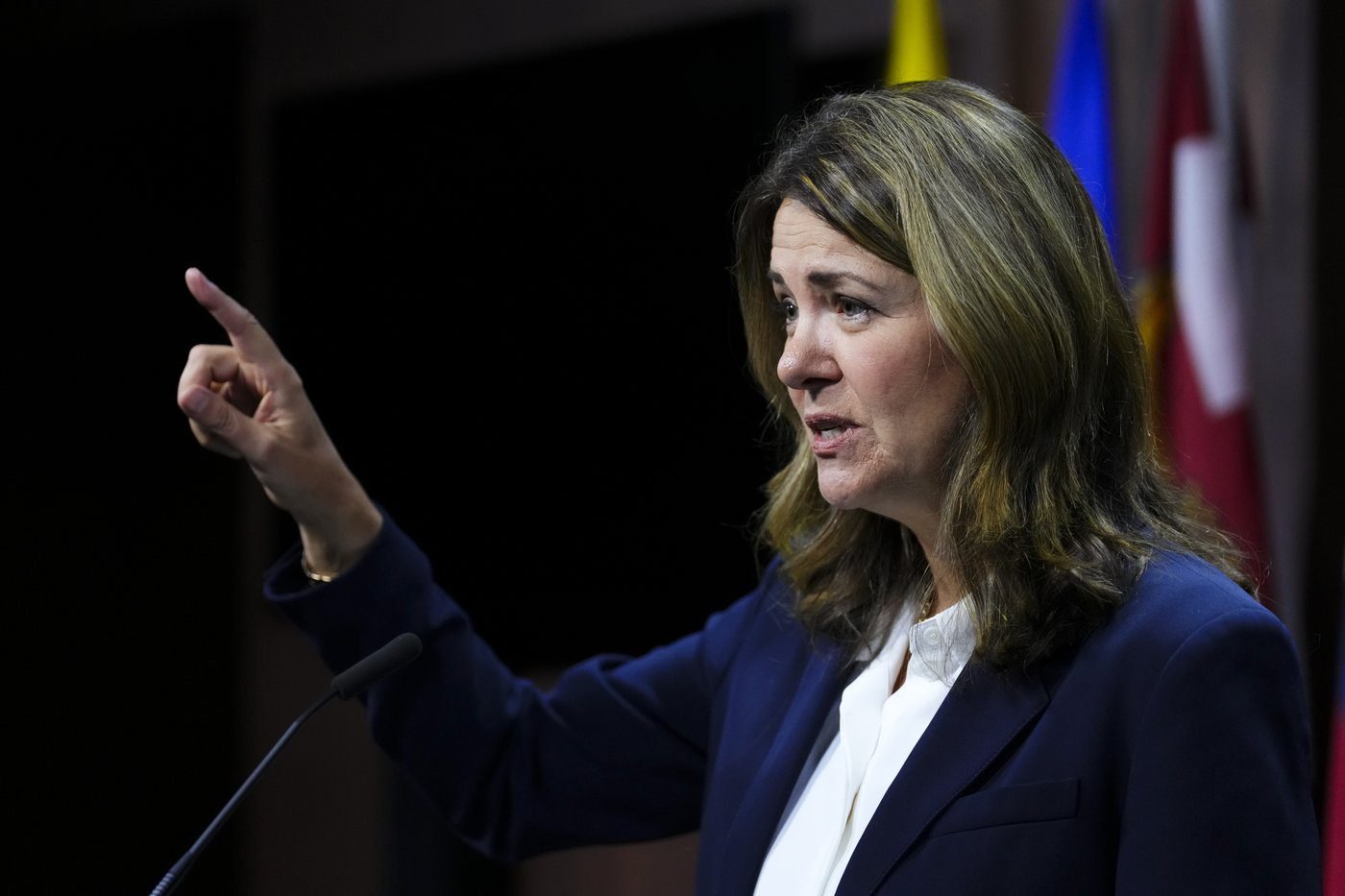
CALGARY — Alberta’s government is eyeing train connections between airports and the downtown cores of its two biggest cities as the first key project of the province’s new passenger rail plan.
But construction isn’t expected to start any time soon, as the government says it will spend $15 million over the next three years to move ahead with planning the routes, and others, before any shovels break ground.
The province’s new passenger rail master plan, which the government released an executive summary of on Friday, was two years in the making.
Three decades from now it sees an Alberta with high-speed rail between Edmonton and Calgary, and a train connecting Calgary to the Rocky Mountain resort town of Banff.
It also sees trains potentially connecting Edmonton and Calgary to surrounding suburbs.
Premier Danielle Smith said Friday the airport connections are the most feasible projects in the short term, and were also a major priority the government heard during public engagement on the rail plan.
“We heard many perspectives, but one thing was abundantly clear: a feasible passenger rail network is no longer just a vision for Alberta, it’s a goal,” said Smith, who was speaking at the Calgary International Airport.
“Certainly, it is an ambitious goal, and it will take about three decades of steady incremental work to achieve it.”
Calgary Mayor Jeromy Farkas said in a statement that after years and years of talk about building a passenger rail system in Alberta, he was thrilled to see steps to make it a reality.
“Calgary is Canada’s fastest-growing major city. As we continue to welcome new residents and businesses, we need infrastructure that matches our ambition,” Farkas said.
Alberta’s master plan says the full build out it’s considering could cost at least $60 billion in today’s cash.
“This includes infrastructure (tracks and stations), land, maintenance and storage facilities, and governance costs,” reads the executive summary.
A new Crown corporation would also be required to oversee operations, it says.
The plan doesn’t come with any proposed routes, though it notes that high-speed rail between Edmonton and Calgary, and between Calgary and Banff, would require extensive land acquisitions.
It also notes the lines wouldn’t be able to run along existing highway corridors, as that would require building costly overpasses. Passing through urban areas located along highways, such as Red Deer, would also come with “significant community impacts.”
“In the next steps of planning, the government of Alberta could examine alternative alignments for passenger rail and consider locations where existing highways may be suitable for high-speed passenger rail,” it says.
Despite the roadblocks, a family that submitted an unsolicited proposal for a Calgary-to-Banff train service five years ago is convinced their project is now closer than ever to being built.
“We think that hopefully now we’re off to the races,” said Adam Waterous, who alongside his wife Jan are behind Liricon Capital.
The route proposed by the Waterous’ — with the financial backing of the Canada Infrastructure Bank and a private investment firm — would be adjacent to the Canadian Pacific Kansas City freight line.
The government’s master plan says building passenger trains adjacent to freight lines would actually add time to the development process, not speed it up.
It says building alongside freight routes could limit high-speed passenger service frequency and reliability while also infringing on freight capacity. Federal involvement would also be necessary since freight corridors are regulated by Ottawa.
But Waterous, who holds a multi-decade lease of Banff’s train station, said Liricon’s proposal should be compelling for the government. The family is promising to eat the cost of building the Calgary to Banff line on its own if Alberta pays to connect downtown Calgary to the city’s airport.
“It’s quite a remarkable business opportunity from the province’s perspective,” said Waterous, a billionaire oil executive.
Despite the challenges identified, the rail plan says it expects the overall network to be a money-making endeavour, with fares easily covering operating costs.
Smith, asked if she was confident the plan would be carried out beyond her time in office, said it’ll depend on how much progress is made in the next few years when it comes to planning.
“I would hope that now that we have it out there and it’s a realistic plan we’ll probably see that there’s a number of partners coming forward,” she said.
“You’ll have to ask me again in a year-and-a-half what my optimism is, but it’s pretty high right now.”
— By Jack Farrell in Edmonton. With files from Dayne Patterson in Calgary.
This report by The Canadian Press was first published June 5, 2026.
The Canadian Press