dailynewsnblog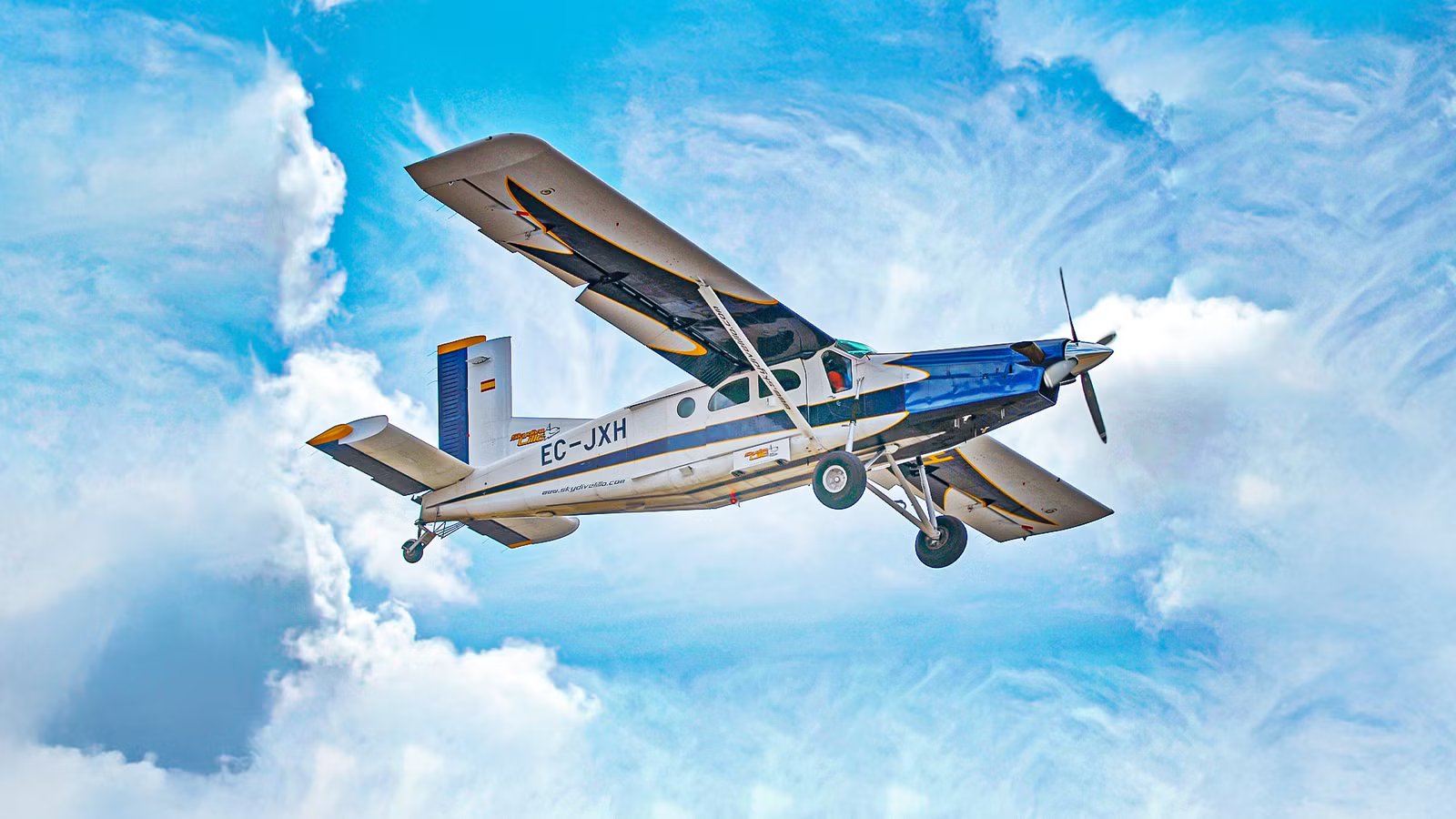
For most travelers, the idea of a memorable flight usually involves upgrades, an exclusive airport lounge, or perhaps a rare aircraft type operating a flagship international route. Aviation stories are often framed around comfort, technology, and prestige, particularly in an era where premium cabins and loyalty programs dominate the conversation around commercial flying.
However, for one Dutch-born traveler with deep family roots in West Papua, the flight that permanently changed his understanding of aviation happened aboard a rugged single-engine turboprop flying into one of the most isolated regions on Earth. Now based in Berlin and in his mid-fifties, Paul Inggamer still remembers the experience clearly more than two decades later. The aircraft was a Pilatus PC-6 Porter operated by Associated Mission Aviation, a missionary carrier serving remote communities in West Papua’s highlands.
The flight involved handwritten tickets, mountain airstrips, and a cabin shared with pigs, chickens, schoolchildren, and sacks of supplies. Simple Flying recently caught up with Inggamer, for whom nothing ever matched the emotional impact of that short bush flight through the Baliem Valley, despite going on to take countless premium long-haul flights during years of international travel.
Returning To A Place His Family Never Could

What brought Inggamer to West Papua in the late 1990s was not tourism in the conventional sense. His connection to the region was deeply personal, shaped by family history that stretched back to the final years of Dutch administration in what was then known as Dutch New Guinea. His parents were born there before being sent to the Netherlands in the late 1950s to study, during a period when the Dutch government had promised Papuan independence.
That promise was never fulfilled. In 1969, following the controversial ‘Act of Free Choice,’ the territory was incorporated into Indonesia. Inggamer’s parents met in the Netherlands during their studies and never returned to their homeland. Decades later, their son became the first member of the family to travel back, with Inggamer saying that:
“I was the first in my family to go back, in the late 1990s, and I returned several times. From 2003 to 2008, I lived and worked in Indonesia and West Papua, first as a Dutch tour leader, and later as a cameraman for an Indonesian TV news network. I traveled extensively across the archipelago, both with tourists and for media work. I speak Malay and Indonesian, and my surname is Papuan, so there was always a sense of recognition and connection.”
That connection became especially powerful in the highlands, where aviation is not a luxury but a necessity. Villages scattered across steep mountain valleys often have no roads linking them to the outside world, making small aircraft the only reliable form of transportation. Over the years, he flew with several local carriers, including Mission Aviation Fellowship and AMA, both of which operate critical flights into isolated communities.
A Handwritten Ticket That Felt More Human

Long before the aircraft itself appeared, one small moment already hinted that this would be a very different flying experience. Inggamer recalled receiving his ticket directly from the AMA bush pilot, handwritten with pen on paper rather than printed through a computerized reservation system. He said that:
“What I remember most vividly about receiving the handwritten ticket from the AMA bush pilot is how personal it felt. For insurance and administrative reasons, the ticket was needed. No system, no barcode, no screen: just a man, a pen, and a piece of paper. It felt like trust more than a transaction. You weren’t a passenger in a system: you were someone being taken along.”
For travelers accustomed to modern aviation, where every step is automated and digitally tracked, the image feels almost surreal today. However, in remote parts of West Papua during the early 2000s, this was completely normal. Flights operated according to weather, cargo requirements, and local necessity rather than rigid schedules or optimized fleet rotations.
Even the airport environment was different from conventional commercial aviation, and there were no elaborate terminals, retail spaces, or carefully choreographed boarding procedures. Operations revolved around practicality and survival, with aircraft moving constantly between mountain strips carrying food, medicine, building materials, and local residents.
Pilatus Aircraft: The Swiss Manufacturer Making Waves in the World of Private Aviation
Pilatus aircraft is a Swiss manufacturer that is doing interesting and innovative things in the world of private aviation
The Pilatus Porter Arrives In The Valley

When the Pilatus PC-6 Porter appeared, Inggamer was immediately struck by how small it looked against the enormous landscape surrounding the airstrip. West Papua’s central highlands are dominated by dramatic mountains, dense jungle, and deep valleys that can make even capable aircraft appear fragile. He recalled that:
“My first impression when I saw the Porter arrive at the strip was how small it looked against the landscape – and yet how powerful its presence was. You could hear it before you saw it, echoing through the valley. And then it appeared, almost as if it belonged to the mountains.”
The Pilatus Porter has long been one of the world’s most respected bush aircraft, renowned for its short takeoff and landing performance, rugged landing gear, and ability to operate in difficult environments. In places like West Papua, those capabilities are not impressive technical features for enthusiasts to admire; they are essential tools that allow communities to survive.
Aircraft like the Porter are often the only way to transport medical supplies, deliver food, evacuate sick passengers, or move teachers and children between villages. Inggamer quickly understood that these flights were not peripheral services operating at the margins of aviation. In West Papua, they represented aviation in one of its purest and most necessary forms.
Catch what other flight trackers miss
Emergency squawks, holds, NOTAMs — live signals, no signup.
Open tracker
Catch what other flight trackers miss
Emergency squawks, holds, NOTAMs — live signals, no signup.
Open tracker
A Cabin Filled With Life

Inside the Porter, the atmosphere was unlike anything Inggamer had experienced before or since. The aircraft cabin was crowded with passengers, animals, supplies, and cargo, all sharing the same compact interior without separation or hierarchy. Inggamer explained that:
“There were no compartments, no separation. People, pigs, chickens, bananas, schoolchildren – everything shared the same space. It wasn’t chaotic in a stressful way, it was just real. You felt part of something communal, something functional. No one complained. Everyone understood the purpose.”
That communal atmosphere contrasted sharply with the increasingly individualized nature of modern airline travel. On most commercial flights, passengers exist in carefully managed personal spaces defined by headphones, screens, seat assignments, and service tiers. The aircraft’s raw interior reinforced that sense of authenticity. Nothing about the experience was curated or polished for comfort.
Every vibration, sound, and movement reminded passengers they were flying through difficult terrain in an aircraft designed for utility rather than luxury. Once airborne, the landscape outside transformed the flight into something almost surreal. The Porter flew low through the Baliem Valley, weaving between mountains and exposing passengers to views impossible to experience from the cruising altitude of commercial jets. Inggamer said that:
“Flying low through the Baliem Valley is something that stays with you. The light, the green, the scale of the mountains: it all felt close, almost within reach. You could see villages, rivers, and people moving. It wasn’t abstract like cruising at 35,000 feet. It was intimate. The aircraft didn’t separate you from the world below: it placed you inside it.”
The terrain also demanded complete attention, and flying in Papua’s highlands requires extraordinary skill due to rapidly changing weather, steep valleys, and short mountain airstrips. Pilots operating there rely heavily on visual navigation and deep local knowledge, making every flight feel intensely physical compared to the automation of long-haul jet operations. Compared with conventional airline travel, Inggamer said it felt like a different universe that stripped aviation back to its essentials.
Why Bhutan’s Paro Airport Is Among The World’s Scariest
The landing at Paro is a white-knuckle roller-coast ride through deep Himalayan valleys to an abrupt touchdown on a short runway.
Understanding Aviation Differently

At some point during the journey, Inggamer realized the experience was changing how he viewed aviation itself. “There was a moment when something shifted for me,” he explained. “Not dramatic, but clear: this is what aviation is at its core. Not lounges or status, but connection. Movement where movement matters.”
The realization stayed with him long after he left West Papua and continued traveling internationally. Over the years, he experienced countless flights in premium cabins, long-haul business class seats, and modern commercial aircraft offering levels of comfort unimaginable inside a Pilatus Porter. However, none carried the same emotional significance. More than two decades later, the memory still shapes how he understands every flight that came afterward. He concludes:
“That short bush flight stayed with me more than any long-haul business class experience because it had meaning. It wasn’t about comfort or distance: it was about necessity, about being part of something essential. Looking back, that Pilatus Porter flight represents something pure. A form of aviation before layers were added, before everything became optimized and distant. It connects me to my father, my mother, the Papuan people to that land, and to a version of flying that feels honest.”
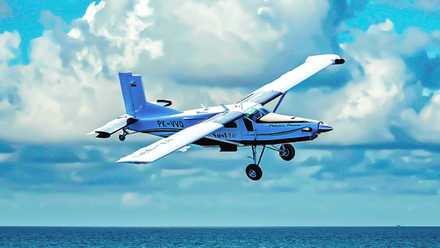
A Look At The Pilatus PC-6 Porter
The Pilatus PC-6 Porter was a very versatile aircraft, let’s have a look into how.
All About The Pilatus PC-6 Porter

The Pilatus PC-6 Porter remains one of the most respected utility aircraft ever produced, earning a reputation for reliability, flexibility, and exceptional short take-off and landing capability. Designed and built in Switzerland by Pilatus Aircraft during the late 1950s, the aircraft quickly became popular in demanding environments where conventional airplanes struggled to operate safely.
Its ability to depart from steep alpine strips, rough gravel runways, grass fields, and remote jungle airstrips made it especially valuable for operators working in isolated regions. The PC-6 was later equipped with the dependable Pratt & Whitney PT6A turboprop engine, significantly improving performance and operational efficiency. Pilots frequently praise the aircraft for its stable handling characteristics, excellent visibility from the cockpit, and strong low-speed control during difficult approaches.
These qualities helped the Porter find success in skydiving operations, cargo transport, humanitarian relief flights, aerial survey work, and military service across multiple continents. A large side cargo door allows rapid loading of passengers and equipment, while the rugged fixed landing gear provides durability on uneven surfaces.
Although production ended in 2019, the Porter, along with other Pilatus aircraft, continues flying worldwide. It is still admired today by bush pilots and aviation enthusiasts for its unmatched versatility and enduring legacy in remote aviation operations.