dailynewsnblog
The flight test crew guiding the Boeing 777X through its lengthy certification campaign occupies one of the most demanding jobs in commercial aviation. Unlike traditional airline pilots, Boeing’s flight-test crews are tasked with pushing an unfinished aircraft into extreme operating conditions, evaluating everything from flight-control software to emergency handling characteristics before the aircraft is put into final production and is cleared to carry passengers.
That level of responsibility comes with significant pay. In 2026,  Boeing test pilots connected to the 777X program are estimated to earn between roughly $100,000 (€88,000) and more than $250,000 (€220,000) annually, depending on seniority, technical qualifications, military testing experience, and involvement in FAA certification work. While Boeing does not publish a dedicated “777X test pilot” salary category, compensation data from Boeing employees and the wider aircraft test pilot market provide a clear picture of what these highly specialized aviators can earn. Join us as we explore the world of test pilots, their roles and responsibilities, as well as how their remuneration stacks up against their mainline colleagues.
Boeing Test Pilots Earn Well Into Six Figures

Boeing’s internal salary data suggests test pilots are among the company’s highest-paid aviation professionals. Reported compensation figures place the average Boeing test pilot salary at around $136,000 (€120,000) annually, while flight test pilots specifically average roughly $126,000 (€111,000) in base pay before bonuses and any other additional compensation they may accumulate.
The highest-paid personnel earn considerably more. Senior experimental pilots and certification specialists working on advanced aircraft programs can reportedly exceed $230,000 (€202,000) annually, with some compensation estimates approaching $270,000 (€237,000) for top-tier professionals. Those upper-level salaries typically apply to pilots with decades of experience in military aviation, aircraft engineering, or complex certification testing.
Unlike airline pilots, Boeing test pilots are deeply involved in the technical side of aircraft development. Their responsibilities often include designing test profiles, evaluating aircraft performance data, analyzing system behavior, and coordinating directly with engineers and regulators during certification campaigns. On the 777X program, pilots may spend weeks preparing for highly specific certification flights focused on areas such as flight-control responses, engine performance, and emergency handling. They are also expected to provide detailed technical feedback to Boeing engineers and FAA officials after each test mission, making them a critical part of the aircraft’s development process.
The 777X Certification Campaign Raises The Stakes

The 777X remains one of the most closely watched commercial aircraft programs in the aerospace industry. Originally expected to enter service years earlier, the aircraft has faced repeated certification delays tied to technical challenges, changing regulatory standards, and increased FAA oversight following broader scrutiny of Boeing’s certification practices. By 2026, the 777X program had accumulated billions of dollars in additional development costs as Boeing continued working toward final regulatory approval.
A major milestone arrived in March 2026 when the FAA cleared the 777-9 to begin Phase 4A certification testing. This is one of the final and most in-depth stages of regulatory certification. It involves transitioning from evaluating isolated systems to testing the aircraft as a completed, operational platform. The testing focuses heavily on validating flight-control laws, redundancy protection, cockpit systems, and aircraft response during abnormal or high-stress scenarios that could occur during airline operations.
The workload required to complete certification remains enormous. Boeing still needs thousands of additional flight-test hours to satisfy FAA documentation and performance requirements, with several test aircraft often flying simultaneously during the campaign. Every flight generates large volumes of technical data that must be reviewed by engineers, pilots, and regulators before the aircraft can move closer to commercial approval. The scale and complexity of that process help explain why experienced flight-test pilots remain among the highest-paid specialists in aviation.
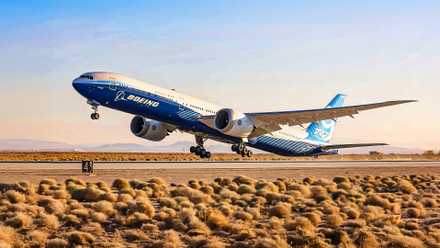
The Boeing 777X Will Physically Refuse To Take Off If Its Wings Are Still Folded
A visually striking feature, the folding wingtips on the 777X are critical to its operation.
The Wider Aircraft Test Pilot Market Also Pays Strongly

Boeing salaries generally align with broader trends across the aircraft testing industry. In 2026, experienced aircraft test pilots with advanced planning and evaluation skills reportedly average around $164,000 (€144,000) annually, while top earners approach or exceed $200,000 (€176,000) per year. Compensation can climb even higher for pilots involved in next-generation commercial aircraft certification programs, particularly those requiring extensive coordination with regulators and engineering teams.
Catch what other flight trackers miss
Emergency squawks, holds, NOTAMs — live signals, no signup.
Open tracker
Catch what other flight trackers miss
Emergency squawks, holds, NOTAMs — live signals, no signup.
Open tracker
Other compensation estimates place the national average closer to $129,000 (€113,000) annually, though that figure includes a much wider range of aviation testing roles across government agencies, aerospace contractors, and private manufacturers. Entry-level or developmental testing positions tend to fall well below the salaries earned by senior experimental pilots working on advanced aircraft programs such as the Boeing 777X.
Specification | 777-8 | 777-9 |
|---|---|---|
Typical seating (2-class) | 395 passengers | 426 passengers |
Range | 8,745 nmi (16,190 km) | 7,285 nmi (13,500 km) |
Length | 232 feet 6 inches (70.9 m) | 251 feet 9 inches (76.7 m) |
Wingspan (extended) | 235 feet 5 inches (71.8 m) | 235 feet 5 inches (71.8 m) |
Wingspan (folded on ground) | 212 feet 9 inches (64.9 m) | 212 feet 9 inches (64.9 m) |
Height | 64 feet 1 inches (19.5 m) | 64 feet 1 inches (19.5 m) |
Engine type | GE9X | GE9X |
Pilots working on flagship programs like the 777X usually sit near the top of the profession. Many possess backgrounds in military experimental testing, engineering qualifications, and years of experience operating high-performance aircraft in demanding environments. Those credentials are relatively rare, allowing senior certification pilots to earn substantially more than standard aviation professionals while also placing them among the most technically skilled pilots in commercial aerospace.
Airline Widebody Captains Can Still Earn More

Although Boeing test pilots earn impressive salaries, senior airline captains at major global carriers can sometimes make even more. Experienced captains flying aircraft such as the Boeing 777 or Airbus A350 for major international airlines frequently earn between $250,000 (€220,000) and $450,000 (€396,000) annually, including bonuses, profit sharing, retirement contributions, and seniority-based pay incentives. Those figures have climbed sharply in recent years as airlines compete for experienced long-haul pilots amid ongoing pilot shortages and strong international travel demand.
Pilots at major carriers, including Delta Air Lines, United Airlines, and Emirates, often operate under highly lucrative contracts negotiated through pilot unions or long-term employment agreements. Captains flying ultra-long-haul international routes can receive additional compensation for overseas layovers, flight-hour premiums, training responsibilities, and holiday schedules. In particularly strong travel markets, some of the most senior widebody captains at major airlines can surpass $500,000 (€440,000) annually in total compensation.
The roles, however, are fundamentally different. Airline captains focus on transporting passengers safely and efficiently, while Boeing test pilots operate experimental aircraft in highly technical certification environments. Test pilots may not always match the highest airline salaries, but they perform some of the most specialized flying in the aerospace industry.
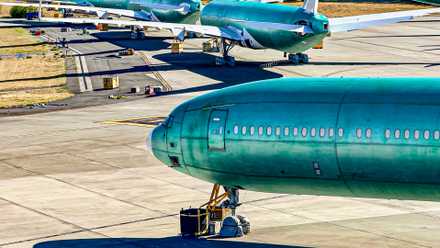
Boeing’s 30 Stored 777X Jets Need Years Of Rework Before Airlines Get Them
30 Boeing 777X jets are built, stored, and not going anywhere for years.
Becoming A Boeing Test Pilot Takes Years Of Preparation

The path to becoming a Boeing test pilot is exceptionally competitive. Most candidates spend years building experience in either military aviation or commercial airline operations before moving into advanced testing roles. Unlike conventional airline careers, flight-test positions require pilots to combine flying ability with engineering knowledge, analytical skills, and the ability to operate experimental aircraft under highly controlled conditions.
Military experience remains one of the most common pathways into the profession. Pilots from organizations such as the United States Air Force Test Pilot School or the United States Naval Test Pilot School often accumulate more than 1,000 military flight hours before entering formal experimental flight training programs. Many candidates also gain experience flying high-performance fighters, cargo aircraft, or military transport jets before transitioning into aerospace testing roles.
Technical education is equally important. Boeing frequently seeks pilots with backgrounds in aerospace engineering, systems engineering, mathematics, or flight sciences because modern certification work involves far more than simply flying the aircraft. Beyond FAA certifications and medical qualifications, test pilots must understand software integration, aerodynamic behavior, flight-control systems, risk analysis, and aircraft performance modeling at an advanced level while also communicating directly with engineers and FAA regulators throughout the certification process.
Boeing’s Demand For Elite Test Pilots Is Unlikely To Slow

The aerospace industry’s growing regulatory scrutiny has increased the importance of experienced certification crews. In recent years, the Federal Aviation Administration (FAA) and other global regulators have placed increasing emphasis on comprehensive flight-test evidence, rigorous validation of system redundancy and failure modes, and the safe integration of software-driven aircraft behavior, reflecting the growing complexity and automation of modern aircraft systems. As Boeing works toward completing the 777X certification process, senior flight-test pilots remain essential in demonstrating that the aircraft meets these increasingly stringent safety and performance requirements.
That sustained level of oversight is expected to keep compensation elevated for highly qualified pilots with backgrounds in experimental testing. Unlike standard airline flying, certification work requires pilots who can interpret engineering data in real time, respond to unexpected aircraft behavior, and communicate precise technical feedback to both engineers and regulators. Because the number of pilots with this blend of skills is relatively small, aircraft manufacturers face ongoing competition to attract and retain experienced test crews, especially for next-generation widebody programs.
The 777X also represents one of Boeing’s most important commercial aircraft developments for the future of its long-haul fleet. Positioned alongside the Boeing 787 Dreamliner, it is intended to strengthen Boeing’s competitiveness in the ultra-long-range market segment. This strategic importance places continued pressure on Boeing’s flight-test teams to complete certification work efficiently and safely, ensuring the aircraft can transition from development into full commercial service.