dailynewsnblog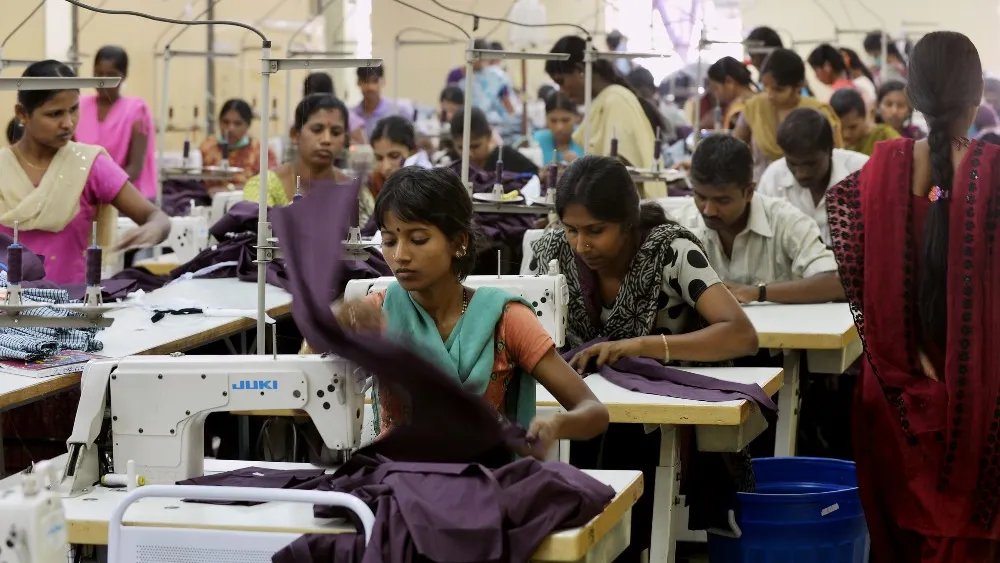
Global brands are under more scrutiny than ever. The European Union’s Corporate Sustainability Due Diligence Directive, the German Supply Chain Act, and a growing wave of human rights due diligence legislation are raising the bar for compliance.
Yet for most brands, the toolkit hasn’t changed: codes of conduct, audits, corrective action plans, and the hope that no scandal surfaces. The continued exposure of labor rights abuses across global supply chains shows that this approach is not working.
Enforceable brand agreements take a different approach. Unlike voluntary codes of conduct, they are legally binding contracts between brands, suppliers, and worker organizations that commit to addressing specific issues in the supply chain together. Worker organizations monitor compliance on the ground, and suppliers have real incentives to collaborate because brands can impose business consequences for violations.
One such agreement, the Dindigul Agreement to end gender-based violence and harassment in garment factories in Tamil Nadu, India, shows what this model can deliver. It was signed in 2022 by brands including H&M, PVH Corp. and Gap Inc., the local union TTCU, the supplier and witness NGOs.
What compliance can look like
Under the agreement, workers can report grievances through multiple channels: shop-floor monitors (SFMs) who are trained co-workers on their production lines with the authority to resolve minor issues on the spot; union representatives who visit the factory and workers’ villages regularly; or India’s legally mandated complaints committees, which are integrated into the agreement’s system. The mechanism is not limited to GBVH. Workers raise issues ranging from production pressure and wage concerns to caste-based discrimination and domestic violence. This matters because trust builds when workers see the system respond to what they care about, not just one isolated issue.
As a result, more than 75 percent of GBVH grievances were resolved within two weeks, many on the same day, as found in an independent final evaluation. Absenteeism at the factory fell from 25 percent to around 10 percent over the course of the agreement.
What makes this possible is the structure of the EBA itself. Factories must meet the agreement standards or face business consequences from brand signatories. Worker organizations provide continuous oversight, not periodic snapshots from an external auditor. And comprehensive, regular training—delivered in workers’ local dialect with specific examples—means that both workers and management understand what constitutes a violation. One worker described the shift in a two-year report: “In the training, I learned that this was a form of harassment and abuse of power. Now, if he (supervisor) retaliates against me without cause, I boldly confront him immediately.”
For brands, this means that compliance is built into the system. Grievances are identified early, resolved quickly, and documented.
Better for business
One concern brands raise about worker-inclusive initiatives is that union involvement creates friction. The Dindigul Agreement shows the opposite.
Prior to the agreement, there was significant distrust between the union and factory management. Three years later, the final evaluation found that management regularly consults the union on production decisions, from explaining worker reassignments to coordinating overtime during urgent shipping periods. The HR manager jokingly referred to the union president as “the HR manager, too.” Both sides attest to mutual gains. An observer from the Asia Floor Wage Alliance, one of the witness signatories, noted that they had not seen this level of union access or labor-management collaboration in any apparel factory across eight countries where they operate.
The agreement has also empowered workers to advocate for their own health and working conditions, which matters for the bottom line. Before the agreement, women had little recourse for health issues that affected their ability to work. “Even if we were on our period, we had to do the same hard work. There was no point asking, nothing would change,” one worker told the author during independent research.
Under the agreement, workers collectively negotiated a task-rotation system with management, allowing women experiencing pain to temporarily switch to lighter work. Raising these concerns early can reduce absenteeism and improve morale, an outcome consistent with the World Economic Forum, which finds that a healthy workforce is better for business and these businesses tend to be more productive than their competitors.
Beyond the factory
The effects of the Dindigul Agreement extend well beyond the factory floor. The training, union presence, and grievance process have given workers, most of them young Dalit women from the lowest and historically discriminated caste, a confidence they carry into their homes and communities.
Workers report challenging caste-based discrimination in their villages, negotiating with local authorities over public services, and shifting attitudes within their own families. One worker described how she uses what she has learned to challenge her son’s attitudes towards women at home: “I tell him, this is how women are treated at work. This is what we fight against. Don’t become that person,” to the author during independent research. These outcomes show what is possible when workers are placed at the center of compliance systems rather than treated as subjects of them.
The next test
The Dindigul Agreement is, as the final evaluation states, “an important proof of concept.” The model is already being replicated. The Central Java Agreement for Gender Justice was signed in 2024. It covers 6,250 workers across two garment factories in Indonesia producing for Fanatics and Nike. Other replication efforts are underway. It draws directly on the Dindigul model with union-appointed shop-floor monitors, multi-channel grievance mechanisms, comprehensive training, and binding business consequences for non-compliance.
What has not yet caught up is sourcing. Brand signatories to the Dindigul Agreement reduced sourcing from the covered factories over the life of the agreement, resulting in job losses with serious consequences for workers’ livelihoods. Displaced workers, most of them Dalit women and often sole breadwinners, are often forced into lower-paid roles, compounding the financial and emotional strain on their households. For the model to scale, brands need to source from factories that have done the work to achieve compliance.
For brands navigating an increasingly demanding regulatory landscape, the question is no longer whether to go beyond audits, but how. Factories operating under enforceable brand agreements reduce due diligence risk. Sourcing from factories under enforceable brand agreements offers worker-centered compliance systems that are effectively monitored and producing results.
Dr. Sanchita Banerjee Saxena holds a PhD in political science from the University of California, Los Angeles and has over 25 years of experience working on issues related to business and labor in global supply chains, with a special focus on the garment industry in Asia. At the University of California, Berkeley, Dr. Saxena teaches classes about social sustainability and she is also a Faculty Fellow at the Institute for Research on Labor and Employment (IRLE) and a Senior Academic Fellow at the Berkeley Center for Law and Business. She is also a Senior Advisor to Article One, a specialized strategy and management consultancy with expertise in human rights, responsible innovation, and sustainability where she advises companies on responsible supply chains.
Pauline Jerrentrup is a researcher and human rights consultant with five years of experience working across companies, international organizations and policy makers. She is a research fellow at ChainGE and and currently conducting her PhD at the London School of Economics, focusing on effective approaches to address gender-based violence in global supply chains, including the Dindigul Agreement.