dailynewsnblog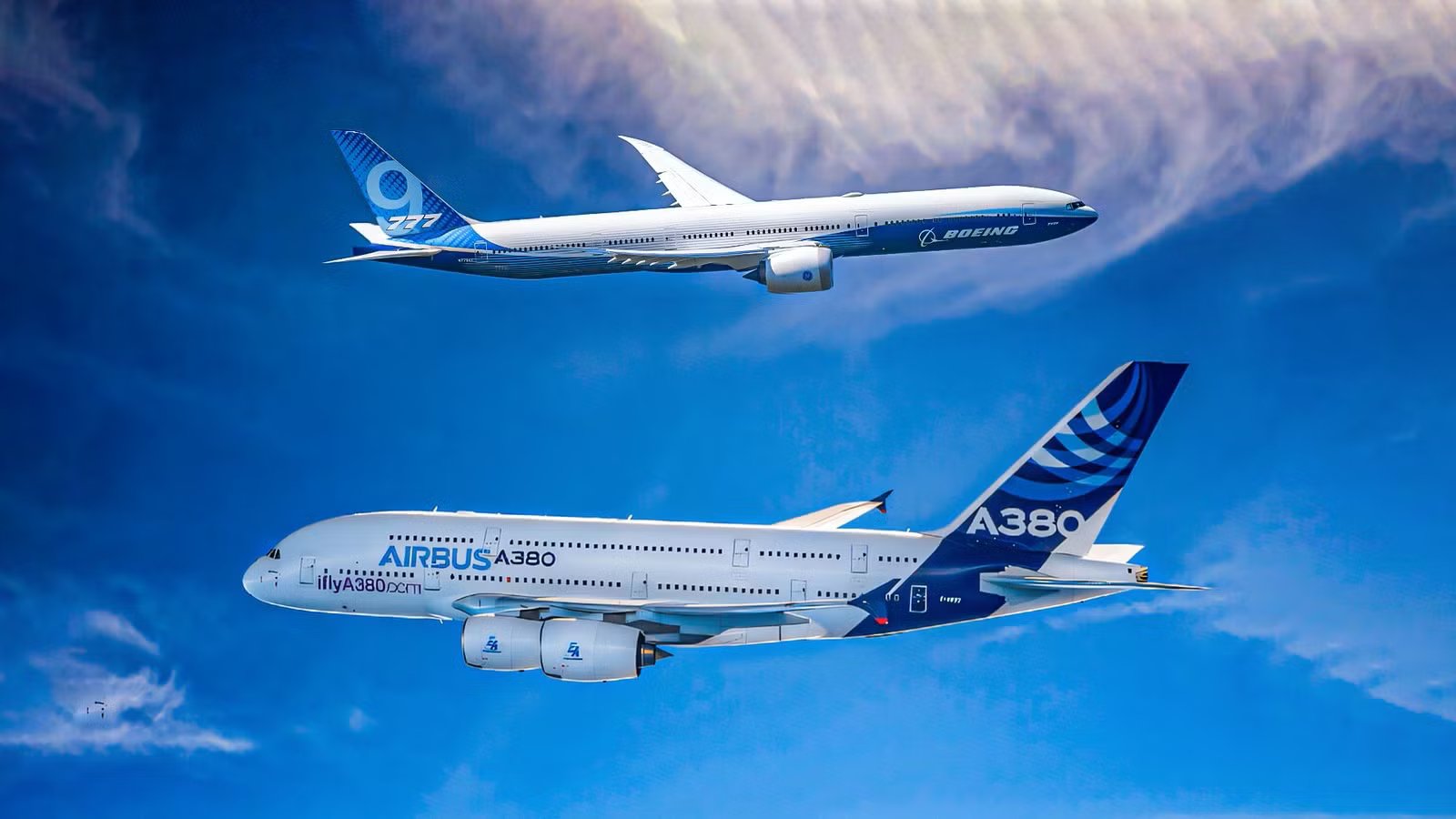
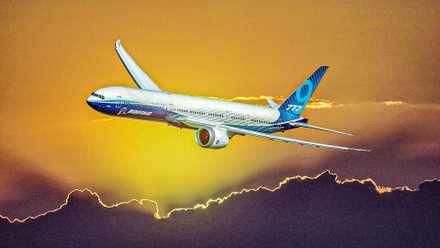
The future of ultra-long-haul flying is increasingly becoming a contest between two very different philosophies: the four-engine Airbus A380 superjumbo and the next-generation Boeing 777X, which is also the main dilemma for airlines like Emirates. While the Airbus A380 can carry well over 500 passengers in a standard three-class layout, the Boeing 777-9 is expected to seat roughly 426 travelers while delivering dramatically lower fuel burn thanks to its advanced GE9X engines and lightweight composite wing design. According to analysis previously published by Simple Flying, the 777X was specifically designed to approach A380-level capacity without inheriting the same operational complexity.
That shift matters not only to airlines worldwide but also to passengers connecting through hubs operated by carriers such as  Emirates,
  Lufthansa,
  Qatar Airways, and
  Singapore Airlines. Based on fleet and orders data, technical aircraft specifications, and our A380 replacement analysis, this comparison examines major areas shaping the future of long-haul flying: operating economics, passenger comfort, environmental performance, route flexibility, premium branding, and airline strategy.
Why Airlines Increasingly Prefer The Boeing 777X Despite Delays

The Boeing 777X represents the aviation industry’s long-term move toward highly efficient twin-engine aircraft capable of operating ultra-long-haul routes without the financial burden associated with very large four-engine jets. The Airbus A380 was developed during an era when airlines believed future traffic growth would center on giant hub airports moving enormous numbers of passengers between a relatively small set of global gateways. The 777X, however, was designed for a very different marketplace — one focused on flexibility, lower operating costs, and more direct long-haul connectivity. As explained by Simple Flying’s fleet strategy coverage, airlines now prefer aircraft that can remain profitable without needing to consistently fill more than 500 seats, especially after the COVID-19 pandemic. That’s why they are patiently waiting for the aircraft despite certification delays.
One of the 777X’s biggest advantages comes from its engine technology. The aircraft’s GE9X turbofans are the most powerful commercial jet engines ever developed, producing over 134,000 pounds of thrust while consuming significantly less fuel than the four engines powering the Airbus A380. Combined with carbon-fiber composite wings derived from the Boeing 787 Dreamliner program, the aircraft is expected to deliver major fuel savings on long-haul sectors. Wired’s analysis of the 777X design noted that Boeing’s advanced aerodynamic improvements of the wing and extensive use of carbon composites were specifically intended to reduce fuel burn, while innovative folding wingtips were designed to maintain airport compatibility.
Operational flexibility is another major advantage. Unlike the Airbus A380, which requires specialized airport infrastructure including reinforced taxiways and dual-level boarding bridges, the Boeing 777X can access a far broader range of airports thanks to its folding wingtips and lighter overall weight. As our comparison of the two aircraft shows, this flexibility allows airlines to open new long-haul routes without forcing airports to invest heavily in infrastructure upgrades. In practical terms, the 777X gives airlines more options while lowering operational risk.
Why Passengers Still Love Flying On The Airbus A380

Despite the Boeing 777X’s operational strengths, the Airbus A380 continues to hold a unique position among passengers. Many travelers still consider it the most comfortable commercial aircraft ever built. Its enormous double-deck fuselage with an onboard bar creates a sense of spaciousness that few other jets can replicate, with wider cabins, larger aisles, quieter interiors, and a smoother ride helping define the aircraft’s reputation on ultra-long-haul flights.
One of the A380’s greatest strengths is the way airlines use its immense cabin volume to redefine premium travel. Airlines such as Emirates and Singapore Airlines introduced onboard lounges, shower spas, bars, and ultra-private suites that became iconic within the aviation industry. In this article on aircraft replacing the A380, we explained how the superjumbo allowed airlines to create luxury experiences that smaller twinjets struggle to replicate economically.
Passengers also benefit from the aircraft’s lower cabin noise levels. Because the A380’s four engines are mounted farther from the fuselage and because the aircraft itself is so massive, the cabin environment is notably quieter than many traditional widebody aircraft, despite being a quadjet. On flights lasting 12 to 16 hours, that quieter environment can significantly reduce fatigue. Economy class passengers frequently describe the A380 as feeling less cramped than smaller twinjets, even when seat dimensions are similar, simply because of the aircraft’s enormous internal volume.
Another overlooked advantage of the Airbus A380 is passenger flow. Because travelers are distributed across two full decks, boarding and deplaning can feel less congested at airports specifically designed for A380 operations. The aircraft’s size also gives airlines flexibility to dedicate large sections of the upper deck to premium cabins while still carrying hundreds of economy passengers below.
How The Boeing 777X Will Change The Passenger Experience On Long-Haul Flights
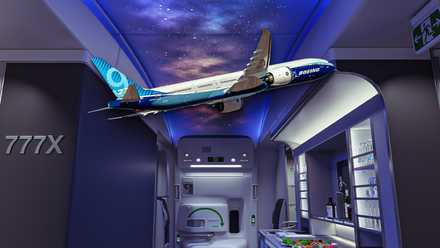
The new Boeing 777X will enhance passengers’ experience and will make the 777 family more like that of the 787 Dreamliner.
The Boeing 777X Could Narrow The Passenger Comfort Gap

Although the Airbus A380 still leads in overall spaciousness, Boeing designed the 777X specifically to improve passenger comfort over earlier generations of twinjets. The aircraft incorporates many technologies first introduced on the Boeing 787 Dreamliner, including larger windows, improved humidity systems, lower cabin altitude, and more advanced pressurization. In our previous analysis of the 777X’s role on future long-haul routes, these features are intended to reduce fatigue and improve the passenger experience on ultra-long-haul flights.
The 777X also gives airlines tremendous flexibility in cabin design. Airlines can install larger business-class suites, upgraded premium economy sections, and more advanced in-flight entertainment systems while still maintaining strong economics. Carriers such as Lufthansa, Emirates, and Qatar Airways are all expected to use the aircraft as a platform for next-generation premium products.
Perhaps the most important passenger advantage of the 777X is not inside the cabin itself, but in the routes the aircraft enables. Unlike the Airbus A380, which works best between major hub airports, the Boeing 777X can economically connect secondary cities directly over long distances, similarly to the Boeing 787 but with a spaciousness approaching that of the A380. That means passengers may increasingly avoid lengthy layovers in giant hub airports and instead travel nonstop between destinations that previously lacked enough demand for an A380-sized aircraft.
This trend aligns closely with the broader post-pandemic airline strategy, as airlines increasingly favor point-to-point connectivity over funneling passengers through massive connecting hubs.
Environmental Pressures Strongly Favor The Boeing 777X

Environmental efficiency has become one of the aviation industry’s most important topics, and this is an area where the Boeing 777X holds a major advantage over the Airbus A380. Governments, regulators, investors, and airlines are all under growing pressure to reduce carbon emissions and improve sustainability. Four-engine aircraft are increasingly difficult to justify in that environment because they consume substantially more fuel than modern twin-engine designs.
The Airbus A380 was conceived during a very different era of aviation. When development began in the 1990s, fuel prices were lower, environmental regulation was less stringent, and airlines still expected future traffic growth to center on giant hub airports. The Boeing 777X, however, benefits from two decades of advances in engine technology, aerodynamics, and materials science that did not exist when the A380 first entered service.
Its GE9X engines are central to that advantage. Not only are they extraordinarily powerful, but they are also among the most fuel-efficient large commercial engines ever built. Composite wings further reduce weight while improving aerodynamic performance. Sustainability increasingly affects fleet financing, investor confidence, and long-term operating strategy. This is one reason why many airlines accelerated the retirement of older Airbus A380 fleets following the COVID-19 pandemic, as the economics of operating very large four-engine aircraft became far harder to justify in a market focused on efficiency and flexibility.
The Boeing 777X’s GE9X: Inside The Largest Engine Ever Built
The Boeing 777X is currently set to enter commercial service in 2027.
The Airbus A380 Still Holds A Unique Prestige Advantage

Even though the Boeing 777X is likely to become the more commercially successful aircraft, the Airbus A380 continues to offer airlines something that few aircraft in aviation history have ever achieved: prestige. For airlines such as Emirates, in particular, the aircraft became a global brand symbol that is difficult to replace, though the airline has ordered over 270 Boeing 777X aircraft, as it is currently the closest aircraft capable of doing what the A380 can.
According to numerous reviews, travelers often specifically choose Airbus A380-operated flights because they want the experience of flying aboard the world’s largest passenger aircraft. Aviation enthusiasts continue to view the aircraft almost as a destination in itself, while premium travelers associate it with flagship-level service and luxury.
Category | Airbus A380-800 | Boeing 777X (777-9) |
|---|---|---|
Aircraft Type | Full double-deck ultra-large widebody | Next-generation twin-engine widebody |
Overall Length | 238 ft 7 in (72.72 m) | 251 ft 9 in (76.72 m) |
Wingspan | 261 ft 8 in (79.75 m) | 235 ft 5 in unfolded (71.75 m) / 212 ft 8 in folded (64.85 m) |
Tail Height | 79 ft 1 in (24.1 m) | 64 ft (19.5 m) |
Maximum Takeoff Weight | 1.27 million lb (575 tonnes) | 775,000–805,000 lb (351–365 tonnes) |
Engines | 4 × Rolls-Royce Trent 900 or Engine Alliance GP7200 | 2 × GE9X |
Engine Thrust | ~70,000–76,000 lbf each | ~105,000–110,000 lbf each |
Typical 3-Class Capacity | 500–555 passengers | 400–426 passengers |
Maximum Certified Capacity | 853 passengers | ~550 passengers |
Typical Cabin Crew | 22–30+ crew members | 14–20+ crew members |
Range | 8,000 nm / 9,200 mi / 14,800 km | 7,285 nm / 8,380 mi / 13,500 km |
Cruise Speed | Mach 0.85 (652 mph / 1,049 km/h) | Mach 0.84–0.85 (646–652 mph / 1,040–1,049 km/h) |
Cabin Width | 21 ft 5 in main deck (6.54 m) | 19 ft 5 in (5.92 m) |
External Fuselage Width | 25 ft 7 in (7.14 m) | 21 ft 1 in (6.2 m) |
Cabin Height | Approx. 7 ft 11 in (2.41 m) main deck | Approx. 7 ft 0 in (2.13 m) |
Typical Economy Seat Width | 18–19 in (45.7–48.3 cm) | 17–18 in (43.2–45.7 cm) |
Typical Business-Class Width | Often 20–30+ in (50.8–76.2 cm) depending on airline | Often 20–24+ in (50.8–61 cm) |
Typical Economy Seat Pitch | 31–34 in (78.7–86.4 cm) | 31–34 in (78.7–86.4 cm) |
Window Size | Standard large widebody windows | 787-inspired enlarged windows |
Cabin Altitude | ~7,000–8,000 ft equivalent (2,134–2,438 m) | ~6,000 ft equivalent (1,829 m) |
Cargo Volume | ~5,900 cu ft / 167 m³ | ~7,000+ cu ft / 198+ m³ estimated |
Passenger Boarding | Dual full-length decks | Single main deck |
Airport Requirements | Specialized gates and taxiways often needed | Compatible with most 777-capable airports |
That prestige translates especially well in premium cabins. The A380’s massive internal volume allows airlines to dedicate large amounts of space to lounges, bars, showers, and oversized first-class suites. Emirates’ onboard bar and shower spa remain among the most famous premium products in commercial aviation, while Singapore Airlines used the aircraft to launch some of the industry’s most spacious first-class suites. No twinjet, including the Boeing 777X, can realistically dedicate the same amount of space to luxury amenities without significantly hurting profitability.
Still, prestige alone cannot guarantee survival. Airbus ended A380 production in 2021 after struggling to secure enough new orders, while the Boeing 777X continues attracting attention from airlines seeking efficient replacements for aging large widebodies. The market has increasingly shifted toward balancing capacity with flexibility rather than maximizing size at all costs.
The Future Of Long-Haul Flying Will Likely Belong To Efficient Twinjets

The broader direction of the airline industry strongly suggests that aircraft such as the Boeing 777X and Airbus A350 will dominate the next generation of long-haul flying. Airlines increasingly value lower operating costs, reduced emissions, operational flexibility, and the ability to serve more city pairs directly rather than funneling passengers through giant mega-hubs. The 777X aligns almost perfectly with that strategy.
That does not mean the Airbus A380 will disappear anytime soon. Emirates remains heavily invested in the aircraft and continues modernizing its cabins with upgraded premium products. On extremely high-demand routes, the economics of carrying more than 500 passengers can still make sense, especially at slot-constrained airports such as Dubai International Airport and London Heathrow Airport.
However, the balance of power has shifted toward efficiency. The Boeing 777X offers airlines a compromise the industry increasingly values: near-superjumbo capacity combined with lower operating costs, broader airport compatibility, and dramatically improved fuel efficiency. For passengers, that may mean more nonstop routes, newer cabin technologies, and potentially lower fares driven by better airline economics.
The Airbus A380 may still represent the pinnacle of spaciousness and onboard luxury, but the Boeing 777X reflects where long-haul aviation is heading. One aircraft embodies the grandeur of the hub-and-spoke era, while the other represents the future of flexible, efficient global travel.