dailynewsnblog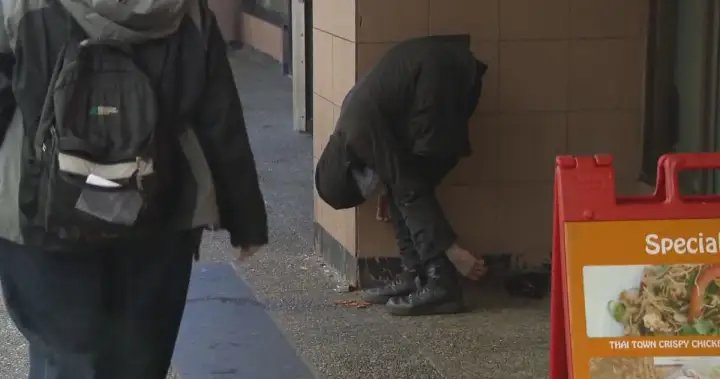
Nearly three months after the B.C. government announced a major program to boost tourism, Destination Vancouver says visitors are increasingly commenting on street disorder, open drug use, aggressive behaviour, and personal safety concerns in the city’s downtown core.

Unveiled in March, the province’s Look West strategy aims to double visitor spending to $48 billion by 2036.
According to a government news release, B.C.’s Tourism Sector Action Plan is built on five pillars: marketing the province as a top-tier destination, improving access through expanded air services and provincial corridors, leveraging events, mobilizing private-sector investment and creating a supportive business climate for tourism operators and investors.
“We have the product, the expertise, and the capacity to grow,” BC Minister of Tourism, Arts, Culture and Sport Anne Kang said on March 4.
The president and CEO of Destination Vancouver, which represents more than 675 members of the city’s tourism and hospitality sector, said the goals of the province’s tourism strategy become harder to achieve when public and business confidence in safety and the downtown visitor experience continue to decline.
Speaking to residents and business leaders at a May 28 news conference regarding a planned Overdose Prevention Site in downtown Vancouver that has now been paused by the B.C. government, Royce Chwin said his members hear directly from visitors.
He shared some recent unedited tourist comments:
“Street upon street of homeless people who were clearly under the influence of what was probably fentanyl and other drugs. Felt very, very unsafe, always looking over your shoulder, drugs openly being consumed. We clearly stood out as tourists, feeling very vulnerable.”

Get breaking National news
Get breaking Canada news delivered to your inbox as it happens so you won’t miss a trending story.
“The streets were dirty, unkempt and very sad to see and what an utter disappointment.”
“Really glad to leave this place and will not be going back, has put me off to going to any other city in Canada.”
“Homeless and mental health problems everywhere. I saw many of these people on Robson Street, in Gastown and on Granville Street.”
“There was seemingly a homeless person (on) every block and a few of them were cooking drugs in the open. At one point, I was aggressively yelled at by someone with serious mental health issues.”
“Vancouver used to be nice. Now, why so dirty.”
“So many homeless people, people injecting drugs passed out on the street.”
“It is living off past reputation, save your money.”
“These perceptions matter,” Chwin said. “Tourism is built on reputation.”

Tourists enjoying the sunshine and North Shore mountain views from Canada Place on Tuesday told Global News they’re loving Vancouver.
“It’s nice, clean, feels safe. You don’t see a lot of homeless,” said Ken and Barb Coutts, visiting from Buffalo, New York. “We’re very impressed; yes, we would definitely come back.”
“It’s beautiful, people are friendly, it’s sunny – the waterfront really is stellar,” added New Brunswick visitor Mary Gatien. “The mountains are beautiful, what could you not like about it.”
East of the downtown core, a couple visiting from Austria found the streets “a little bit dirty”. “We saw a lot of homeless people and at home we don’t have so much, only a few.”
Kang was not available for an interview Tuesday, but her ministry said addressing public safety is a shared priority.
“We continue to support coordinated efforts that strengthen the visitor experience and sustainable tourism growth,” said the Ministry of Tourism, Arts, Culture and Sport in a statement.
According to the government’s emailed response, that action includes:
- Investing in police enforcement programs that target street disorder, theft, vandalism, and repeat offenders.
- Urgently building a strong, comprehensive system of mental health and substance use care—from early intervention and prevention to life-saving harm reduction measures, treatment and recovery, aftercare services, and more—so people can get the care they need.
- Supporting the Downtown Eastside (DTES) through the Provincial Partnership Plan, which works with partners to expand access to integrated housing, health, social, and cultural supports for DTES residents, opening about 1,290 new or renovated spaces in the area since 2023, with 678 more expected in 2026.
- Investing in almost 1,300 permanent shelter spaces in Vancouver, which is 400 more than in 2017, when there were approximately 900 year-round shelter spaces.
- Destination Vancouver said it supports compassionate, evidence-based solutions to the overdose crisis, and recognizes it is an incredibly complex public health issue.
“For us, this is not a debate about whether or not people need help; they do,” said Chwin.
Chwin added his 200-plus Destination Vancouver volunteers are increasingly getting asked about the things tourists are seeing, and where it’s not safe in the city.
For the first time in almost 30 years, he said, the Vancouver Police Department helped train them on how to answer questions about safety.
“That’s not right,” Chwin said.
© 2026 Global News, a division of Corus Entertainment Inc.