dailynewsnblog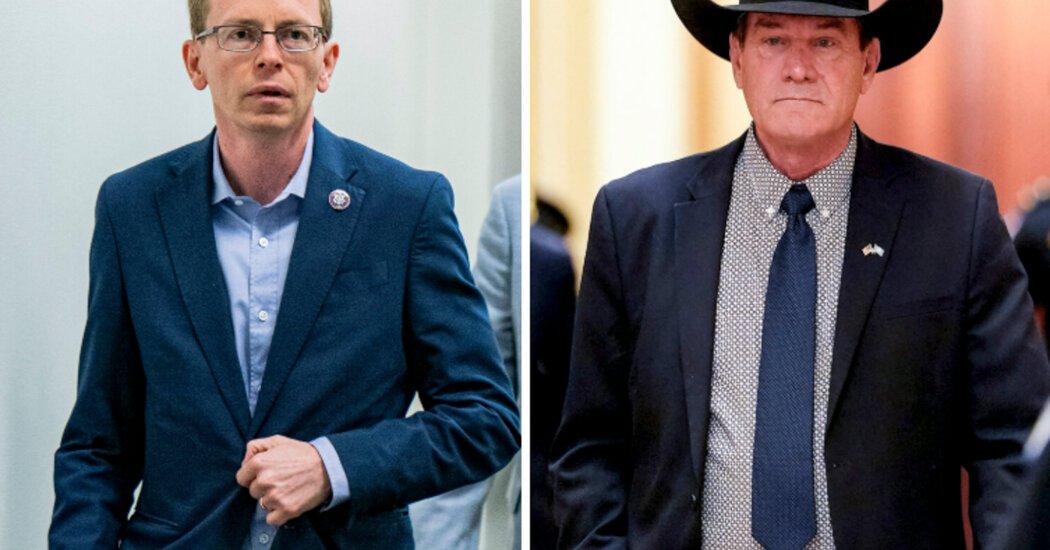
One of the most competitive statewide races on Tuesday is South Dakota’s Republican primary for governor, which has three serious candidates challenging the incumbent governor.
There has been relatively little polling in the race. Five polls have been conducted since March, and only three of those were fielded independently, without ties to a campaign or partisan organization. In the five polls, Representative Dusty Johnson led in three, while Gov. Larry Rhoden and the businessman Toby Doeden each led in one.
Mr. Rhoden was elected lieutenant governor in 2018 and assumed his current office in 2025 when Kristi Noem resigned to become homeland security secretary. A recent poll from KELO News and Emerson College found that more than a quarter of Republicans in the state disapproved of the job he was doing, and that Republicans were most likely to have a neutral opinion or no opinion at all of his job performance.
He faces three strong challengers: Mr. Johnson, a moderate Republican who has represented the state’s at-large district in the House since 2018; Mr. Doeden, who has cast himself as a Trump-like outsider and has poured $4 million of his own money into the race; and Jon Hansen, who is the speaker of the state’s House of Representatives.
The race will advance to a July runoff if no candidate receives more than 35 percent of the vote, a threshold Mr. Johnson approached in two of the surveys. But the most recent poll in the race, from Meeting Street Research, had Mr. Johnson in fourth place, with only four percentage points separating the top four candidates.
Polls from KELO News and Emerson College fielded in early March and mid-May showed Mr. Doeden gaining eight percentage points of support and Mr. Johnson losing five. Mr. Rhoden and Mr. Hansen maintained roughly the same levels of support.
Demographic breakdowns in polls can offer only limited insight, but there has been some consensus among the surveys. Mr. Johnson has drawn support from younger voters and those with higher levels of education. Mr. Doeden, who is more aligned with President Trump, performed better among less educated voters.
And while no candidate has reached the 35 percent threshold in recent polling, a large number of undecided voters — over 10 percent — opens the possibility of an outright winner should those voters lean heavily toward one candidate.