dailynewsnblog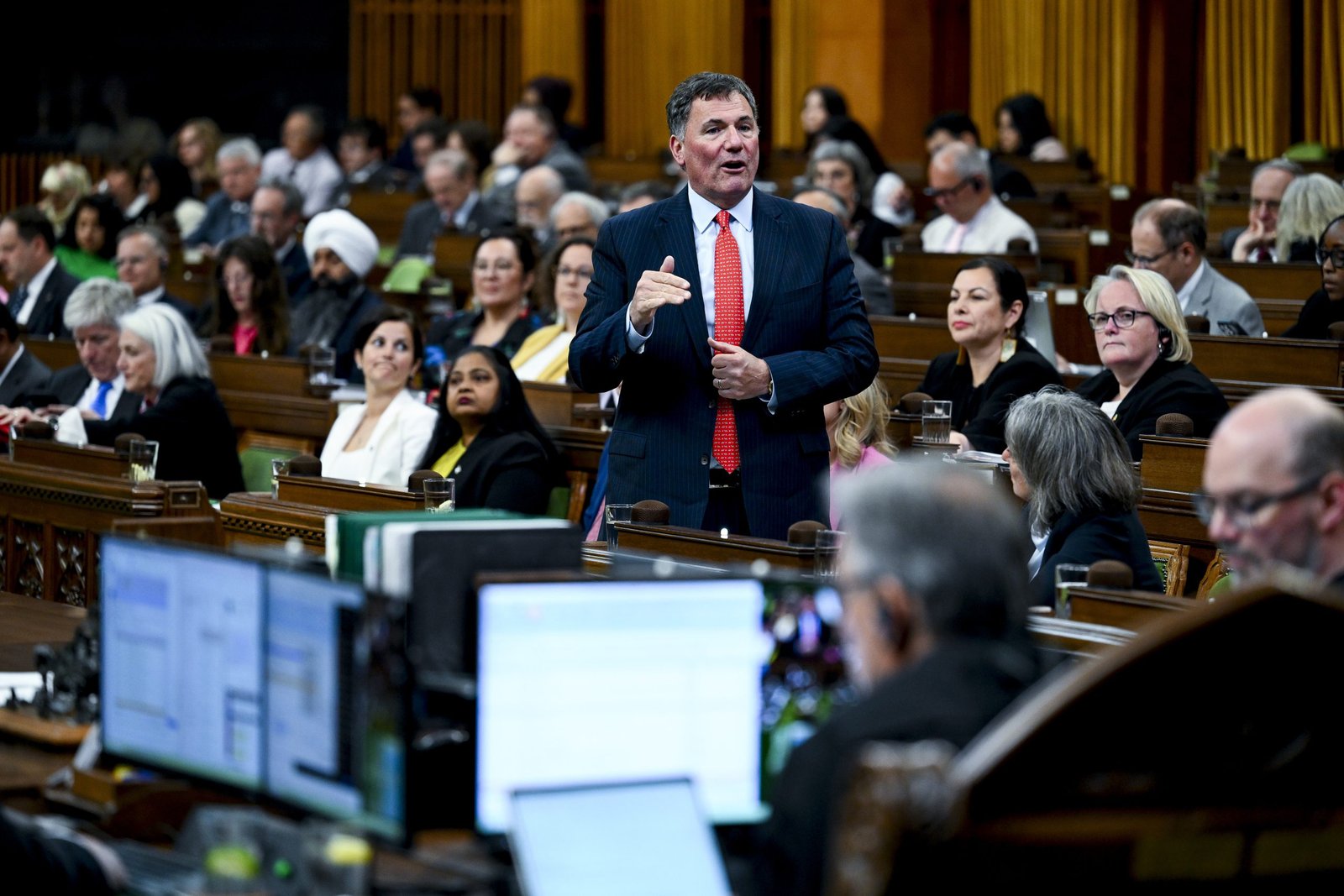
T-minus 29 days until the CUSMA review deadline, and Canada has sent a letter to the U.S. and Mexico recommending the three countries to renew the continental trade pact.
The letter from Canada-U.S. Trade Minister Dominic LeBlanc is required as part of the mandatory review of the Canada-U.S.-Mexico Agreement on trade, known in Canada as CUSMA.
LeBlanc is set to travel to Washington today to meet with U.S. Trade Representative Jamieson Greer.
While official CUSMA trade talks between Ottawa and Washington have yet to begin, the United States and Mexico have started their negotiations.
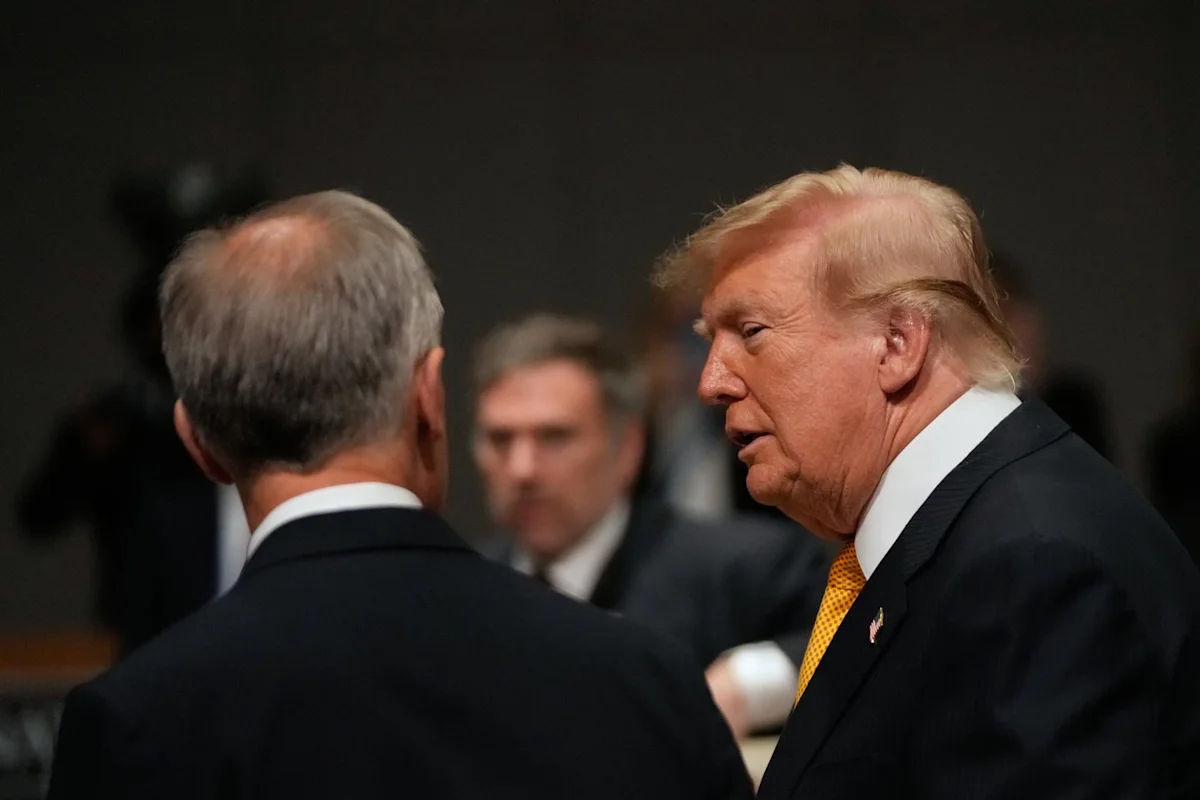
U.S. President Donald Trump has criticized the trade agreement by calling it irrelevant and saying it may have served its purpose.
The Canadian Press has more.

Conservative Leader Pierre Poilievre says his party would vote against the government’s anti-hate bill even after a member of the Conservative Senate caucus helped passed an amendment to criminalize residential school denialism.
When asked by iPolitics on Tuesday about the development, he said the Conservatives oppose Bill C-9 because it’s an “another example of Liberal censorship.”
“We oppose censorship. We believe in freedom of speech. And it’s time for the Liberals to stop going after law-abiding people — whether it’s firearms owners or internet users or other people who follow the law — and start going after real criminals.”
Members of the Senate human rights committee voted nearly unanimously to make the change to Bill C-9 during clause-by-clause review on Monday. The amended bill must still be approved by the Senate, and could undergo additional rewrites on the floor during third reading, and any changes must be approved by the House of Commons before the bill can be signed into law.
Marco Vigliotti has more.

Also, the NDP wants to change the rules for floor crossing.
Bill C-278 would ban Members of Parliament from crossing the floor without the approval of their constituents, NDP House Leader Don Davies said on Tuesday.
“The prospect of MPs being enticed by backroom deals emerges and the notion that only government members get resources for their constituencies smacks of the pork barrel politics more reminiscent of the United States deep south than in Canada,” Davies said.
Floor crossing, rooted in British parliamentary tradition, happens when a politician decides to change their political party affiliation while holding office. Under Canada’s current system, MPs can switch parties without resigning their seat or triggering a byelection.
Since last April’s election, five floor crossers have joined the Liberal caucus, enabling Prime Minister Mark Carney to form a majority government.
Read more from Sydney Ko.
Meanwhile, the Bloc Québécois is taking issue with Conservative Leader Pierre Poilievre’s claim that support for Quebec separatism was “wiped out” under Stephen Harper’s government.
The Tory leader insists separatist sentiment in both Alberta and Quebec is being driven by the Liberals and their policies. On Monday, he told reporters support for separation “was zero” when Harper was in power between 2006 and 2015.
“Under Stephen Harper, the separatist movement was wiped out. The Parti Québécois and the Bloc Québécois were on their last leg,” he said.
Bloc Québécois House leader Christine Normandin pointed out that Quebec elected a minority Parti Québécois government in 2012.
“I couldn’t agree less with (Poilievre’s) statement,” she said in an interview.
CP’s got this one too.
In Other Headlines
Internationally
Elsewhere, President Trump on Monday adjusted tariffs on some aluminum, copper and steel imports.
In a proclamation, the president lowered tariffs on some aluminum and steel derivative products, including agricultural equipment and certain heating, air conditioning and ventilation systems, from 25 percent to 15 percent.
Trump initially imposed 25 percent tariffs on aluminum and steel derivative products on April 2. In doing so, he cited Section 232 of the Trade Expansion Act of 1962 — which gives the president the authority to impose restrictions on imports under national security grounds.
The president stated Commerce Secretary Howard Lutnick recommended that he reduce those tariffs, citing “recent circumstances” that “have affected and are affecting” domestic industries that use the aforementioned equipment.
“These products also serve an important role in productive domestic economic activity,” the proclamation states. “For example, American farmers use agricultural equipment to produce the food upon which our Nation relies; construction equipment is essential for the continued reindustrialization of our Nation; and material-handling equipment enables industrial logistics and factory operations.”
The Hill has more.
Less than two hours after polling stations closed on Sunday, it was clear that Colombia’s presidential race would be settled in a run-off between two finalists: hard-right political outsider Abelardo de la Espriella and leftist Senator Ivan Cepeda.
Though the overall result surprised few, de la Espriella’s strong showing upended pollsters’ predictions.
Cepeda, President Gustavo Petro’s chosen successor, had been expected to win the most votes, based on public opinion surveys.
But instead, de la Espriella came in first place, winning 43.74 percent of the vote. Cepeda trailed with 40.90 percent.
Supporters of de la Espriella, a criminal defence lawyer, held rapturous celebrations in the coastal city of Barranquilla, where the candidate has an office.
Read more from Al Jazeera.
In Other International Headlines
The Kicker
And finally, scientists may have figured out how pigeons always know where they’re going: it’s their liver.
Specialized immune cells in the pigeon’s liver break down red blood cells and store iron. Apparently, when scientists temporarily stripped pigeons of those immune cells and let them fly, the birds just couldn’t find their way.
It honestly explains why pigeons walk around the city like a man who owns six condos.
Arab News has more.