dailynewsnblog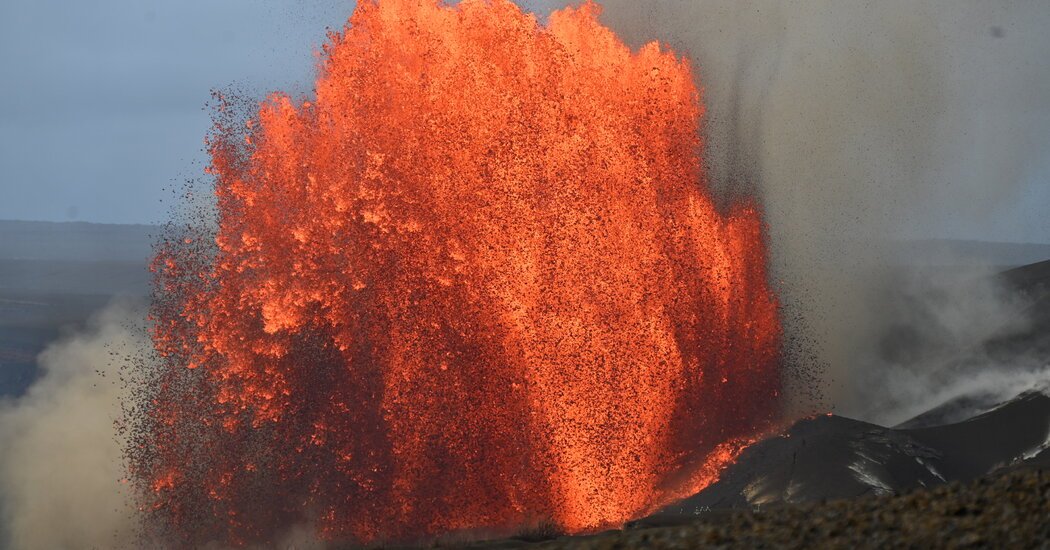
The volcano Kilauea erupts all the time, as it has for thousands of years on Hawaii’s Big Island. It still managed to do something unexpected.
The volcano produced nine hours of fountains that sent jets of lava into the air on Monday. Scientists call that a “fountaining episode,” and this was the 48th such episode of an eruption that began in December 2024, according to the U.S. Geological Survey. That is the most episodes the volcano has produced in a single eruption, the survey’s scientists said.
Kilauea is on the southeast of Hawaii’s Big Island, and has been particularly active over the last 50 years, including several eruptions over the last decade. Though somewhat less well-known than the dormant Mauna Loa and the active Mauna Kea, it is Kilauea that has been the most active volcano on the Big Island.
The current eruption is unusual, the U.S.G.S. said late last year: “Sustained, repeated high fountaining — where molten lava is lofted hundreds of meters — is uncommon at Kilauea.” It said just three other similar eruptions had been recorded: in 1959, and in the early parts of the volcano’s 1969–74 and 1983-86 eruptions.
The first hint that another round of fountaining might be on its way came on Saturday evening with some spattering from the volcano, followed by lava overflow. The actual lava fountains started in the early morning hours on Monday and lasted until the early afternoon. It produced “significant heat and ash,” the U.S.G.S. said.
Ashfall advisories were issued for areas including Hawaiʻi Volcanoes National Park, the U.S.G.S. said. Within the park and in the immediate surrounding areas, the agency said, there were reports of fine ash and Pele’s hair — a term for thin strands of volcanic glass that resemble hair or straw, named after the Hawaiian goddess of volcanoes.
A sulfur and ash cloud led to some flight cancellations, the U.S.G.S. said.
Monday’s fountains of lava were notably regular, according to the agency, occurring roughly every 15-30 minutes and lasting five to 10 minutes each.
Some of the lava fountains observed on Monday reached about 650 feet. Fountains from Kilauea in the past have shot as high as 1,500 feet, which can cause life-threatening danger for those nearby.