dailynewsnblog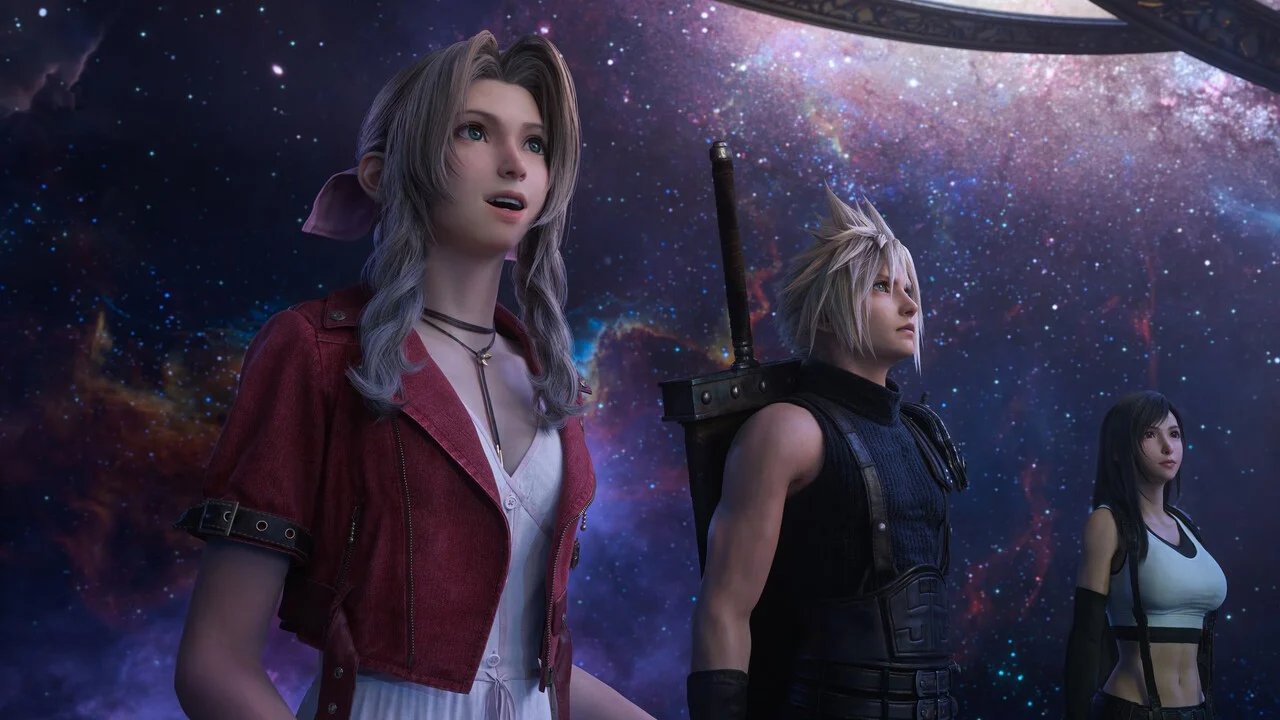
When Square Enix originally announced that Final Fantasy VII Remake was coming to Switch 2, it came with the promise that Final Fantasy VII Rebirth and its eventual sequel would also be coming. While Remake established itself as one of the finest and most advanced titles for Nintendo’s new platform, there was lots of talk about whether the same would be true for the next instalment.
Known for its significantly expanded scope and open world, 2024’s Rebirth was a system showcase on more powerful hardware, and squeezing it down to a handheld seemed an impossible task. Though it doesn’t make the leap unscathed, I’m happy to report that Final Fantasy VII Rebirth is every bit as engaging and enjoyable as the versions you can find on other platforms – this is easily one of the greatest JRPGs of the last several years, and that’s still true of the Switch 2 port.

Following on from the thrilling conclusion to Remake, Rebirth continues the journey of Cloud and the gang as they leave behind Midgar to pursue and confront Sephiroth before he can bring about the shared vision they received of the planet’s ultimate destruction.
The far-reaching consequences of the party’s choice at the end of their last adventure are still unknown, leading to a delightful tension as you move through the story not entirely sure if events will play out in quite the same way that they did the first time we experienced this world in 1997. While there’s still more yet to come with the planned Part 3 finale of this years-long project, this middle chapter nonetheless still feels like it tells a satisfying standalone narrative.
As you explore all corners of this much wider and expanded world, the interpersonal dynamics and relationships of the party are often brought to the forefront, highlighting the family-like nature of this eccentric band of warriors, flower-pickers, bartenders, and ninjas.
Yuffie is the dorky little sister of the group, while Cloud is the aloof but caring older brother, and the banter between them and all the party members as they forge a new fate for their world helps to keep the occasionally oddly-paced plot from feeling too awkward. This is a story that’s just as much about these people learning to trust and understand each other as it is about the quest that brought them together in the first place, which makes the finale of their penultimate outing all that much more impactful.

I also loved how the storytelling effectively straddles cartoonish absurdity and gritty seriousness. The same game that portrays an incredibly graphic incident in which a village is burned to the ground with most of its inhabitants beneath also has no problem introducing an adorable dolphin companion whose playful aid is a mandatory component of plot progression. In a lesser game, such conflicting tones would run the risk of making the story seem unfocused and meandering, but Rebirth knows how to balance its various plot components to make for an adventure that feels as whimsical as it is unpredictable.
In stark contrast to Remake, which was a largely linear experience, Rebirth throws the doors wide open by giving you a massive open world to explore at your leisure. Spread out over a handful of densely packed zones, there are a variety of side quests, world activities, and minigames that lead to an incredibly varied gameplay loop which feels expansive without feeling like it devolves into an overdone checklist of copy and paste content.
Not only are there many well-written sub-narratives and character moments stashed away in various side quests, but every activity feels like it meaningfully contributes to the gameplay loop without being tacked on for the sake of padding the runtime.

For example, not only do Lifesprings grant you rare crafting resources and some interesting notebook entries that expand on the lore for the region, but finding them all in a zone unlocks a unique boss hunt in the region that acts as its own reward above and beyond the resources it grants you.
The clever way in which the various activities have been neatly threaded together with both gameplay and story relevance makes it incredibly easy to get sucked into taking a couple of hours to complete everything on a portion of the map you just happened to be running through, powering up with rewards and learning more about the region as you go.
This is easily one of the most addictive open-world games I’ve played in a while, striking that balance between meaningful content density and giving you and the environment room to breathe. Roaming the land atop a chocobo, I never felt at a loss for interesting things nearby to get caught up in, but I also felt like the current region was usually wrapping up right around that point where the content fatigue was just beginning to set in.

Perhaps best of all, you aren’t required to do any of it; all the optional content that fills the world is there for those who want to dig in deeper, while those who just want to keep the story moving can do so without worrying about being woefully underpowered.
When you get pulled into fights, combat largely continues the system pioneered in Remake, with some welcome tweaks that make it feel both snappier and more strategic. Somewhat similar to the Xenoblade games, there’s a balance here between basic, quick attacks and more powerful abilities governed by cooldowns.
As you mash the attack button and guard against incoming attacks, you’ll build up part of your ATB gauge with each hit. Once a bar fills, you can then essentially freeze time while you select a spell or ability from the quick menu to help level the playing field more. This is where you can take advantage of elemental weaknesses an enemy may have and more effectively build up their stagger bar, which will temporarily stun them and lower their defence once it’s filled.
Every playable character has their own distinctive playstyle, creating a lot of gameplay variety to play around with as you switch between party members in the heat of battle. Tifa’s kit is built around close combat and building up stagger meters, with a signature ability that can manually raise her ‘chi’ level and enable her to deal more damage. Barret, on the other hand, specialises in long-range combat with his arm cannon and introduces a subtle rhythm element to the rotation where well-timed button presses charge his cannon faster.
To tie it all together and to encourage you to swap around the party more mid-fight, Rebirth has added in Synergy Skills and Abilities, iterating on a mechanic introduced in the Episode INTERmission DLC from Remake. Unlocked through each character’s skill tree, these powerful moves will see active party members teaming up for spectacular combo attacks that usually lead to some temporary bonus effect like no MP costs on spells or a more rapidly charging ATB gauge. These take some setup and planning to pull off, but just one of them activated at the correct moment can turn the tide of a fight that slowly wasn’t going the right way.

All of this makes for an electric action combat system that manages to be fast-paced and energetic without descending into a mess of particle effects and mindless button mashing. There’s just as much focus on careful planning and strategy as there is on raw skill and dexterity, creating an interesting push and pull where you oscillate between beating up foes while reacting to enemy attacks and taking a quick breather to decide what spell to cast next and whether you should switch to another character to start building towards another Synergy Ability.
With practice, you start to pick up on the nuances of each character and how to operate your party as a singular unit that’s stronger than the sum of its parts, leading to a tremendous sense of satisfaction when you take down a mighty foe through incisive exploitation of its weaknesses by leveraging your active party’s strengths. Few games out there manage to balance turn-based and action combat so elegantly – Square has set a high bar for itself to meet for the inevitable Part 3 conclusion.
When it comes to tinkering with your party, the Materia system has returned as the central component of character building, allowing for a more flexible take on a class system that lets you mix and match moves and abilities. Obtained as shop, exploration, or combat rewards, Materia orbs represent individual spells or abilities which can be levelled independently to enhance their effectiveness. Some can be linked to others to enhance their effects, such as the Magnify Materia turning a single target spell into an AoE, while others will grant flat bumps to various stats, such as health or luck.

Materia fits seamlessly with the flexibility of the open-world design, giving you all sorts of options to try out with various team compositions as you swap characters and loadouts to accommodate whatever content you’re challenging. Sometimes it’s best to load up Aerith with attack spells against a boss with various elemental weaknesses, while other times it’s better to swap some of those spells out for more defensive options that favour healing and aggro control. No Materia is locked to any one character, giving you a lot of leeway to mix various roles as you build your team to their strengths.
Each character also has a folio skill tree you can access, where SP earned from each level up can be invested in new abilities and passive stat bumps. These are each tailored to the intended strengths of each character, such as Aerith having many magic and MP-related nodes in hers, but there’s also still lots of room for you to prioritise various builds for your character as new nodes are unlocked and you have to make tough decisions about where to invest your limited SP.
When you’re getting tired of exploring the world or beating up monster packs, there are tons of minigames to master that break up the gameplay loop with some refreshing ideas. Whether you’re racing on the backs of chocobos or defending territory in a miniature RTS, a bunch of different genres are explored that are both addictive and surprisingly in-depth without distracting from the core gameplay. As an added plus, it feels like many of these minigames were designed with a handheld device in mind, making them feel right at home on the Switch 2 screen in portable mode.

On the topic of minigames, I’d be remiss not to talk a bit about Queen’s Blood, a shockingly deep, ongoing side mode that could legitimately do well as a standalone release. Played on a simple 3×5 grid, this easy-to-learn card game focuses on finding a balance between claiming territory and building up points as you take turns trying to outwit your opponent. There are NPCs scattered throughout the whole game who you can challenge, each of which has a unique card you can win.
What at first just seems like another little time-waster soon reveals mechanical depth as you start to get more into deckbuilding and better understand the meta. Between levelling up your rank, winning powerful cards from rivals, and hoovering up booster packs at new stores you come across, there’s a strong sense of progression as you amass a mountain of cards and design new decks to counter your opponents’ increasingly advanced strategies. Suffice to say, there’s a lot to dig into with this, and it’s impressive how many hours you can drop into this optional mode alone.

From a visual standpoint, Rebirth is one of the most impressive titles yet released for the Switch 2, but there are some caveats.
On one hand, the character models are expressive, the fight animations are full of bombast, and the wide shots of the valleys and mountains of the regions you explore capture the grandeur of the expansive world. In so many ways, this release compares favourably to other platforms.
And yet, some concessions have had to be made to fit this on a portable device. Regardless of whether you’re in a smaller environment or out in the open world, the resolution is noticeably fuzzy and soft around the edges, as if you’re viewing the action through smudged glasses. Meanwhile, pop-in is abundant, with all kinds of environmental assets loading in constantly right in front of you if you’re moving too quickly, and distant enemies will sometimes be completely frozen in place until you get close enough to them for their animations kick in.

Amid all this, the frame rate does its best to adhere to 30fps, and it largely does so. But there are many moments where it appears to dip into somewhere in the low-to-mid-20s when there’s too much happening at once on screen. These frame drops weren’t serious enough to interrupt or alter my gameplay experience, but they’re both frequent and significant enough to be a noticeable issue.
All of which is to say, this is not the version of Rebirth to play if you’re particularly sensitive to graphical or performance hiccups. Yet despite the compromises, the overall experience is remarkably consistent, especially in portable mode. This is the epitome of a port that looks ‘good enough’ — there’s a fair amount to validly scrutinise about the image quality, but it’s also not difficult to ignore those rougher edges as you immerse yourself in this engaging world.