dailynewsnblog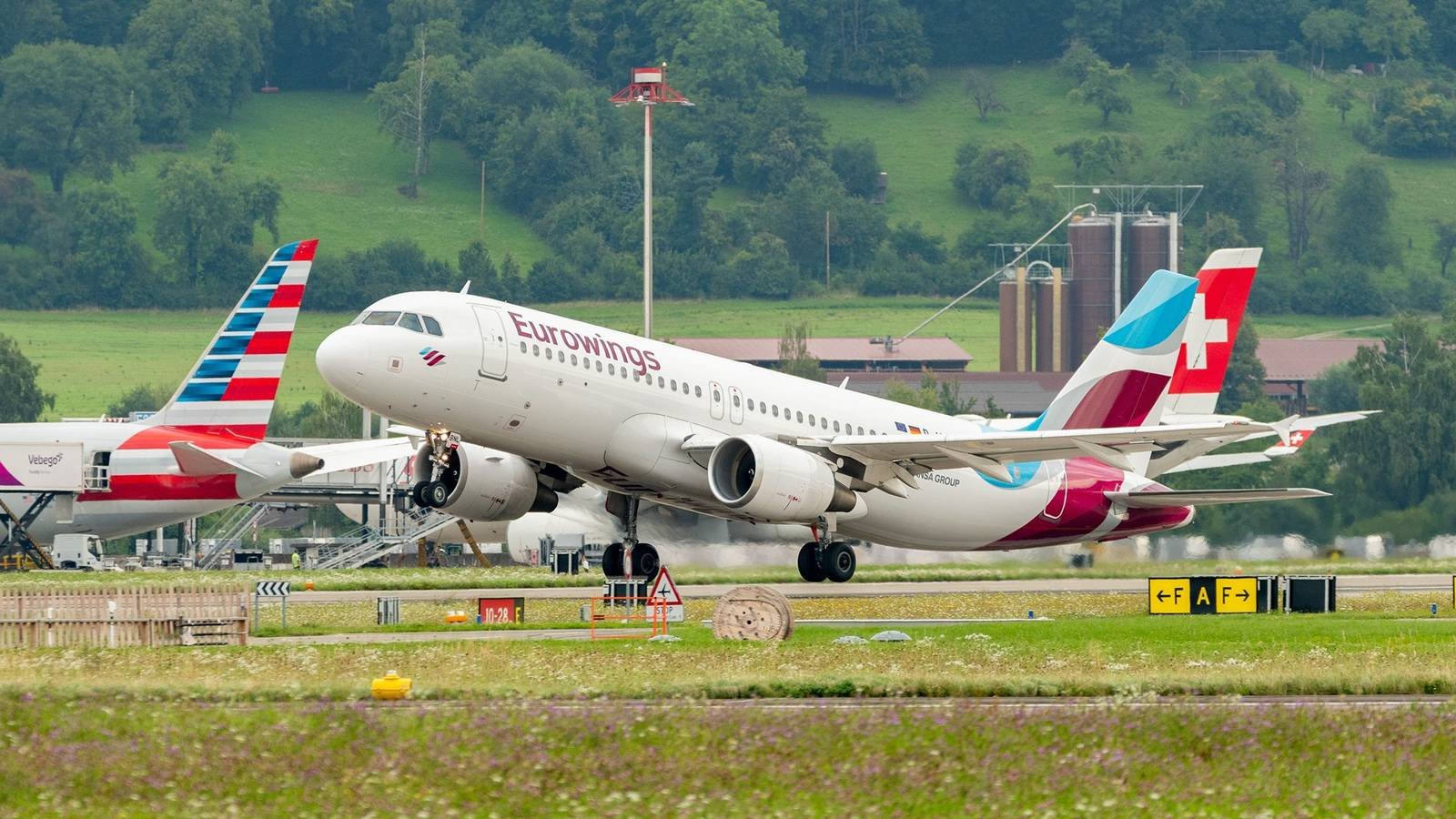
Five occupants onboard a Eurowings flight from Greece to Germany have sustained injuries after the Airbus A320 that they were traveling on came into wake turbulence left behind by an  Emirates A380. It is understood that as the aircraft climbed safely into the superjumbo’s wake, four passengers and a flight attendant were thrown against the aircraft ceiling.
The International Civil Aviation Organization (ICAO) outlines that the safe minimum separation that is needed between the A380 and A320 when traveling at the same altitude or within 1,000 feet (304 m), should be at least seven nautical miles (12.9 km).
Four Passengers And One Crew Were Injured When The Eurowings Flight Struck Wake Turbulence

According to a report by Aviation Herald, the incident unfolded on Saturday, May 30, when the Eurowings flight operating as EW635 had departed from Rhodes International Airport “Diagoras” (RHO), flying non-stop to Cologne Bonn Airport (CGN). The plane was over the skies of Sarajevo and cruising at an altitude of 36,000 feet (FL360) when it was cleared to climb to 38,000 feet (FL380).
This was to follow in the trail of another flight traveling overhead, that of Emirates EK1 from  Dubai International Airport (DXB) to
  London Heathrow Airport (LHR). The double-decker was ahead by around 7.6 nautical miles (14 km), and for geographical positioning, the Emirates plane was approximately 13 nautical miles (24 km) north-east of Sarajevo.
As it has been reported, the Eurowings plane has been gradually increasing its altitude to FL380, when at FL376 (37,600 feet) the plane struck unexpected turbulence, and wake turbulence, which allegedly threw four passengers and a flight attendant into the ceiling of the narrow-body jet.
Unexpected Wake Turbulence From The Emirates A380

The Cologne-bound flight immediately descended its altitude to return to FL 360 (36,000 feet), at a rate of 3,000 fpm (feet per minute). Injured passengers and crew onboard were offered first aid, and the Captain decided that the aircraft could continue to its final destination of Cologne, where the plane was then met by medical services at the gate before being escorted to a local hospital.
For the Eurowings A320, the plane remained on the apron at Cologne for over four hours for inspection, where the cockpit voice recorder and flight data recorder were secured. These checks delayed the corresponding flight for the aircraft to Venice (VCE). Details of the two aircraft involved are outlined in the table below as per ch-aviation:
Airlines | Eurowings | Emirates |
|---|---|---|
Aircraft Type | Airbus A320-214 | Airbus A380-861 |
Registration | D-AEWS | A6-EUF |
Serial Number (MSN) | 7439 | 218 |
Hex Code | 3C56F3 | 89645B |
Aircraft Age | 9.5 years | 10.1 years |
Configuration |
| |
Flight Operating | EK635 | EK1 |
Departure Airport | Rhodes (RHO) | Dubai (DXB) |
Arrival Airport | Cologne (CGN) | London Heathrow (LHR) |
Following the incident, there was no delay or interruption to the Emirates flight, and the aircraft continued to its final destination of London.
easyJet Flight Attendant Injured As Turbulence Strikes Shortly After Takeoff
An easyJet cabin crew member required emergency medical assistance.
ICAO Recommendations For Minimum Separation Rules

According to ICAO recommendations, the minimum separation between the A380 and a trailing A320 when at the same altitude or 1000 feet below should be at least seven nautical miles. Noted in ICAO Doc 4444, standards and the separation rules are applied, which are primarily for departure and arrival; depending on the phase of the flight, various standards may apply.
Due to the size and velocity of the A380 superjumbo, this plane can create long-lasting wake vortices and subsequent turbulence, which can remain for up to five miles (8 km) behind the plane itself. Pilots are trained to study the Standard Lateral Offset Procedure, which can help reduce the risk of en route wake turbulence.
In the incident of this Eurowings and Emirates crossover, the Cologne-bound aircraft was well beyond the minimum seven nautical mile threshold, and the unexpected turbulence that then struck the aircraft was likely caught off guard, leading to the injuries to the five on board. This is not the first time that the A380 wakes another aircraft, after in 2017 a private jet traveling near an Emirates plane over the Arabian Sea was sent into a roll after passing the double-decker.
Catch what other flight trackers miss
Emergency squawks, holds, NOTAMs — unique signals, live, no signup.
Open tracker
Catch what other flight trackers miss
Emergency squawks, holds, NOTAMs — unique signals, live, no signup.
Open tracker