dailynewsnblog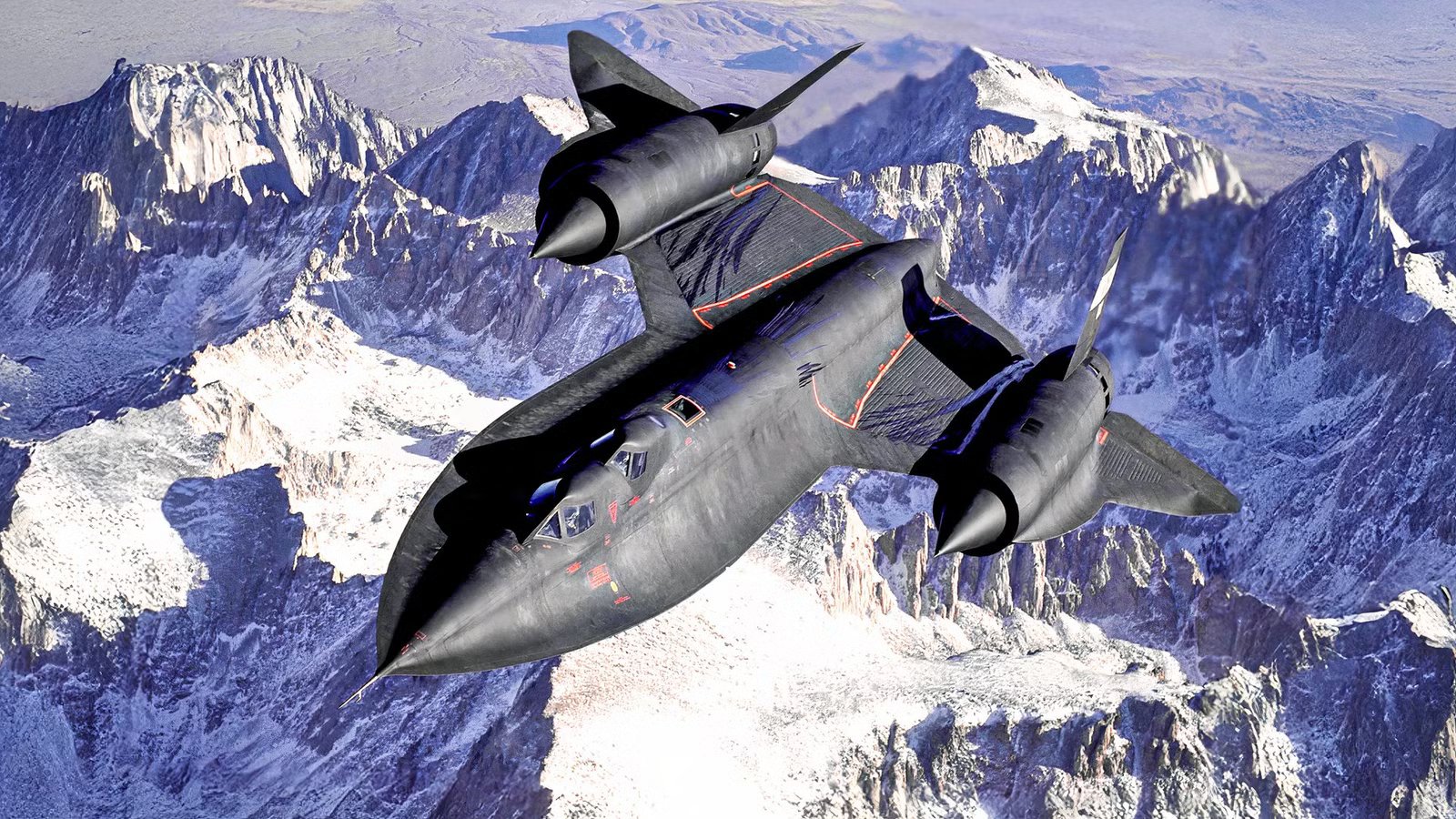
Science fiction experienced a major creative boom during the 1950s and 1960s; the fear, paranoia, and technological rivalry of the Cold War helped shape this cinematic and literary genre. Topics such as space travel, rogue technology, nuclear apocalyptic fears, aliens, and radioactive monsters grasped readers and moviegoers alike.
While the Lockheed Martin SR-71 Blackbird could not travel to space, it certainly had the appearance of a futuristic spacecraft. It looked like no other aircraft in service at the time of its official reveal in 1964, by the United States Air Force (USAF).
With its ink-black paint, sleek, sharp edges, and long, protruding fuselage that blended into a highly swept, triangular wing area, it looked otherworldly. This new reconnaissance aircraft surely captivated the imagination of a public that was still getting accustomed to conventional jet aircraft for both Military and commercial applications. Adding to its futuristic aura, the SR-71 could fly higher than any other manned aircraft, providing a view of space like no other.
For Its Time, The SR-71 Offered An Incomprehensible View Of Space

Operationally, the SR-71 would routinely fly at altitudes between 80,000 to 85,000 feet (approximately 24,000–26,000 meters). At these heights, 95 percent of the Earth’s atmosphere would be below the fuselage of the spycraft. The advantages of flying at these altitudes provided the Blackbird with the ability to safely photograph sensitive sites across the world that were in the national security interests of US military planners.
Catch what other flight trackers miss
Emergency squawks, holds, NOTAMs — live signals, no signup.
Open tracker
Catch what other flight trackers miss
Emergency squawks, holds, NOTAMs — live signals, no signup.
Open tracker
Some areas of interest included the Soviet Union, Vietnam, China, Cuba, and more. In addition to sensitive reconnaissance mission profiles, operating at those extreme heights and speeds of Mach 3.2 or greater allowed the SR-71 to evade not only interceptor aircraft but also surface-to-air missiles. To this point, the Smithsonian reports that the aircraft was fired upon in excess of 4,000 times, with no hits.
While the practical applications of flying in the upper stratosphere are evident, these altitudes offered a view of space that few at the time—aside from astronomers and high-altitude pilots—could have fully imagined. This is particularly true if the crew of a Blackbird was operating at night.
One such pilot to experience this was USAF Lt. Colonel David Peters. Following three tours in Vietnam (1967-1969) flying the McDonnell Douglas F-4 Phantom II, in addition to spending time as an instructor stateside, he gradually made his way into the SR-71 program by 1977. Once operational, he was stationed in Japan flying missions over the Korean DMZ and the Chinese coast.
On one such flight, Lt. Colonel Peters, flying his SR-71, stated that flying over “…the Korean DMZ out of Kadena on a moonless, clear night, we could see 3.5 trillion more stars at 80,000 feet than you can on the ground. That’s according to Palomar Mountain Observatory in California.” Further, recounting the experience of seeing a glimpse of the vastness of space, he added that it “…will mess up your head really quick, and you jump on instruments just like you were flying in weather.”
What Lt. Colonel Peters experienced is the psychological term “Awe”, which is a well-studied emotional state where an individual encounters something that is so vast or cognitively overwhelming that it challenges their typical mental frame of reference. In aerospace medicine and astronautics, a related concept or term is the “Overview Effect”.
While this is formally associated with spaceflight, it is a cognitive shift reported by astronauts when they see Earth from orbit. This experience has produced feelings of unity, a sense of the fragility of the earth, and intense, emotional overwhelm. Both awe and the overview effect match the feeling that Lt. Colonel Peters vividly described.
5 Fast Facts On The SR-71 Blackbird Cockpit
The SR-71 was a technological marvel, it had a unique appearance, capabilities and technology.
Flashback: The Blackbird Overtook Its Big Brother The A-12

The SR-71 was developed out of the Cold War desire to maintain an ever-watchful eye on the activities of the Soviet Union and other hostile nations. This mission required an aircraft capable of flying higher and faster than enemy interceptor aircraft and surface-to-air missiles (SAMs). This became especially important because although the Lockheed U-2 could operate at around 70,000 feet (21,336 meters), it was still vulnerable to Soviet air defenses, particularly SAMs.
This vulnerability became unmistakably clear in 1960 when Francis Gary Powers was shot down while flying a U-2 over Yekaterinburg — then Sverdlovsk — by a Soviet SA-2 missile. It was a visceral reminder that altitude alone was not enough to protect high-risk espionage missions.
In response, the Central Intelligence Agency and the United States Air Force sought a reconnaissance aircraft capable of surviving the increasingly lethal air defense systems of the era while operating in the unforgiving upper atmosphere. Development of the new aircraft was led by Clarence Leonard Johnson and Lockheed Corporation’s Skunk Works division. The program first produced the Lockheed A-12 OXCART, the direct predecessor of the Lockheed SR-71 Blackbird.
The Lockheed A-12 introduced major technological advances, including the extensive use of titanium in the fuselage, reduced radar signature features, and powerful engines capable of sustained flight above Mach 3 at altitudes exceeding 80,000 feet (24,384 meters). The aircraft remained operational for only two years before retiring in 1968 due to its operational difficulties and high costs.
Ultimately, the U.S. government concluded that maintaining both the A-12 fleet and the Lockheed SR-71 Blackbird program simultaneously was unnecessary. The SR-71, which had been developed alongside the A-12, was declared fully operational in 1966 and began global reconnaissance missions in 1968.
The SR-71 was selected because it represented a major operational advancement over the A-12. Most notably, it featured a two-person crew: the pilot and the reconnaissance systems officer (RSO). This significantly reduced the workload during long and complex missions. Some of the aircraft’s major improvements included:
- Astro-Inertial Navigation System (ANS): This system tracked stars during flight to correct inertial drift, greatly improving long-range navigational accuracy.
- Itek Optical Bar Camera: This was the aircraft’s primary long-range imaging system. It used a rotating optical bar to sweep across the ground, producing extremely high-resolution panoramic photographs over wide areas. The system was a more operationally refined evolution of the camera technology previously used in the A-12.
- Improved electronic warfare systems: The Blackbird incorporated a more advanced electronic warfare suite, including improved radar warning receivers and jamming systems.
- Refined Pratt & Whitney J58 engines: The SR-71’s twin J58 engines were improved for longer and more stable high-speed cruise performance. The aircraft also incorporated enhanced thermal management and durability features. Titanium alloys were used extensively throughout the airframe and inlet structures to maintain strength at extreme temperatures while reducing weight. High-temperature nickel-based superalloys were utilized in the turbine sections, while specialized coatings helped protect high-heat components from oxidation and thermal fatigue during sustained high-speed flight.
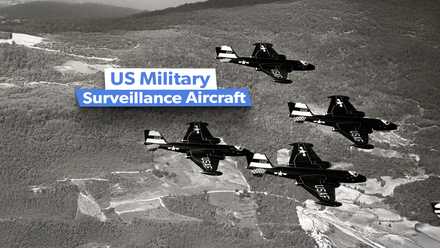
Top 5 US Military Surveillance Aircraft That Made History
The legacy of the US military developing some of the world’s most iconic and successful surveillance aircraft looks set to continue into the future.
The SR-71’s Missions Over Vietnam

The Vietnam War is one that, while it has been heavily discussed and written about, is still misunderstood, as it was a protracted war with the lines between civilian and combatant blurred and no clear or defined “front line” as it was in previous wars. Amid this opaque war, the SR-71 was tasked with collecting intelligence over North Vietnam.
The Blackbirds that flew over this Southeast Asian country were stationed at Kadena Air Force Base (DNA) in Japan; there were three in total, and gathering high-value information across Asia was their primary mission objective. The first operational mission over North Vietnam was conducted by Major Jerry O’Malley and Captain Ed Payne on March 21, 1968. Imagery captured from its first and follow-on missions was largely focused on supply depots, port infrastructure, industrial complexes, and prisoner of war installations.
In the late 1960s, just one sortie per week was being completed. However, by 1972, the Blackbird crews were flying near daily missions over northern regions of the country. There was a dire need to ascertain what types of equipment and in what quantity were moving from China down into North Vietnam, and the SR-71 was the best and most reliable method for gaining this information.
According to a March 15, 1973, Central Intelligence Agency document, the agency requested that special emphasis be placed on several rail lines heavily used to move critical military equipment and personnel. One such route was the strategically important Kép–Thái Nguyên rail line in northeastern Vietnam.
This line served the heart of North Vietnam’s steel complex and associated military manufacturing industries. As a result, aerial photography of the area revealed activity at storage facilities and depots used to transport soldiers and military supplies destined for battlefields in the south.
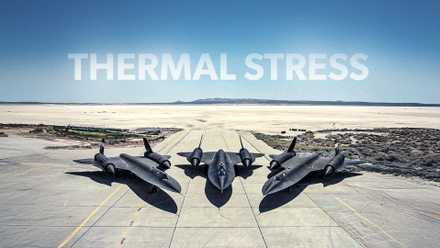
How The Lockheed SR-71 Blackbird’s Titanium Fuselage Withstands Extreme Thermal Stress
The technology behind the fastest warbird of all time.
The SR-71, An Incredible Intelligence Collector And Unforgettable Aircraft

The Lockheed SR-71 Blackbird is an unmistakable aircraft, and it was a crucial tool for U.S. military and intelligence officials during the height of the Cold War. It was capable of producing timely, highly detailed intelligence from virtually anywhere on Earth, without the vulnerabilities associated with the U-2. Flying at extreme altitude and speed, it was effectively beyond the reach of contemporary air defenses. Ultimately, it was retired in 1998 after 32 years of service.
Its retirement was driven by a combination of factors, including high operational costs, the growing capability of reconnaissance satellites, and post–Cold War budget reductions. As a result, the U.S. Air Force prioritized other programs, such as the Lockheed F-117 Nighthawk and the Northrop B-2 Spirit. Although it is retired, the SR-71 Blackbird remains an enduring icon of Cold War aviation, remembered by its pilots, maintainers, and aviation enthusiasts alike.