dailynewsnblog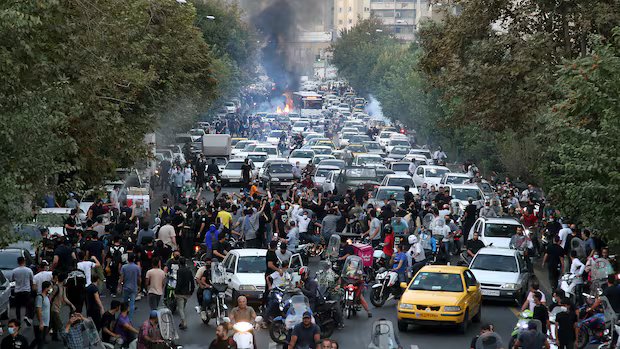
Shayda’s siblings had long urged her to leave Iran.
Their father spent 16 months in Tehran’s Evin prison after the Iranian Revolution, where they say he was tortured. Relatives linked to political opposition were later executed, and one by one, the siblings built new lives in Canada, France and Australia.
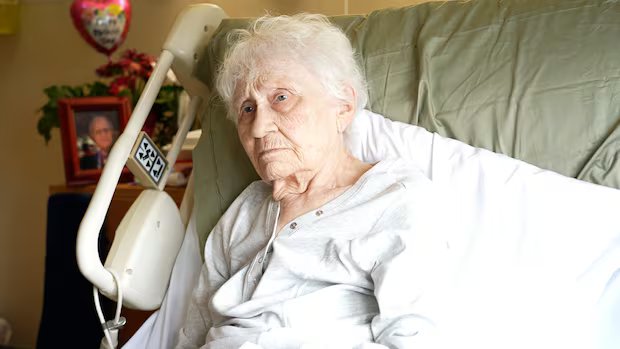
But Shayda, now in her late 50s, stayed, hoping things would change. She survived an abusive marriage, built a career in advertising and found ways of resisting the oppressive regime. (CBC News is not using her real name because she fears persecution if returned to Iran.)
She joined protests sparked by the death of 22-year-old Mahsa Amini in 2022. On one occasion, Shayda says, she narrowly escaped detention by morality police on the subway. She says her car was impounded three times over alleged hijab violations.
Last year, she came to Canada and sought refugee status. But she and another Iranian woman with whom CBC News spoke have had their cases caught up in a new federal asylum law barring people from making refugee claims more than a year after first arriving in Canada.
Passed in March, Bill C-12 was designed to reduce Canada’s refugee claim backlog, approaching 300,000 cases. Its supporters say it helps prioritize those seeking protection immediately after arriving in the country.
But refugee lawyers say it’s creating unintended consequences for some of the most vulnerable claimants, including those from nations like Iran, to which Canada has suspended deportations due to dangerous conditions. They say claimants have been left in a state of limbo for the foreseeable future.
In response to questions from CBC, a spokesperson for Immigration, Refugees and Citizenship Canada (IRCC) said the government would assess whether additional exceptions are needed.
A brief visit then — limbo now
Shayda first visited Canada in 2023, when she went to see her brother in Toronto. She had recently become Christian, which she says yet again made her a target for the regime. Her brother pleaded with her at the time to stay in Canada.
She returned home, but as conditions worsened, she began preparing to escape to Canada.
“I lost hope,” she said. “You feel drained.”

Human rights groups say Iran is speeding up executions of political dissidents and anti-regime protesters who took to the streets in January. Families and activists say any negotiations to end the war must be conditioned on ending the killings.
In August 2025, soon after Iran’s 12-day war with Israel ended and its airspace reopened, Shayda flew back to Toronto and within days began her refugee claim. Months later, officials selected her case for expedited processing — a sign her case was strong, her lawyer says.
Then, she received a letter this spring warning her claim could be found ineligible under the new law. Thousands of claims are expected to be retroactively found ineligible, according to the IRCC — including Shayda’s, because she had previously visited Canada two years prior.
“It’s extremely unfair because she was about to receive a decision,” said Arghavan Gerami, Shayda’s Ottawa-based lawyer.
No path to permanent residency
Most people facing a removal order can undergo a pre-removal risk assessment, seen as a last opportunity to receive refugee status and to prove that one faces danger in their home country.
But Shayda and many others cannot, as their home countries are considered too unsafe for deportations. Though they are protected from removal, they’re now left without a clear path to refugee status or permanent residency.
“It’s so harsh because they’ve been taken out of the refugee determination process,” said Asma Faizi, president of the Canadian Council for Refugees. “You’re left with nothing.”
It makes it virtually impossible for them to reunite with spouses and children, and difficult to work, study or obtain health care. Shayda’s daughter in Australia, for example, had been planning to join her in Canada.

A 47-year-old Iranian woman in Montreal, whom CBC has also agreed not to identify due to risks in her home country, arrived in Canada three years ago. But she says she delayed making a refugee claim while trying to bring her teenage daughter here safely.
The daughter had developed lung problems after a suspected chemical attack on her school and was detained by morality police due to her hair showing under her headscarf, she said.
They were reunited in Canada last year and filed their claims, but the mother’s was later flagged as potentially ineligible under the new law.
“It’s a dead end,” she said. “I can’t go back to my country and I can’t stay in this country normally.”
The only alternative is applying for permanent residency on humanitarian and compassionate grounds, for which there is currently a more than decade-long wait.
“They really have no viable option available to them right now,” said Aisling Bondy, president of the Canadian Associate of Refugee Lawyers (CARL). “It’s really terrible.”
CARL has organized mounting constitutional challenges to the law and in late 2024 made a series of proposals to the government to reduce the asylum backlog.

Gerami, Shayda’s lawyer, is one of dozens of lawyers across the country participating.
“I’m a fighter, so I’m not giving up on this.”
Law was meant to clear backlog: senator
Bill C-12’s sponsor, Independent Senator Tony Dean, told CBC News that Ottawa had become concerned about people increasingly making asylum claims years after arriving in Canada on temporary visas, work permits or visitor visas.
“People who were desperate were pushed back further in the queue,” he said.
Due to labour shortages during and after the COVID-19 pandemic, the government under Prime Minister Justin Trudeau had accepted hundreds of thousands of temporary immigrants.

Ottawa believed people were filing weak asylum claims and remaining in the country for years while they awaited their decision, Dean said.
The senator acknowledged he was unfamiliar with the predicament that people like Shayda and the Montreal woman are facing: “I did not go down into that level of granularity.”
Most of the 20 lawyers across Canada with whom CBC News spoke said they had clients from moratorium countries affected by the law.
Calls for exemptions
Advocates in testimonies to Parliament have called for exemptions for cases involving vulnerable claimants.
Two weeks ago, Ottawa introduced one for unaccompanied minors, a move Gerami says is a welcome but inadequate step.
For Shayda, the uncertainty has resurfaced traumatic memories. She fears the life she has begun building here — caring for her brother’s children, signing up to volunteer at church, learning English — could be put on hold.
“It’s the first time in a very long time that I had a sense of security when I came to Canada,” she said. “I can just be me. I am recognized as an individual, as a human being.”