dailynewsnblog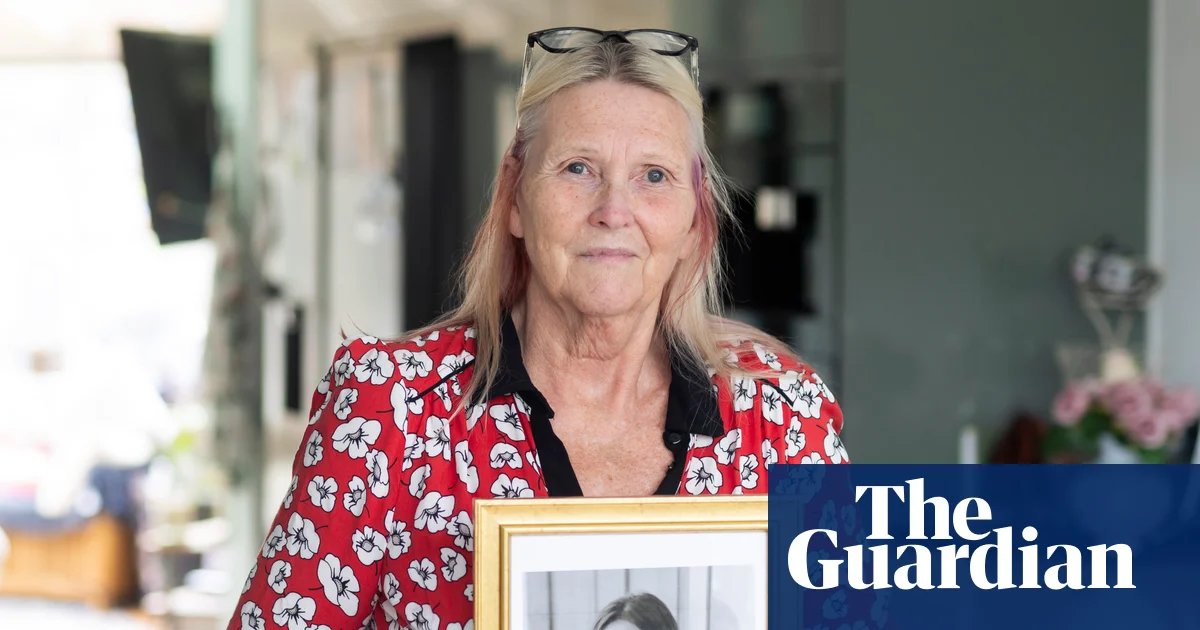
Annette Bramley fondly remembers her daughter Holly as being family-oriented and a lover of animals. “She adored anything small and furry, or even not. I mean, she thought orangutans were beautiful,” she said.
When Holly ended up in a controlling and abusive relationship, her husband, Nicholas Metson, was quick to use this passion against her. He bought Holly a puppy and then tried to kill it by putting it in a washing machine at their home in Lincoln. After it was rescued by Holly, he drowned it in a bath.
He went on to kill and abuse numerous hamsters, rabbits and guinea pigs over the course of their seven-year relationship. Annette said she thought he used the threat of animal abuse to force Holly to do what he wanted.
“I didn’t think he would stop at animals. I knew the connection between animal abuse and domestic abuse,” she said. “When the police came to the door, we knew nothing else could possibly have happened to her. We didn’t suspect a car accident or anything like that; we just said: ‘What has he done to her?’”
Holly, 26, was killed by Metson in March 2023 in what prosecutors described as a “twisted and barbaric” attack, cutting Holly’s body into more than 200 pieces, which were later discovered by a member of the public.
Bramley is now campaigning for Holly’s Law in her daughter’s memory, to stop prolific animal abusers from being able to acquire more pets, and to raise awareness of the link between animal and domestic abuse.
She wants to see an animal abuse register and a scheme to allow police to disclose information on animal abuse and neglect to prevent perpetrators acquiring more pets.
Studies have shown a strong link between pet abuse and domestic abuse, including perpetrators using animals as a coercive control strategy, while analysis by the UK’s national wildlife crime unit found a link to domestic violence and abuse for 27% of all wildlife crime offenders.
The government said it had commissioned a research project to explore the connection further and that it would work with the veterinary profession to help staff recognise potential signs of domestic abuse through non-accidental animal injuries.
Bramley said: “I think vets need to be educated on this. If you have an animal that’s regularly being brought in with a broken leg or dislocated shoulder, they should be able to spot the signs and raise concerns.”
Mark Randell, a former senior detective and campaigns manager at Naturewatch Foundation, which is backing the campaign, said: “The whole concept of Holly’s Law is to be able to at least advise those safeguarding organisations where there is animal cruelty within a domestic abuse environment.
“Bearing in mind how many domestic abuse cases involve animal abuse, and the fact that 50%-60% of households in the country have a pet, it will make a real difference.”
He said he wanted to see animal abuse taken more seriously in the conversation around misogyny, and tackling violence against women and girls, arguing that it is a significantly overlooked risk factor.
“There’s an increasing number of young men, predominantly, who are using catapults and slingshots to harm wildlife. We’ve got to shift that culture. It’s about respect for women, but also respect for all living beings and the environment,” he said. “And if we’re talking about what’s being done in relation to online abuse of people, we’ve got to make sure it includes animals too.”
In Holly’s case, Metson had a long history of animal abuse from the age of eight, had openly admitted strangling animals and was on the radar of the RSPCA animal-rights charity but had never been prosecuted.
For Annette, the drive to make change that might protect women from being abused and manipulated in the way her daughter was keeps her motivated.
“Every single day my thoughts were consumed with what happened and how we failed to save her. And with his history, why was he allowed to go on to have more pets?” she said. “He’d been harming animals for all these years. What can we do to stop that?”