dailynewsnblog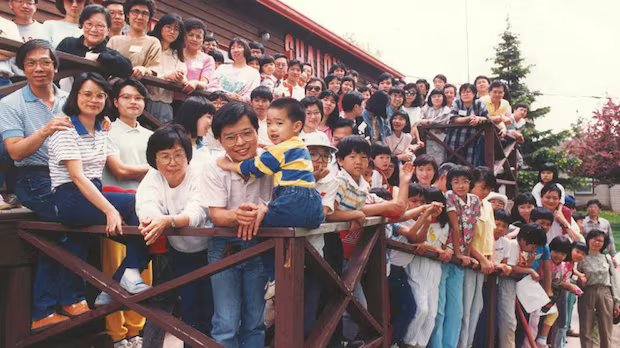
When Joyce Leung moved to Hamilton in 2019, she noticed something was missing.
“I would shop at the Asian grocery stores and I see that there’s no community here,” she said. “There’s, like, no Chinatown and there’s no real organization, at that point, that was active.”
Leung had lived in several cities across the Greater Toronto Area, like Markham and Mississauga, where large Chinese communities were anchored by Chinatowns, plazas, restaurants, and cultural organizations. Hamilton felt different, she said.
“When we were first here, there wasn’t much going on,” Leung said.
As Asian Heritage Month comes to a close and shines a spotlight on the stories of Asian Canadians, CBC Hamilton spoke to members of Hamilton’s Chinese community, who say despite the city not having its own Chinatown, there is a sense of community that captures the essence of what Chinatowns are all about.
A vision that never materialized
In the past, there were efforts to bring a Chinatown to Hamilton. Archived Hamilton Spectator articles made several references of a “Chinatown,” including efforts of local business leaders and politicians discussing for an official Chinatown downtown, pitching it as both a cultural hub and an economic draw for international investment. It also made reference to King William Street as the area where there was a cluster of Chinese businesses.
One article from Jerry Rogers in 1985 wrote that it could be an “international village downtown” for the Hamilton’s Chinese population of roughly 3,000 people at the time. He highlighted businessman Clement Chan, who was leading a push for an official Chinatown district. The vision never fully materialized.
Other articles highlighted why there was a push for a Chinatown. An article from Adam Mayers in 1984 tells the story of Moy Seto, one of many Chinese immigrants who came in to Canada in the late 1800s to the early 1900s to help build the Canadian Pacific Railway, to then be “discarded once those tasks were done.” It detailed anti-Chinese sentiment that continued for generations, and why Chinatowns were the only place for refuge.
Leung, who knew little about Hamilton’s Chinese history when she first arrived, founded the Hamilton Chinese Association, a grassroots community group that organizes cultural events, mahjong nights and Lunar New Year celebrations, as a way to celebrate Chinese culture with others.
“Immediately, lots of people were coming,” she said. “Lots of people that we’ve never met before showed up.”
The group’s first gathering was lunch at a dim sum restaurant. “It kind of just built from there,” she said.

Community existed without a Chinatown
Long-time Hamiltonian Solomon Ngan says there has always been a small but active Chinese community, anchored by restaurants, grocery stores and gathering places.
Over 15,000 Hamilton residents identified themselves as Chinese in the 2021 census. Historians say that is reflective of different waves of migration to Canada from different regions of China, going back to the Gold Rush in the mid 1800s.
Ngan arrived in Canada from Hong Kong in 1972 before eventually moving to Hamilton to work at Stelco as a mechanical engineer.
“At that time, there were only two Chinese restaurants,” he recalled. “Any Chinese we met, we felt very excited to connect with them because there were not too many Chinese in Canada.”
But unlike places like Toronto and Vancouver, there was never an official designation of a Chinatown here in the city. Even without formal recognition, Ngan says members of the Chinese community still found ways to build spaces of connection — representing the spirit of a Chinatown.
“It was hard to have an official Chinatown because everyone was dispersed,” Ngan said. “But there were spaces where Chinese people came together.”

One of those spaces is the Hamilton Chinese Alliance Church, where Ngan serves as chair.
“Since 1975, this was one of the places where Chinese people could connect with each other, and organize events,” he said.
Ngan says the church also became a bridge between different generations and migration waves within the Chinese community.
“There were Chinese people like me working in steel, and now, a lot of Chinese people are in healthcare, or [as students] at McMaster.”
They also spoke different languages. Earlier migrants from Hong Kong largely spoke Cantonese, while newer immigrants from mainland China mainly spoke Mandarin, Ngan said.
“Those are different cultures and histories, and that is why it is important for the church to be welcoming to all,” he said.
‘The survival of Chinatown is about resilience’
Amy Go, president of the Chinese Canadian National Council for Social Justice, said Hamilton’s story mirrors what happened in many smaller Canadian cities where Chinatowns either disappeared or never formally took shape.
She pointed to Windsor as an example of a city where there was a Chinatown, but gradually disappeared.
“The survival of Chinatown is about resilience,” Go said. “It’s about community getting together, banding together, supporting each other through a very racist environment.”
Go said she remembers working with Hamilton members of the former Chinese Canadian National Council during the redress movement for survivors of the Chinese head tax and exclusion act.
She recalled driving elderly head tax survivors from Hamilton to Ottawa for protests and meetings with politicians.
“They were amazing — they were so resilient,” she said.
That history is why advocates like Go have pushed for Chinatowns to be recognized as a UNESCO World Heritage Site designation.

A Vancouver newspaper that ran for more than 40 years is now available online. As the CBC’s Pinki Wong reports, the pages of the Chinatown News have now been digitized as part of a project documenting the experience of Chinese-Canadians in the 20th century.
Arlene Chan, a Toronto historian and author who has written about Chinese Canadian history, said Chinatowns across Canada were built out of necessity.
She said Chinese immigrants used Chinatowns for housing, work and community, and were a safe space away from discrimination and exclusion.
“Chinatown is more than just a place to visit,” Chan said. “It’s a neighbourhood with rich heritage and history.”
Ngan said Hamilton had that history too, but many of the stories are undocumented.
“In Vancouver, they have a museum dedicated to the history of Chinese Canadians and the Chinatown,” he said. “We do not have that here.”
Still, Ngan is encouraged by newer community efforts like the Hamilton Chinese Association, which he believes carry forward the same spirit of connection traditionally associated with Chinatowns, something he has done himself for decades.
For Leung, she wants to continue to celebrate Chinese history and culture through community events like her cooking classes.
“The goal is to just continue to educate people on our culture and what it’s all about,” Leung said.