dailynewsnblog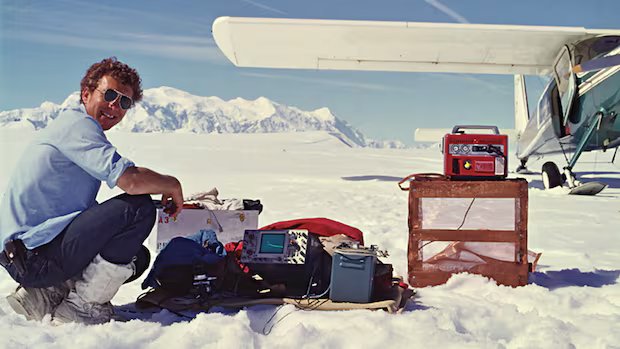
Pat Morrow has worked with plenty of back-country pilots in his decades-long career as a mountain climber and photographer — but few of them were like Andy Williams.
“He carried an old-school mountain pilot ethic — you know, no bravado, no drama, no ego,” Morrow recalled this week, from his home near Invermere, B.C. “And that’s sort of rare, I think, in some of these bush-pilot contexts.”
Morrow calls Williams, who died earlier this month, “one of the great glacier pilots of the Yukon.”
He flew with Williams many times over the years, while on climbing and skiing expeditions. Sometimes he’d also find himself in the Yukon on photographic assignments that had nothing to do with flying and he’d still make time to pay a visit to Williams, who would “regale us with some great stories.”
Williams had a rich lifetime of stories to draw from. Born in Wales, he initially moved with his wife to B.C. before they made their way to the Yukon in the early 1970s, to run the Kluane Lake Research Station. Scientists would come from all over the world to work at the facility, and Williams became an invaluable source of practical support and backcountry knowledge.
“He always called himself a diesel mechanic,” recalled his daughter, Sian Williams. “That’s what he was doing a lot here, was keeping things going.”
Sian says her dad became a pilot in the Yukon, and learned his way around the icefields of the St. Elias range from another legendary glacier pilot, the late Phil Upton. Andy would eventually found the aviation charter business that Sian now runs, Icefield Discovery.

Sian recalls growing up in the Kluane region, regularly meeting scientists and adventurers who came from all over to explore and study among some of Canada’s highest mountains.
“My dad was just very central to supporting all of that,” Sian said.
“So that’s just how we grew up out here. And yeah, it wasn’t ’til later that we realized that it wasn’t like that everywhere else.”
Sian describes her dad as a dynamic character, thoughtful, wise, and always with a unique perspective on things. Every interaction was memorable, she said.
“Everybody who met him, even if they met him briefly, seemed to remember him forever,” she said.

She said Andy was someone you could always go to when things weren’t going right. He’d help you see the humour in the situation, or give you some new insight into whatever problem needed to be solved.
“You would always come away feeling better after talking things through with him,” Sian said.
“I think people from very many backgrounds gravitated towards him for that. And yeah, I think that’s what a lot of us are going to be missing.”
‘He virtually became part of the expedition itself’
Michael Schmidt, a mountaineer based in Haines Junction, Yukon, worked with Andy several times over the years. The first time was in 1992 when Schmidt organized an ambitious expedition to measure the height of Mount Logan, Canada’s highest peak, using then-new GPS technology. Andy was the expedition’s pilot, and was “instrumental” to the whole undertaking, Schmidt says.
“Flying in the mountains is never easy, and having someone like Andy, who knew the St. Elias mountains so well, and was familiar with the weather patterns and landing in snow conditions and so on and so forth … was really essential,” Schmidt recalled.

“All the modern conveniences we have now, with aerial photos and satellite photos and things like that weren’t available back then to the same degree that they are now. So having someone with that experience was absolutely essential.”
Morrow, who was also part of that 1992 expedition, recalled how Andy’s experience and expertise in the region meant he “wasn’t simply just transportation.”
“He virtually became part of the expedition itself,” Morrow said.
“In the years before satellite communication, it was always comforting to hear his voice giving us a weather update at the other end of a crackly shortwave radio conversation.”
Schmidt also recalled Andy’s irreverence, how he would often speak with a smile and a “glint in his eye” as he pulled your leg about something. He was a character, Schmidt says, but could also be serious when needed — and that’s when it was important to pay attention.
“That was his true uniqueness was that wealth of experience, wealth of knowledge and just the opening up to people. And you know, we all benefited from that,” Schmidt said.
Morrow described how Andy also wasn’t afraid to disappoint people, if he decided the conditions weren’t right to fly into the mountains.
“You know, he didn’t want to risk their lives, let alone his own,” Morrow said.
“Some pilots might be pressured into flying into a whiteout, for instance, hoping that they would break through the clouds on the other side. But Andy was always, you know, getting back to that no bravado, no drama, no ego kind of persona.”
Sian said her dad was deeply committed to the mountains and the region that became his lifelong home. She recalled being up in the icefields recently, setting up field camps for the season, and thinking about him.

“The St. Elias mountains always draw you in,” she said.
“He would love to come in, just shut the plane down, sit in the chair and look across at Mount Logan and just watch what was going on around there,” she said.
He gave a lot to the area, she said, and his loss will be felt by many people.
“There’s a certain view on the world that I don’t know if any of us will be able to capture — but we’ll do our best,” she said.
A celebration of life for Andy Williams is scheduled for June 4 at Whitehorse United Church.