dailynewsnblog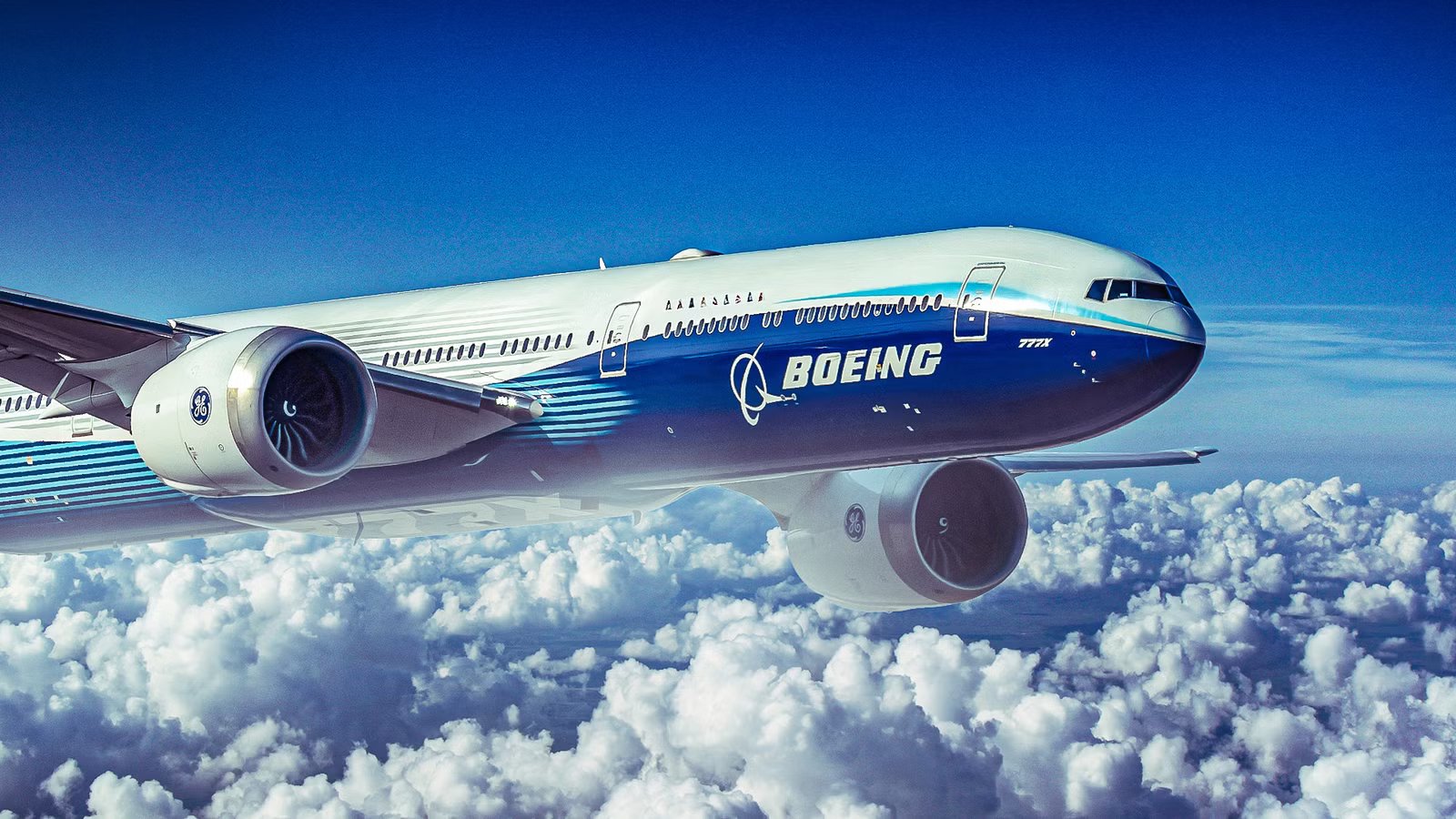
Of course, it’s normal for new engines to experience teething issues, given that they are the most complex part of an aircraft, but the 777X program has been heavily delayed as a whole. If Boeing is to meet its current 2027 target for entry into service, much will rest on the shoulders of General Electric.
What The General Electric GE9X Brings To The Table

The most visually striking element of the General Electric GE9X is that it’s huge. With a fan diameter of 134 inches (340 cm), it’s the largest jet engine ever built, and it’s also the most powerful jet engine ever built, setting a world record when it produced 134,300 lbs of thrust during testing. In service, however, the most powerful variant of the GE9X will only produce up to 110,000 lbs of thrust, or about 82% of what it’s capable of.
This was possible due to the 777X’s new, larger wing, and it means that the engine will never be operating close to its capabilities, reducing wear and tear. The GE9X is designed with a bypass ratio of 10:1, among the highest of any in-service turbofan. It’ll have an overall pressure ratio of 60:1, up from the GE90’s pressure ratio of 40:1, while the high-pressure core is designed with a 27:1 pressure ratio.
These are the highest figures ever recorded for a production turbofan engine, and this will reduce fuel burn by up to 10% compared to the GE90. The GE9X has only 16 fan blades, which are constructed out of fourth-generation carbon fiber reinforced polymer. Ceramic matrix composites are used for 65 components in total, the most of any commercial turbofan, and these can withstand higher temperatures than conventional materials while also being stronger and lighter.
There are 11 compressor stages, and the GE9X also features a third-generation twin-annular pre-swirl combustor. The compressor and high-pressure turbine are constructed out of powdered metal, while the low-pressure turbine airfoils are made of titanium aluminide.
Early Issues With The GE9X

During certification testing in 2019, it was discovered that exhaust gas temperatures in the second stage of the compressor exceeded the intended limit. This caused premature deterioration in the stator vanes, which would result in these components failing quickly. Engineers quickly worked to rectify the problem, redesigning the variable stator vane lever arms and performing flight tests afterwards to validate their work, which ended up delaying the first flight of the 777-9 until 2020.
2022 saw a more serious issue arise when a 777-9 test aircraft experienced an engine shutdown in October. The entire test fleet was subsequently grounded, while Boeing and General Electric worked to uncover what led to the failure. A boroscope inspection revealed that the issue was related to the engine’s internal temperature, and the GE9X required additional redesigns. The 777-9 fleet did not resume flight testing until January 2023, after roughly two months on the ground.
The GE9X pushes the boundaries of engine design through its extensive use of materials like CMC, and it operates with higher pressure ratios and at higher temperatures than any engine before it. While the use of CMC is what enables these conditions, the GE9X is still extremely sensitive to small deviations and requires continuous improvement as the certification process continues.

This Is Why The Boeing 777X Can’t Be Powered By Any Engine Other Than The GE9X
Discover why the Boeing 777X depends entirely on the GE9X, the world’s largest and most advanced commercial jet engine ever built.
Another Major Problem With The GE9X

In August 2024, a post-flight inspection of test aircraft WH003 revealed that a thrust link in one of the engines had severed. The thrust link is a large titanium component that transfers the engine’s thrust load to the pylon and wings, making it a critical structural component of the engine. Subsequent inspections revealed cracking in the thrust links on two other 777-9 test aircraft, and the entire fleet was grounded again while General Electric worked to discover what led to the issue.
The manufacturer found that in specific stress conditions, the thrust links and their bolts vibrated excessively, which exceeded their fatigue tolerance. The 777-9 test fleet was grounded for months while Boeing and General Electric worked on redesigning the component. The delay was also compounded by a seven-week strike in 2024, leading to further delays. Eventually, Boeing and General Electric created a new thrust link design, which was retrofitted onto the 777-9 test fleet, permitting flight testing to resume.
The thrust link issues caused a significant delay to a program that’s already been plagued by years of delays. The 777X program was first announced in 2013 and is now projected to enter service in 2027, a full 14 years of development and testing. For reference, the iconic Boeing 747 took less than four years from launch to its introduction, while the Boeing 787’s development and certification lasted eight-and-a-half years, and those were clean-sheet programs rather than derivatives of an existing aircraft.
The Latest Issues With The GE9X

An inspection of a GE9X in January 2026 revealed cracking in the engine’s mid seal. This issue isn’t severe enough to halt certification, but General Electric still needs to resolve the issue. The manufacturer is still working on a fix for the mid seal, with both General Electric and Boeing maintaining that this won’t affect the delivery timeline, which is crucial given the nearly seven-year delay already incurred by the program. However, the issue itself is also troubling, given the supposed strengths of the engine.
The 777X was designed with heavy input from Emirates and Qatar Airways, who requested an aircraft that could fly from their hubs to the US West Coast nonstop with a full load. Lifting capability is important, but so too is engine durability, given the challenging conditions that these carriers operate in. The Airbus A350-1000, the 777-9’s closest competitor, has generally been well received for its capabilities and fuel efficiency.
|
Airbus A350 Variants |
Orders |
Boeing 777X Variants |
Orders |
|---|---|---|---|
|
A350-900 |
1111 |
777-8 |
35 |
|
A350F |
101 |
777-8F |
63 |
|
A350-1000 |
367 |
777-9 |
521 |
However, it has been criticized by Emirates in particular regarding its Rolls-Royce Trent XWB-97 engines due to a reported lack of durability. Emirates has yet to order the A350-1000, while Qatar Airways has been favoring the 777-9 in recent contests despite already operating the A350-1000.
At this point, airlines have access to years of data and have largely continued to top off their orders, including Emirates and Qatar Airways. This suggests that the data being provided by Boeing and General Electric is positive, and given General Electric’s experience in building powerful, durable engines, it’s unlikely that the GE9X will experience any significant issues in service. However, the GE9X’s on-wing time in service will be a key point to watch in its early days.
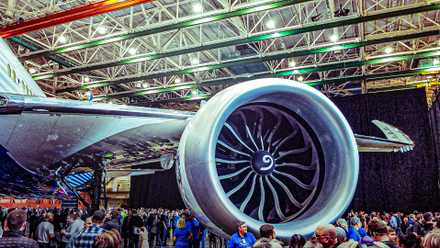
Why Might This Monster Jet Engine Have Airbus Worried?
The massive powerplant offers some impressive capabilities.
The Value Proposition Of The Boeing 777X

The 777X includes a fuselage stretch, a modernized interior and cockpit, a brand new carbon-composite wing, along with the GE9X. It’s an expensive program, with the plane’s new wings alone costing roughly the same as the entire Airbus A330neo program, which was also a modernization of an existing widebody.
The 777X needed these modifications, however, because it’s competing against the Airbus A350, a clean-sheet CFRP widebody that was far better suited to ultra-long-haul flying than the immensely popular 777-300ER. The 777X program is largely being carried by the largest 777-9 variant, which has received over 500 orders on its own. In addition, the 777-8F has been reasonably popular for its market space, while the passenger 777-8 has faced a lack of demand.
|
777-9 Customers |
Aircraft With First Class |
||
|---|---|---|---|
|
Air India |
777-300ER |
Etihad Airways |
A380-800, 777-300ER, 787-9 |
|
All Nippon Airways |
777-300ER |
Ethiopian Airlines |
None |
|
|
A380-800, 777-200ER, 777-300ER, 787-9, 787-10 |
Korean Air |
A380-800, 747-8, 777-300ER |
|
Cathay Pacific |
777-300ER |
Lufthansa |
A340-600, A350-900, A380-800, 747-8 |
|
China Airlines |
None |
Qatar Airways |
A380-800 |
|
Emirates |
A380-800, 777-300ER |
Singapore Airlines |
A380-800, 777-300ER |
 British Airways
The primary selling point of the 777-9 is its size, as it offers more floor space than any other aircraft on sale. This makes it perfect as a flagship four-class aircraft, while the A350-1000 may be slightly too small for some airlines to serve this role, which is especially relevant today, given the popularity of large premium seats. While the 777-9 doesn’t have as much range as the A350-1000, its range is still enough for almost all routes, and it will also bring immense cargo capacity.
The GE9X’s promised durability is also a major selling point, as the A350-1000’s Trent XWB-97 is essentially the same as the A350-900’s Trent XWB-84 but with more power, making it a highly stressed engine. This can result in significantly lower on-wing time, increasing maintenance costs. As a whole, the 777X is promising to be a compelling aircraft, and it’s proven reasonably popular for its market space, but its success will rely heavily on the GE9X.