dailynewsnblog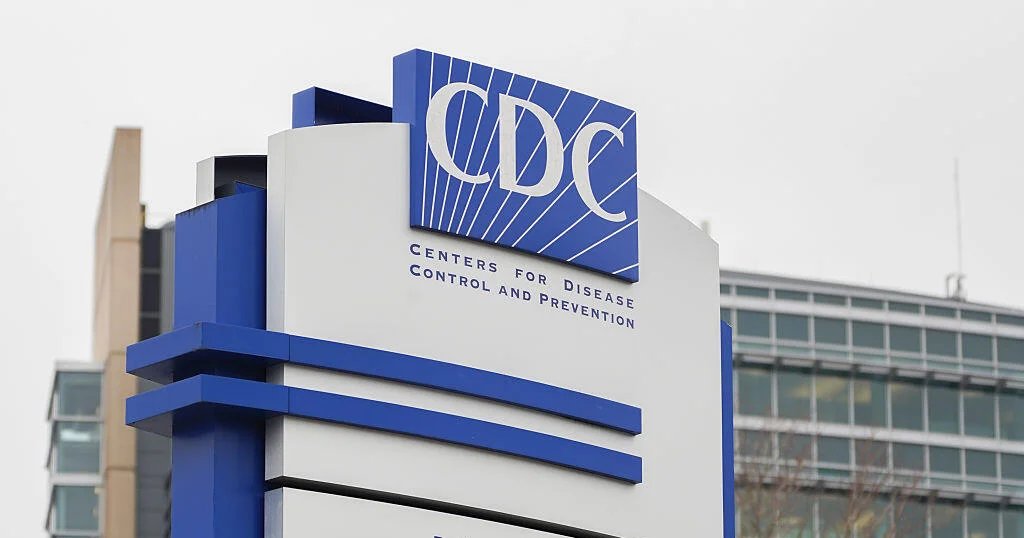
President Trump signed an executive order Friday that directs the U.S. Centers for Disease Control and Prevention to align with a scientific assessment released earlier this year by the Department of Health and Human Services that calls for fewer childhood vaccines.
The move comes after Mr. Trump in December issued a memo directing HHS to align U.S. childhood vaccine recommendations with “best practices from peer, developed countries.”
In early January, HHS released an assessment that determined the U.S. “recommends more childhood vaccines than any peer nation, and more than twice as many vaccine doses as some European nations.”
Following that assessment, the CDC, which is part of HHS, announced updated recommendations in January that would reduce the number of recommended immunizations for children from 17 to 11.
The move prompted heavy criticism from medical experts and health organizations, including the American Academy of Pediatrics, which subsequently chose to release its own childhood vaccine recommendations, breaking significantly with the CDC guidance.
Friday’s executive order directs the CDC and the CDC’s Advisory Committee on Immunization Practices, or ACIP, to review HHS’ January “scientific assessment and the latest clinical data” and “take any appropriate steps to update the United States childhood and adolescent vaccine schedule.”
“By signing today’s Executive Order, President Trump is reaffirming his commitment to gold-standard science, ensuring Americans receive the best possible medical advice, and empowering patients and doctors with maximum flexibility,” the White House said in a fact sheet accompanying Friday’s order.
In the CDC’s January recommendations, it found that only children in high-risk categories should receive immunizations for respiratory syncytial virus (RSV), hepatitis A, hepatitis B, dengue, meningococcal ACWY and meningococcal B.
The CDC kept recommendations in place for 11 childhood diseases: measles, mumps, rubella, pertussis (whooping cough), tetanus, diphtheria, Haemophilus influenzae type b (Hib), pneumonia, polio, human papillomavirus, or HPV, and varicella, or chickenpox. (Some vaccines, such as the MMR shot for measles, mumps and rubella, protect against multiple diseases.)
In December, the CDC’s ACIP panel also issued a controversial recommendation on when children should get their first dose of the hepatitis B vaccine. For decades, it has been recommended that children receive the first dose within 24 hours of birth, but the panel voted to recommend that the first dose be delayed until a child is 2 months old if the mother tested negative for the virus.
The current ACIP panel was chosen by Health Secretary Robert F. Kennedy Jr., a vaccine skeptic, after he ousted all 17 members of the previous panel. Several of the newest members have questioned established medical research on vaccines.
In March, a judge ruled against the new HHS childhood vaccine schedule recommendations in a lawsuit brought by the American Academy of Pediatrics and others, finding that Kennedy’s moves to appoint the new ACIP panel violated federal law. The judge also wrote that the government “disregarded” its traditional, scientifically grounded process for vaccine recommendations.
The Trump administration has argued that American children tend to be recommended for more vaccines than children in some other developed countries, particularly in Europe.
The American Academy of Pediatrics has argued that most developed countries have broadly similar practices, and any differences are due to country-specific factors.
“We don’t follow Denmark’s vaccine recommendations because we don’t live in Denmark,” Dr. Jose Romero, a member of the group’s committee on infectious diseases, said in a statement last year. “Children in the United States are at risk of different diseases than children in other countries. We also have a completely different health system.”