dailynewsnblog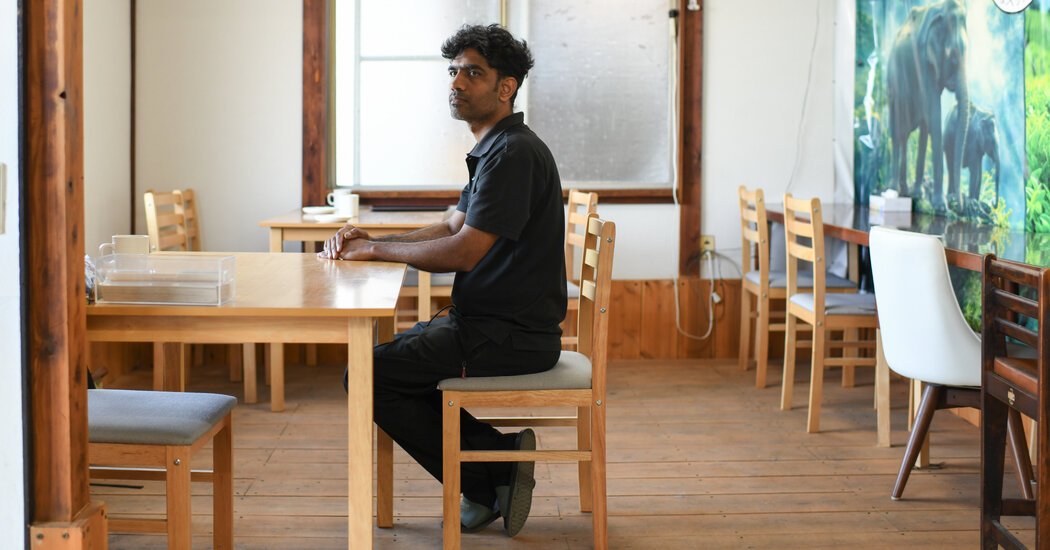
For three years, Mahendra Dharmapriya, a Sri Lankan restaurateur, filled the streets of his neighborhood in rural Japan with the smells of his homeland: creamy lentils, fish curry, egg hoppers and black tea with ginger.
But on a recent Saturday, Mr. Dharmapriya cooked the last meal at Daiya Ceylon, his Sri Lankan curry shop in the Japanese town of Shimotsuke, about 66 miles north of Tokyo, and shut its doors. He was forced to close the restaurant because he could not satisfy new visa rules meant to restrict the flow of foreigners into Japan. He plans to return to Sri Lanka this week.
“I felt so alone,” Mr. Dharmapriya, 40, who moved to Japan in 2015, said in a recent interview at his restaurant, where he was handing out unopened bags of spices and cassava chips to friends. “I have no hope for the future right now.”
Japan’s prime minister, Sanae Takaichi, won office last year on a promise to more strictly regulate immigration and tourism. Now her government is trying to deliver, scrutinizing the roughly 47,000 foreigners like Mr. Dharmapriya who live in the country on so-called business manager visas.
Japan has long been cautious about immigration; foreigners make up only about 3 percent of the population. Some experts argue that Japan needs to allow more immigrants to deal with labor shortages and offset its rapidly declining population. But a wave of nationalist sentiment has swept the country recently, with some activists calling for even stricter controls as part of a “Japan First” movement.
Conservatives say that foreigners are exploiting Japan’s visa rules to stay in the country indefinitely. The government has responded by making it harder to obtain business manager visas, requiring applicants to have $188,000 in capital, up from $31,000 previously, and to employ at least one full-time staff member.
The change has left many foreign restaurant owners in limbo. For decades, workers from India, Nepal, Sri Lanka, China, Vietnam, Thailand and other countries have relied on business manager visas, setting up small restaurants in Japanese cities and rural areas that serve curry, fried rice, noodles and other favorites.
Chan Ka Yee, who managed a branch of San Mai San, a Hong Kong-style congee chain, in Tokyo, closed her restaurant last week after more than five years because she said she could not meet the new visa requirements. She plans to return to Hong Kong this summer.
On her final day, customers brought flowers and snapped photos of Ms. Chan as she made pork congee, waffles and milk tea. She thanked them and waved goodbye.
The next morning, she wrote on social media, “My eyes are incredibly swollen from crying so much last night.”
“I can’t believe it’s over,” she said. “I wanted to stay there forever.”
Chie Taniguchi, 50, a regular at Ms. Chan’s restaurant, called the new visa requirements “sloppy politics.”
“Now it will become impossible for Japanese people to discover new flavors and food cultures,” she said.
Japanese activists are pushing Ms. Takaichi’s administration to reconsider the changes. A petition has gathered more than 60,000 signatures.
Manish Kumar, an Indian restaurant owner, went public this month with his criticism of the rules. He spoke in an emotional video about living in Japan for 30 years, studying Japanese and raising his children in the country.
“They haven’t done anything wrong,” he said of his children. “I think it’s cruel to suddenly be told: ‘The rules have changed. You must go back.’”
The video prompted intense backlash, with some commentators accusing Mr. Kumar of exploiting the system by staying in Japan for so long.
Ms. Takaichi’s administration says the new rules have been a success. There are now an average of 70 applications per month for business manager visas, compared with 1,700 under the old system, a 96 percent drop.
Kimi Onoda, the minister who oversees economic security and policies on foreigners, said at a recent news conference that the changes had helped dispel concerns that the visas “might be abused as a means of immigration.”
The abrupt shift in policy has been tough for many restaurant workers, who have to pack up their lives in about a month.
Mr. Dharmapriya recalled his visit to an immigration office in April, when he learned that his visa renewal application had been rejected because he did not hire an additional employee. He was so devastated that it took him seven hours to drive back home — it usually takes two.
He said he was saddened by the perception among some Japanese that immigrants are a source of problems. “We don’t cost anyone money, we pay our taxes, we pay our bills,” he said.
In early May, Mr. Dharmapriya held a farewell buffet for his customers, serving dishes like red rice and dal curry. He was expecting about 20 people, but more than 70 attended, bringing Japanese sweets and other gifts.
He will soon return to his hometown in Sri Lanka. He has not yet told his family why he is leaving.
“If I have the chance,” he said, “I would come back to Japan tomorrow if I could.”