dailynewsnblog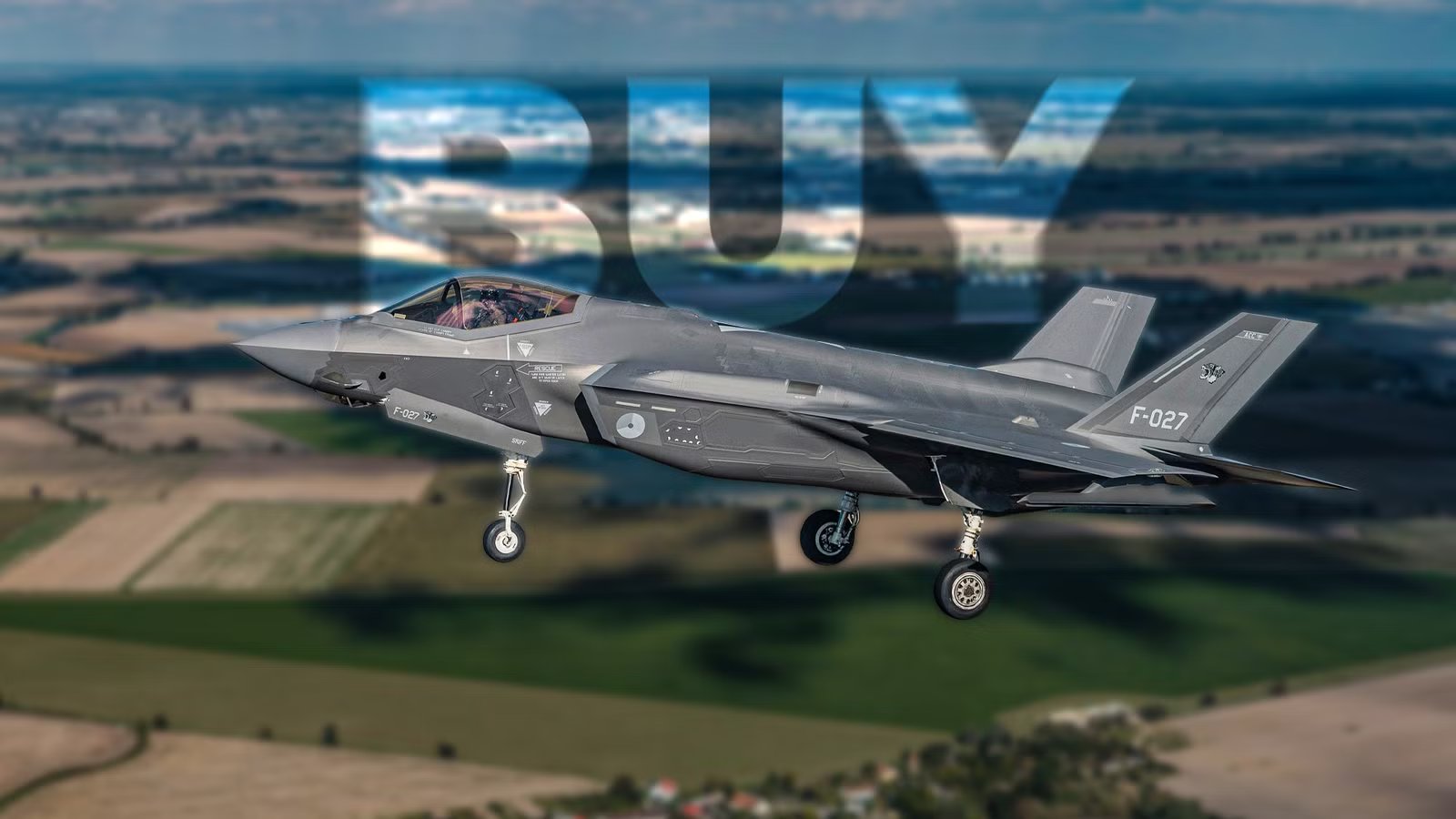
European Countries Purchasing F-35s

Most of the air forces in Europe that have a requirement for a high-end fighter jet fleet have elected to purchase the F-35. Countries with programs of records are the United Kingdom (138), the Netherlands (57), Belgium (34 increasing to 45), Norway (52), Denmark (27 increasing to 43), Finland (64), Switzerland (36 decreasing to 30), Poland (32), the Czech Republic (24), Italy (115), Romania (32), Greece (20), and Germany (35).
Of these, Norway has become the first country to complete its program of record, having received all its 52 intended F-35As. The UK has 47 (of 48 delivered), the Netherlands has at least 40, Belgium has 11, Denmark’s 27 order is expected to be completed in 2026, and Italy has perhaps more than 30 delivered. Some of these F-35s are in the US for training and maintenance.
Additionally, the first Finnish and Polish examples have been built, but they remain in the US for training as of the time of writing. The first German examples are currently being built. This gives the Europeans almost 200 F-35s physically based in Europe, with more in the US. The total eventually planned European F-35 fleet is around 690 F-35s, of which most are F-35As and around 150 are F-35Bs, depending on the exact make-up the British eventually go for.
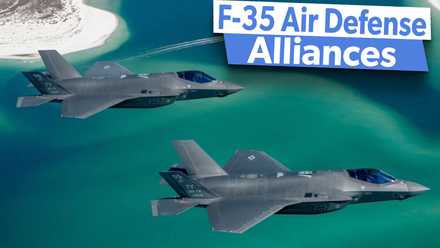
The F-35’s Role In Multinational Air Defense Alliances
The F-35 is set to play a central role in air defense of both the United States and its allies for decades to come.
The F-35B’s Naval Role

The F-35B is the world’s only STOVL frontline fighter jet in production. It was designed to meet the needs of the US Marine Corps and the needs of US allies with smaller aircraft carriers. After some dispute over whether to purchase the F-35B or F-35C carrier variant for the Queen Elizabeth Class carriers, the Royal Navy chose to only purchase the F-35B, as the cost of retrofitting the ships was too high.
The F-35B was also chosen by the Italian Navy for its smaller aircraft carriers. The Italians are purchasing 75 land-based F-35As and 40 STOVL F-35Bs, while the British have changed their plans to only purchase the F-35B. Britain has formally ordered and taken delivery of 48 examples (47 after one was lost); these F-35Bs are shared by the Royal Navy and Royal Air Force.
|
Program of record per F-35.com (not all ordered) |
Delivered (some in the US for training/maintenance) |
|
|---|---|---|
|
United Kingdom |
138 |
48 (47 remaining) |
|
Italy |
115 |
Approx. 30+ |
|
The Netherlands |
57 |
Approx 50 |
|
Norway |
52 |
52 |
|
Denmark |
27+16 |
Approx. 20+ |
|
Belgium |
34+11 |
Approx. 11 |
|
Finland |
64 |
4 |
|
Poland |
32 |
Approx. 2 |
|
Germany |
35+ |
|
|
Romania |
32 |
|
|
Switzerland |
30 |
|
|
Czech Republic |
24 |
|
|
Greece |
20 |
|
|
Turkey |
100 (canceled) |
4 (impounded in the US) |
As with the US Marines, the British and Italian F-35Bs replaced/are replacing the far less capable and aging fleet of Harrier jump jets. The UK is expected to soon place another order for 25 F-35s, which will bring the total to 72 jets. Britain has plans to eventually purchase 138 F-35s. At least 12 of these will be F-35As intended for a nuclear role discussed below. Notably, the UK is co-developing the next-generation Tempest/GCAP fighter jet with Italy (and Japan) to replace their Eurofighters.
The Frontline Stealth Fighter Jet Role

The primary role of the F-35 is that of a stealth fighter. It is designed to penetrate enemy air defense, conduct SEAD (Suppression of Enemy Air Defense) and DEAD (Destruction of Enemy Air Defense), and provide a “god’s eye view” of the battlespace. It is somewhat limited in the number of munitions it can carry compared with 4th-generation fighter jets, as it must carry them internally.
That said, the F-35 also has the option of non-stealth “beast mode” carrying munitions externally. While the F-22 is the dedicated air-superiority fighter, the F-35 is often considered so good in that role that some US fighter pilots, according to Sandboxx News, say the F-35 is the fighter they would choose to fly in that role.
Broadly speaking, European F-35-equipped air forces can be divided into F-35-only air forces and F-35-paired with 4th-gen fighter air forces. Smaller air forces like Norway, the Netherlands, and Denmark only have a single fighter type for budget and logistical reasons. Larger air forces like the UK, Germany, and Poland have mixed fleets. The F-35 is a significant enabler of these 4th-generation fighter jets, and it works well in a complementary role.
The Nuclear-Capable Role

While the United Kingdom and France have their own sovereign stockpiles of nuclear weapons, other countries participate in NATO nuclear sharing. NATO says “to guarantee the security of its Allies, the United States has deployed a limited number of B61 nuclear weapons to certain locations in Europe, which remain under US custody and control.”
Participant countries include Belgium, Germany, Italy, and the Netherlands, as well as Greece and Turkey in contingency/reserve DCA roles. These countries are required to operate fighter jets able to carry the B61 nuclear bombs. All four full-participant countries are at various stages of transitioning from using F-16 and Panavia Tornado jets to F-35As. Nuclear sharing was one of the main considerations for Germany when selecting the F-35A.
In France, Rafales are tasked with carrying the independent French ASMP-A (Air-Sol Moyenne Portée Amélioré) medium-range nuclear-tipped cruise missile. Meanwhile, the United Kingdom scrapped its final WE177 free-fall nuclear bombs in 1998, leaving it to rely solely on its submarine-launched ICBMs. The UK has decided to reintroduce air-dropped nuclear bombs (likely US B61-12 bombs) and will now acquire at least 12 F-35As for the role. The RAF’s STOVL F-35Bs are not suitable for the role.
How The Mass Production Of This Fighter Jet Keeps Its Price Down
With over a thousand F-35s built and thousands more on order, the F-35’s flyaway costs can be lower than some fourth-generation fighter jets.
European Countries Not Purchasing The F-35

There are several countries in Europe that are choosing not to purchase the F-35. France and Sweden have chosen not to purchase the jet as they are prioritizing their own domestic fighter jet programs, even if those programs are less capable. France values strategic autonomy, while Sweden also wants to protect its domestic military industry. France’s Dassault produces the Rafale, which also comes with a carrier-based variant.
The Rafale has proven popular on the export market in recent years, while Sweden’s Gripen comparatively struggles in the export market. The Gripen is advertised as a rugged, easy-to-maintain fighter jet able to operate from dispersed bases in Arctic environments. Neighboring Finland has such a requirement, but selected the F-35A for that role and said it was better at it. Slovakia and Bulgaria have chosen the cheaper, but still capable, F-16 Block 70 fighter jet.
Portugal and Spain were expected to purchase the F-35, but they abandoned the idea after Trump’s comments in his second term and geostrategic concerns. Turkey had been a Tier 3 partner of the F-35 program, and the first F-35s were built and ready for delivery. However, the US kicked Turkey out of the program after it purchased the Russian S-400 air defense system, which the US feared could compromise the F-35 by gathering intelligence.
The Neutral Country The US Trusts

Europe’s F-35s are being acquired to fill a large range of roles from aircraft carrier air wings to Arctic fighter jets expected to operate in rugged and dispersed operations. All European countries acquiring the F-35 are NATO members and therefore, close US allies except for Switzerland (and Finland when it initially ordered the jets).
Switzerland has a strict policy of neutrality, although the US sees it as a trusted partner. The US will only sell the F-35 to trusted allies that it is confident will not be a backdoor for the F-35’s classified information leaking to adversaries like China and Russia. Partly because of this, the US has refused to sell F-35s to many allies and partners, including Turkey, the UAE, Qatar, Egypt, Thailand, Indonesia, and Taiwan.
Ironically, on a GDP per capita basis, Switzerland is the wealthiest country in the F-35 program, and yet it is the only one explicitly downsizing its order because of cost. A fixed sum was agreed on for the government to purchase a fighter jet to replace the aging Swiss F/A-18 Hornets. When the F-35 was selected, Switzerland worked out that the sum was sufficient to purchase 36 jets. However, costs have increased, and the spending ceiling remains in place. This is forcing Switzerland to reduce its purchase to 30 F-35As.