dailynewsnblog
When Jason Kenney created the UCP he set up the preconditions for the party to get to where it is today, and its eventual demise. What do I mean by this? Kenney may have believed that he could control the extreme elements in the UCP in much the same way that Harper did so as leader of the CPC.
Harper allowed the extremist factions in the CPC to exist and even to have something of a voice in the party, but at the moment that a given push looked like it would have a political cost for him, he would shut it down. This was done through a combination of tools – Harper exercised considerable personal control over the party apparatus. That meant that in large part, if you kept him happy, your career was secure. The leader’s office had the power to quash constituency decisions such as new nominees, and the “public face” of the party was carefully protected. So, while the extremist wings of the CPC could make a certain level of noise – it was never enough to do more than keep their followers believing the party was aligned with them.
However, Harper was able to do this because the Federal CPC is a much bigger entity than the UCP in Alberta – and although the Prairie Reform rump of the party clearly dominates it today, the party needs votes from outside the Prairies in order to have any hope of ever forming government. Harper understood this, and was very careful to keep the extremes in check even though his own leadership depended on them.
A party of the scale of the UCP is a much different animal, and that’s where Kenney’s choices failed.
First, let’s talk a bit about the formation of the UCP. It was a fairly bog standard “unite the right” kind of campaign on the surface. Except it wasn’t. It was an engineered takeover of two parties from within, followed by a forced merger. In the process of putting that together, Kenney spent a considerable amount of time travelling rural Alberta, and making friends with all sorts of fringe groups, encouraging them to join the new UCP he was creating. Many of the groups he encouraged to come “in from the cold” had long been left on the fringes of conservative politics in Alberta for a reason – and Kenney decided that he could use Harper’s playbook to keep them under thumb.
The party was created with numerous mechanisms in the constitution that (in theory) would make the political leadership more accountable to the rank and file membership. Annual General Meetings (AGMs) would include policy conventions, and likely leadership review votes, the Riding Associations could get together and force leadership reviews outside of the AGM cycle, and so on. All of this sounds like pretty bog standard “grassroots” politics – except it had one key difference: it lacked any overrides that the elected politicians could use to shut down destructive movements.
2019 – UCP Government
In 2019, the UCP won an election, and catapulted Jason Kenney and a stack of new MLAs into the legislature. Several things stood out about the UCP government formed under Kenney: much of his cabinet was politically inexperienced – they had never sat in the legislature, and most had even less knowledge of the operation of cabinet. Kenney installed a surprising number of known social conservatives in posts that were clearly designed to enable them to move forward social conservative goals. Particularly LaGrange in Education gave a fairly solid signal that the Social Conservative (SoCon) wing of the party figured prominently in the party power structure.
In the fall sitting of 2019, a novice backbencher named Dan Williams tabled Bill 207 – Conscience Rights (Health Care Providers) Protection Act. It was, in my opinion, a bill that no novice legislator could have written independently. I am fairly certain the bill was written by other SoCon aligned legal lobbyists and handed to Williams to stickhandle. Kenney allowed it to bubble along until it got into committee and the issues it created started to become a political liability. Then, in very classic Harper fashion, he killed it.
Now, if this was Harper’s CPC, that would have been the end of it … instead, it was arguably the beginning of the end for Jason Kenney’s tenure – for he wouldn’t even make it to the next election cycle. Dan Williams, on the other hand, would go on to sit in several high profile cabinet posts after Kenney’s departure.
Pandemics and Convoys
In 2020, the COVID-19 Pandemic was in full swing, and Kenney found himself walking a tightrope that he was ill-suited to manage. On one hand, the vast majority of Albertans were rightly concerned and demanding that the government do more than ignore a disease that in its early stages was killing many people who contracted it. On the other hand, anti-vaxxers and religious hardliners got together and complained loudly that any action on the government’s part was “too much” for something they argued was “just a bad flu”.
Kenney tried to walk the line and sound reasonable doing it … he failed. Albertans who were opposed to restrictions were angry because he dared do anything; others were frustrated because he seemed slow to act in a crisis.
Here is where the weaknesses in the UCP’s internal structures start to surface. The relative ease with which leadership reviews can be triggered created an environment where the political leadership has to tread very carefully and keep the extremes “happy”. Kenney failed to keep ahead of an astonishing deluge of misinformation about COVID, manufactured rage and so on – which resulted in a leadership review in 2022.
Now, one thing to recognize here is that between election cycles, party membership typically drops off considerably. People don’t renew their memberships, volunteer engagement drops, and so on. That can become fertile ground for a small group of highly motivated people to move to assert control of the party from within. This is exactly what David Parker’s Take Back Alberta group did. They organized at the Riding Association (RA) level, taking control of RA executives, who would then apply pressure to sitting MLAs as well as triggering a leadership review.
Structural Problems
The structure of the UCP creates a fundamental problem for elected politicians: they are beholden not to the citizens of their riding between elections, but to whomever happens to control their Riding Association. The elected politician is caught in a transactional trap – do as the RA dictates, or you’re screwed. That goes all the way up the tree to the Premier – who finds themselves forced to do the bidding of whoever controls the backroom structures.
Smith is an excellent example of this. She was elected leader in 2023, went through an election and then when the government was sitting in 2024, she started legislating not on what she had campaigned for, but on what the Take Back Alberta operatives were demanding. They put her in power, they wanted their payback. Smith could have said “no, those aren’t good policies”, but she didn’t – instead she caved to their demands because effectively she had no actual power over them. The party leader’s overrides that exist in most other political parties don’t exist in the UCP. A Premier in Smith’s position has no real leverage when an organized group has seized control of the party from within.
Fast forward through 2025, and Take Back Alberta pivots to being a separatist aligned organization, and the separatists begin flexing their muscles within the party in earnest. The results? A government that rewrites the rules multiple times to benefit a proposed separatist citizen’s initiative petition. A Premier who tries to claim to be a federalist while doing everything she can to enable the separatists (Schroedinger’s Premier – a federalist and a separatist at the same time).
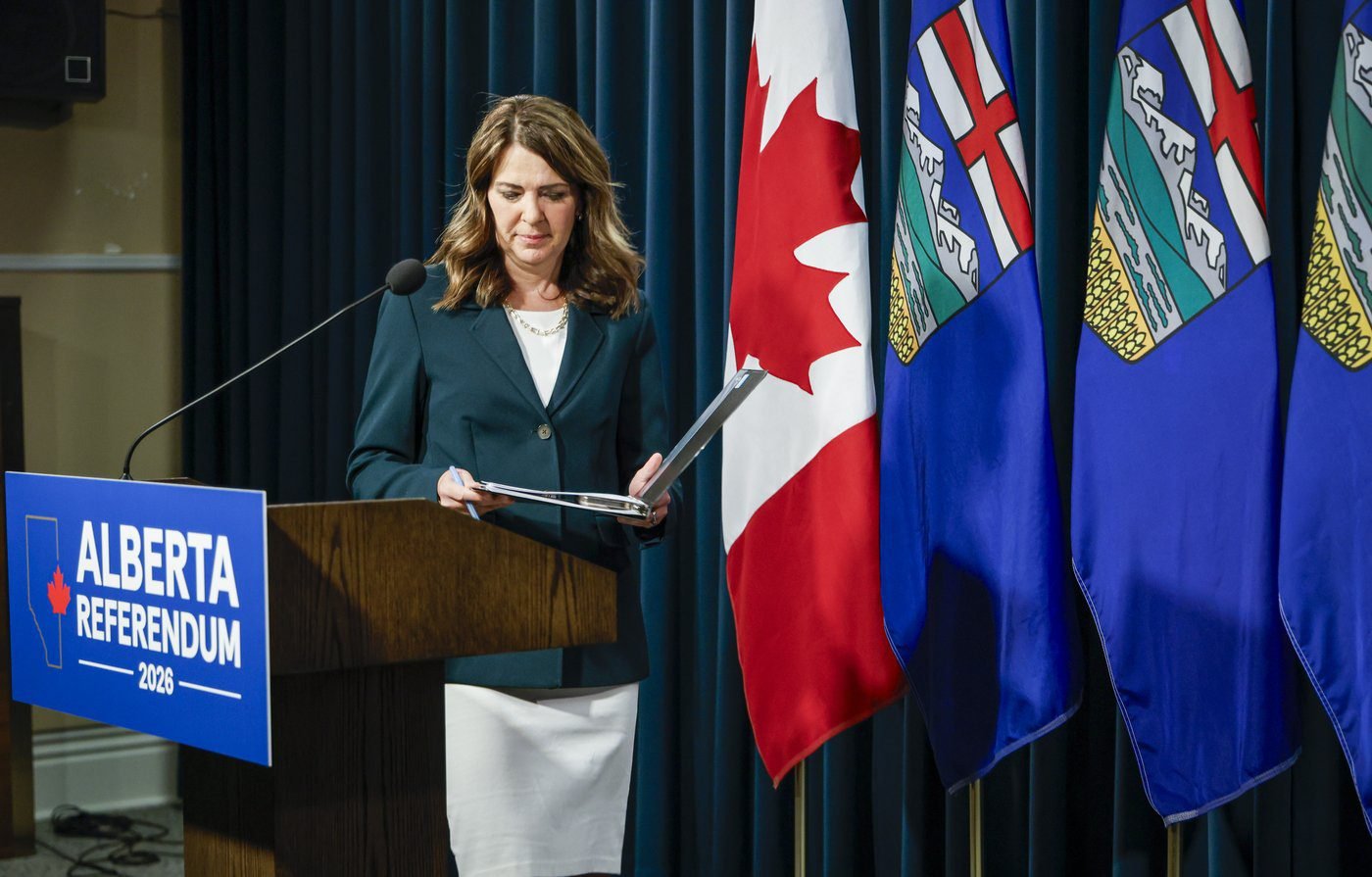
Now, when Smith puts a pseudo-separation question on the referendum ballot for this October, she finds herself facing the anger of separatists who didn’t get the absolute question they wanted moving to remove her from power they way they did Jason Kenney.
Here’s the structural problem the UCP is stuck with:
Fundamentally, the elected arm of the party is decoupled from the electors entirely. The politicians are beholden to a small group of people who control the Riding Associations and Party Executive roles. Even the Party Leader doesn’t have any particular power in the face of this control structure.
The result is a party that is vulnerable to internal takeovers by relatively small groups of people who are willing to organize and don’t care about the electorate. This creates a party where the angriest people are in control, and there is very little to moderate their zealousness.
I’m not even certain that a highly charismatic and popular leader would be able to exert control over the party – much less someone like Danielle Smith who acts “oh-so-reasonable” while having no real principles of her own.