dailynewsnblog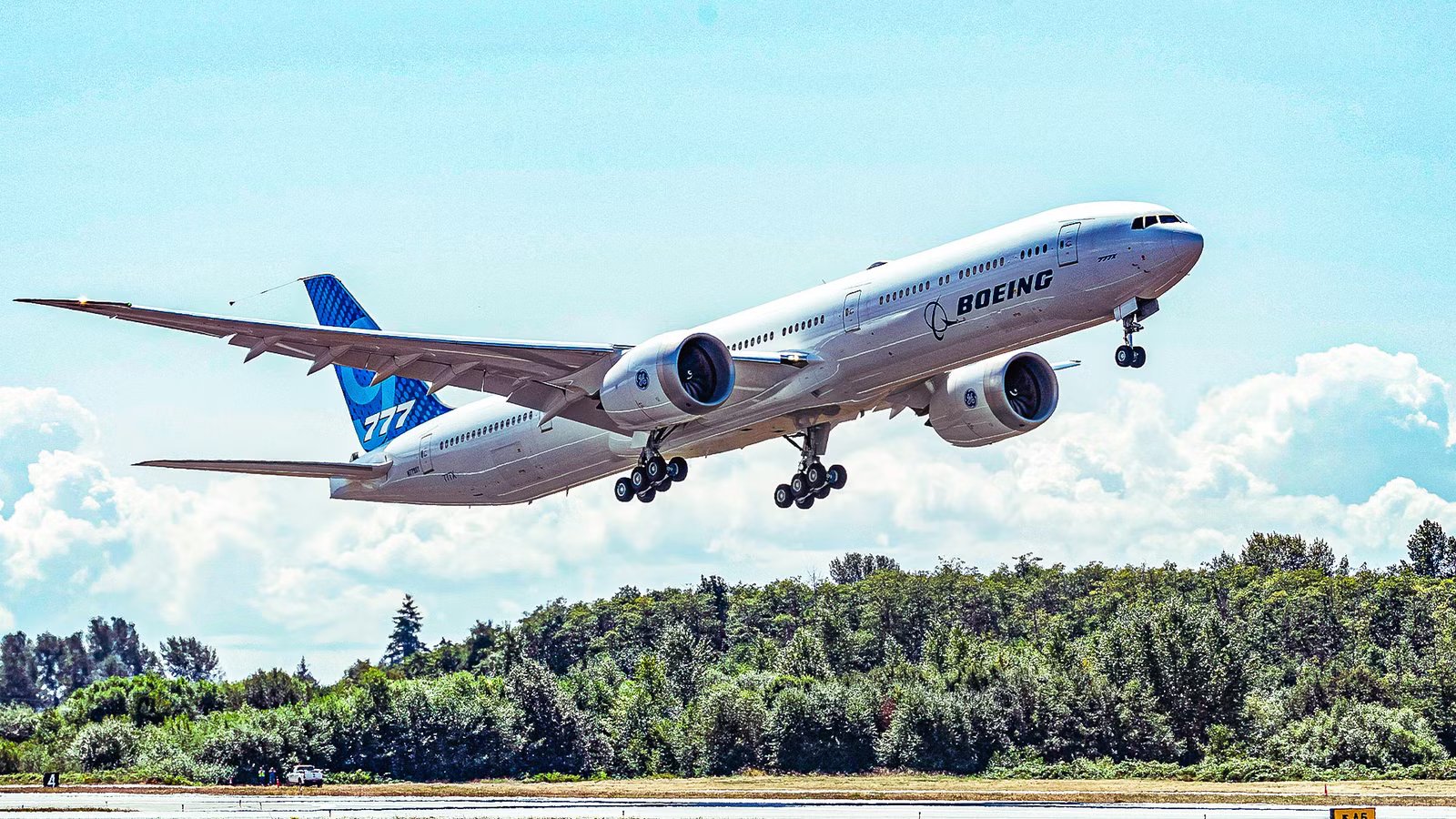
The Real Missing Link

Thrust links are the silent heroes of heavy aviation, acting as the middleman between the massive propulsive power of the engine and the airframe’s wing structure. On the Boeing 777-9, these components are responsible for transferring the nearly 21,000 lbs (9,525 kg) engine load and the massive forward force generated by its GE9X turbines into the aircraft’s aft lower engine mount. Without these links, the engine would literally tear itself from the wing under the stress of a standard takeoff roll.
The failure of test aircraft WH003 revealed that these links were not just handling steady-state loads, but were also subject to unintentional high-frequency vibrations. As the engines operate, they naturally vibrate, but the original mounting design failed to account for these specific harmonic frequencies over repeated flight cycles. This results in what engineers call metal fatigue, where the material develops microscopic cracks that eventually propagate until the part can no longer support the tensile stress of operation, leading to a complete structural failure.
Boeing’s subsequent inspection of the remainder of the test fleet, specifically airframe WH004, revealed that this was not an isolated manufacturing defect. Cracks were found in similar load-bearing components across multiple test units, confirming that the issue was systemic to the design of the interface between the GE9X engine mount and the wing. It turned a routine inspection after a Hawaii ferry flight into a comprehensive four-month deep dive into structural resonance and material integrity.
Big Strengths Can Also Be Major Weaknesses

Why a thrust link would actually snap has a lot to do with the sheer scale of the GE9X engine. Delivering approximately 134,300 lbf (597.396 kN) of thrust, this engine produces more power than the collective output of many historical four-engine airliners. With any increase in scale comes a necessity to also increase the scale, and therefore the durability, of key components that make up the overall structure on which the engine is built.
Managing this energy requires materials that can handle immense heat and mechanical strain, but as Boeing learned, it also requires a mounting system that can isolate these forces from the airframe structure. Reinforcements had to be made as a result of such an increase in power output, but catching such a problem in the testing stage reinforces the necessity of thorough testing before an aircraft is unleashed into the market.
|
Metric |
Specification |
Engineering Significance |
|
Max Thrust |
134,300 lbf (597.396 kN) |
Extreme tensile load on mounting bolts and links |
|
Engine Weight |
Over 21,000 lbs (9,525 kg) |
Massive cantilevered weight on the wing box |
|
Component Failure |
Aft thrust link |
Critical load path from engine to wing spar |
|
Vibration Source |
Unintentional harmonic resonance |
Leads to micro-fractures in metallic interfaces |
The vibratory response discovered during the 2024 grounding was, in principle, an unintentional side effect of the engine’s design integration. In complex aerospace engineering, these harmonics are often difficult to predict in a purely theoretical model, which is exactly why the 777X test fleet is pushed through thousands of flight hours in the real world. The grounding provided the data necessary to refine the engine mount’s dampening characteristics, ensuring that the link can survive the entire multi-decade service life of the aircraft.
Problem Solved? Boeing Redesigns 777X Thrust Links
The American aircraft manufacturer plans to install new thrust links later this summer.
A Simple Fix?

The four-month pause in operations from August 2024 to January 2025 wasn’t quite a period of inactivity, but rather an intense phase of iterative design and validation. Boeing moved quickly to implement a temporary reinforcement of the thrust links to allow for a safe resumption of flight test activities. However, this was never intended to be the final solution; it was more of a stopgap to allow the test program to collect necessary data while the permanent redesign moved through the production pipeline.
In early 2025, Boeing successfully resumed the test program, utilizing the temporary modifications to validate their understanding of the vibratory environment. The plan for the final, permanent redesign involved using titanium to help strengthen the linkage and tune out the damaging harmonic vibrations that caused the original links to crack. Fortunately for the design teams, the solution was not based on the concept of a total redesign but rather on a material change.
Delays are still ongoing, however, pushing the expected delivery date into 2027. For  Emirates, which holds a substantial order volume of 270 aircraft across the 777X family, every month of certification delay ripples through their long-term fleet renewal strategy. Boeing’s focus on lessons learned and meticulous validation of these new links is now the single greatest dependency for closing out the 777X development program.
Tests Exist For A Reason

The excessive delays of the 777X program have now forced launch customers to continue operating older, less fuel-efficient airframes longer than originally anticipated, impacting their bottom lines. However, airlines often prefer a delayed delivery of a fully compliant aircraft over an early delivery that requires immediate, widespread retrofits. These delays are not happening without reason, and are helping to ensure that the aircraft arrives when it is actually ready, and not an unfinished disaster waiting to happen.
The purpose of a flight test fleet is to break things, or, in this case, to find the parts that are at risk of breaking, in a controlled environment. The discovery of the crack on WH003 actually serves as a validation of the testing process. If the failure had occurred after the aircraft entered commercial service with hundreds of passengers on board, the narrative would be one of a failure of safety protocols, rather than a successful capture of a design flaw.
Boeing is under immense pressure to show that its certification processes are not just rigorous, but also capable of producing reliable long-term hardware, especially with plenty of other high-profile incidents occurring with other aircraft in its family. At least for this part, the successful flight testing of the temporary fix has somewhat restored confidence that the permanent solution will hold up to the high-thrust demands of commercial service.

How Often Have Boeing’s 4 Test 777Xs Flown This Year?
The Boeing 777X test fleet is finally back in the air. So where are they flying?
Much Deeper Issues At Hand

As Boeing edges closer toward the final certification, the focus shifts from fixing the issues to ensuring long-term reliability. The 777X is designed to operate for 30+ years, and these thrust links must withstand tens of thousands of thermal and mechanical cycles. The redesign of this component is a test of Boeing’s current engineering culture, which revolves around prioritizing structural integrity over schedule.
If the redesign successfully eliminates the vibratory response and all issues can finally be ironed out, the 777X will likely be regarded as one of the most thoroughly vetted airframes in history. The rigor applied to this thrust link can help to establish a new benchmark for how manufacturers account for engine-airframe resonance in the initial design phase of future widebody aircraft. Though there is a fine line that Boeing has to deal with when it comes to timelines. Rushing is not the name of the game, but how long can you keep customers waiting in the name of ironing out a few bumps in the development road?
The successful integration of the redesigned thrust link will be a key performance indicator for the 777-9. The 777X is significantly delayed from its original roadmap, but the structural improvements that have been made so far will ultimately result in a more durable and reliable aircraft for the airlines that have placed their trust in the program. The question remains, though, as to how such an established manufacturer can be developing upgrades that are so systematically wrong from the outset, suggesting why further issues are coming up as testing goes along.
A Worthy Wait?

The snapping of a thrust link on WH003 was a moment of high tension for Boeing, but it also functioned as a definitive diagnostic tool. It identified a specific, manageable structural issue before it could become a systemic failure in the global fleet. Addressing the vibration directly, Boeing is working to solidify the 777X as the reliable successor to the 777 family that airlines require.
Complex aerospace systems are rarely perfect on the first try, but that doesn’t mean mistakes are acceptable. The maturity of the 777X program is now being forged in the fire of these technical challenges, and the story of the 777X will be defined by how it navigates these structural hurdles to ensure long-term, safe performance.
The thrust link is a small piece of a massive machine, but it now represents the foundation upon which Boeing’s reputation for engineering integrity is currently being rebuilt. There is still some time to go before the first 777X is delivered, but Boeing hopes to ensure that these initial setbacks will be worth the wait for the massive promises that Boeing has made to its customers.